


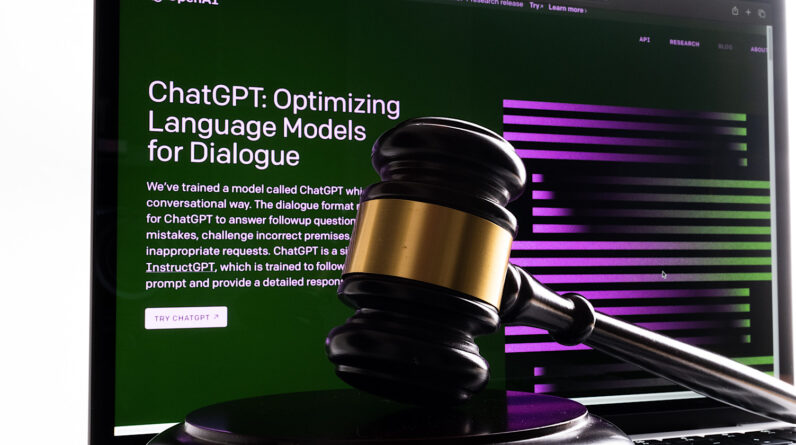
OpenAI, the company that created ChatGPT, is facing a lawsuit that claims OpenAI used copyrighted books without permission to train its AI systems.
The suit was filed in federal court in San Francisco and alleged that OpenAI illegally copied text from books without obtaining the consent of copyright holders, crediting or compensating them.
This lawsuit isn’t the first legal issue OpenAI has faced recently. As lawmakers work to regulate the fast-growing AI industry, OpenAI has been sued in yet another class-action lawsuit.
This other lawsuit claims that OpenAI’s machine learning models, including ChatGPT and DALL-E, illegally collect personal information from people on the Internet, violating various privacy laws.
The results of these lawsuits could set important precedents for artificial intelligence, copyright, and privacy that shape the regulatory landscape in the future.
Claims of Copyright Infringement
Two authors have presented a lawsuit claiming that OpenAI’s ChatGPT language model copied and used his books without permission.
The lawsuit, Tremblay v. OpenAI Inc, claims that ChatGPT can accurately summarize authors’ science fiction and horror books. This suggests that the chatbot has read and absorbed your works.
Pointing to a 2020 OpenAI paper, the lawsuit notes that 15 percent of the data used to train ChatGPT came from “two corpora of Internet-based books.”
The authors believe one dataset contained more than 290,000 book titles from “shadow libraries” such as Library Genesis and Sci-Hub, which illegally publish thousands of copyrighted books.
The authors allege that ChatGPT violated copyright law by removing the copyright notices from these books.
Privacy Violations and Data Theft
a long lawsuit filed last week against OpenAI alleging that two of its AI models, ChatGPT and DALL-E, were trained using hundreds of millions of people’s data without proper consent.
The demand, entitled PM v. OpenAI LP, claims that OpenAI obtains private information from individuals who directly use its AI systems and other applications that incorporate ChatGPT. The complaint argues that this collection and use of data violates privacy laws, particularly for children’s data.
The lawsuit claims that OpenAI has integrated its systems with platforms such as Snapchat, Spotify, Stripe, Slack and Microsoft Teams. OpenAI is accused of secretly collecting users’ images, locations, music tastes, financial details and private communications through these integrations.
The lawsuit argues that this data collection violates those platforms’ terms of service and privacy laws and constitutes unauthorized access to people’s information.
The complaint names 16 plaintiffs who used online services and believe OpenAI took their data without permission.
OpenAI did not respond to a request for comment on the lawsuit.
Potential consequences for OpenAI
OpenAI could face significant financial penalties if the court finds in favor of the plaintiffs, which could harm OpenAI’s financial stability and ability to raise funds.
Some of the possible ramifications include:
Lawsuits could damage OpenAI’s reputation and trust among key stakeholders such as users, partners and investors. Regulators may scrutinize OpenAI more closely, leading to stricter rules and compliance requirements. If using copyrighted data to train AI models is found to infringe copyright, OpenAI and others may have to change the way they collect and use the data. Depending on the rulings, companies using ChatGPT or other OpenAI products may rethink these relationships to protect their reputation and user privacy.
To sum up
OpenAI is in the midst of several lawsuits that could affect the AI field by setting important rules about copyright, privacy, and how data can be used.
For anyone following AI, it’s important to stay abreast of how these demands are progressing and think about how they might lead to new laws and policies, change how AI technology is built, and require companies to adjust how they design and deliver AI products and services.
Featured image: Ascannio/Shutterstock
[ad_2]
Source link





