


I’m just going to come out and say it…
SEO should be a product because it is a channel for acquiring traffic and organic revenue.
SEO as a product largely means business:
Understand that it works in a digital world. Make an effort to make your digital properties (website, app, etc.) SEO friendly.
This way, when potential customers search online with their devices, search through an app, or initiate a voice search, subsequent digital properties can be discovered.
Simply put, product management is a problem-solving discipline with customer empathy. Although search engine optimization (SEO) is the broadest and constantly evolving consideration to be discovered for customers using connected devices to find information, products or services.
There are more and more places where humans “search” outside of traditional search engines like Google, DuckDuckGo, Baidu or Microsoft Bing. Prospects can start their own product search on Amazon or use YouTube if it’s a visual search.
It’s all based on intention – what does the customer want?
To clarify, this article is not about optimizing product detail pages for SEO.
Instead, it examines the big picture of dedicating product resources to grow organic traffic and revenue and why SEO should be considered a product by businesses.
SEO as a Product: What Does It Mean?
Let’s quickly set the stage to highlight the fact that this is a relatively new concept.
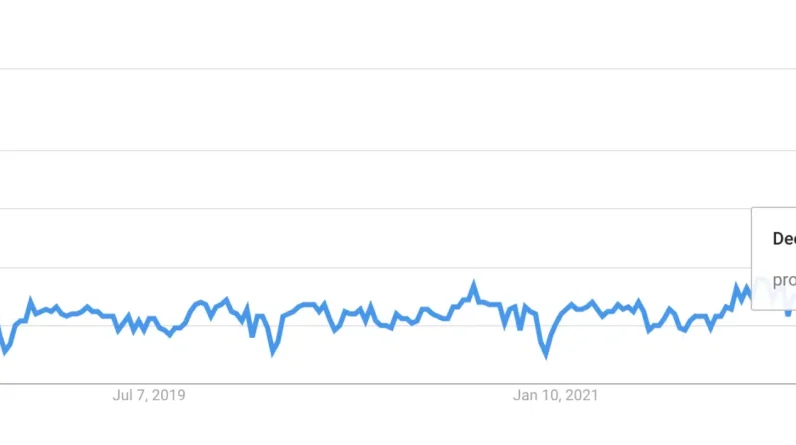
A Google Trends search for “product management” shows that interest over time has started to peak as recently as December 2022.
Conversely, the search term “SEO” shows healthy interest over time.
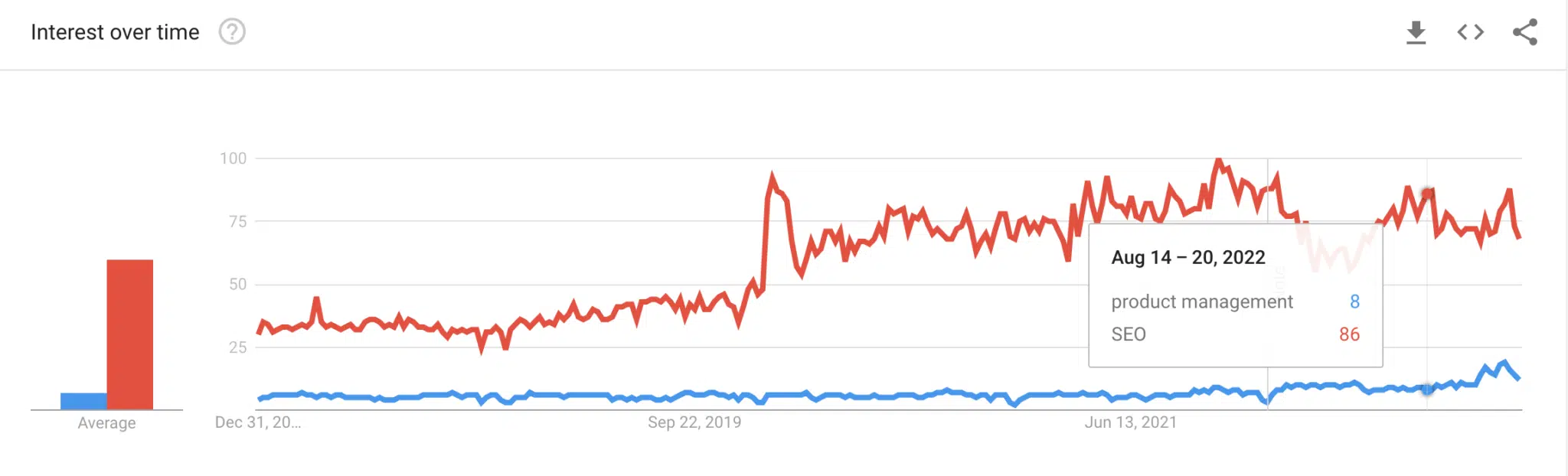
The parallel is that SEO has been around (and continues to evolve) for over a decade. While product management is just starting to gain traction. It will take time for the role of an SEO product manager to become more prevalent.
More importantly, what must also evolve is how organizations operate their SEO program. When SEO is a product, it is treated as an aspect of the business that drives revenue and customer acquisition.
SEO as a product means that product management is applied to search engine optimization
For a long time, SEO focused on keywords, especially how many and which ones to use on your pages. Then, Google’s algorithms evolved significantly to detect bad actors.
To evolve and thrive with the times, Eli Schwartz outlines the concept of a product-led approach to SEO. In his book “Product-led SEO”, explains Schwartz:
“A product-led SEO effort is not something that only works with specific companies; rather it is a process that all websites working on SEO should employ.
The key part of creating a product-led SEO strategy is that it is a product (an offering of any kind) that is being built. This should be approached in the same way as any other product: a product plan, a roadmap, project management of inputs and collaborators, and most importantly, incorporating user feedback.
Unlike an SEO effort based on keyword research, the product-led SEO strategy must fit the product market.”
This largely means empathy for customers who bring profit to the business. For SEO, it’s web crawlers Googlebot and humans
As an SEO product manager, you have two main clients to consider: search engines i people.
Most product managers focus primarily on a customer or target market segment (as defined by the company), but fail to realize that major search engines, such as Google, are customers in their own right because they consume products and features created for the web. .

Get the daily search newsletter marketers trust.
Top 4 Reasons Why SEO Should Be a Product
Consider the following compelling reasons why SEO should be a product.
Treating SEO as a product means accounting for it as a channel for acquiring traffic and organic revenue. SEO best practices are considered in online operations to ensure search engines “see” your website i Humans searching online discover your brand site or social media pages. SEO product managers understand external factors (such as how search engines work) and how aspects of the website need to be optimized in order for the site to be SEO friendly and gain organic traffic. Due to the fluid nature of search, SEO should have its own roadmap to continually address improvements (i.e. advances in machine learning), areas of growth (i.e. production of useful content) and maintenance. No company has an infinite amount of funding or capital to be able to acquire new customers through significant investments in paid search. Organic traffic is a scalable and compounding source of income for new site visitors. This source needs protection and development to grow.
There’s a product manager for everything else that’s important to a business, so why not look?
Some companies have product managers for search, but they usually deal with on-site searches performed by customers and their experience of finding or not finding products.
Instead, I’m referring more to an SEO product manager who focuses on two primary external customers: search engines and customers visiting the website from a search engine results page.
Read the job description for any product manager role and you’ll see that at a high level, it’s critical for companies to develop the best quality app and/or e-commerce experience by providing a branded customer experience that drives sales and retention.
The role requires a balance of both analytical and creative with strong consumer instincts.
Product managers are good at writing requirements in tickets that engineering teams work on. This is where SEO requirements or considerations can come into play.
Is there a link? It should then be coded as a attribute so that search engines can “read” it.
Post a visual product carousel? Make sure it’s not wrapped in JavaScript because if it’s disabled on the client side, it won’t be visible to the client or a search engine.
SEO is an evolving discipline because it is tied to getting organic traffic from Google searches and its understanding of user queries and intent, which changes over time. This means, ultimately, that leaderboard compositions will shift and change.
In one episode of the Search Off the Record podcast, John Mueller discussed the fluid nature of search. He noted that as Google’s understanding of user queries and intent changes, so will the composition of the rankings.
Human nature is dynamic and our needs change over time. For these reasons, it is important for businesses to focus on how organic search is evolving as a channel to continue generating revenue and capturing new customer visits.
Stop asking “What do we do with the latest algorithm update?” or “What keywords are we or are we not ranking for today?” – which is a myopic view of how search works.
It’s more productive to solve, “First, what does my customer want? And how do we make sure Google knows we’re offering it?”
When SEO is a product, it benefits from the product framework that helps identify important work and implement it on site. Teams can then measure it, learn from it, and improve it over time.
How SEO product management fits within an organization
In large organizations, SEO is usually handled by a manager or a team of technical SEOs, content SEOs, and marketing analysts. SEO is usually not within the product vertical.
But no matter where SEO sits in the organization, there will always be a need to navigate complexity and ambiguity, using a structured approach and delivering results.
SEO often suffers from a lack of resources (specifically in engineering) to make and publish improvements.
One part of the product process that most SEO professionals don’t understand is the time frame in which the work is done. Most major technology companies (Apple, IBM, Microsoft) use agile methodology to deliver work. Recently, more companies are adopting this approach as a way to work on and iterate on strategic initiatives.
This cannot be overstated. In an agile methodology approach, engineering teams operate in sprints, and there are a finite number of sprints each year. This is especially true if you’re an e-commerce brand that operates with a “code freeze” period of time that’s usually between November and January, where no updates are made to the code base.
Since there are a finite amount of sprints, the planning process means working backwards from the “pencil down” time period to prioritize the items on the roadmap.
It also means that if you do new or ad hoc work, it will replace an existing initiative. These are the tradeoffs that the SEO Product Manager manages and articulates with leadership.
In early 2022, I spoke at an industry conference about engagement points that SEO product managers have with engineering teams during the agile process that SEO managers are not used to.

Similar to a “before, during and after” strategy, there are specific ways in which an SEO product manager supports cross-functional teams along the way to deliver SEO work together.
The product is where the resources are
SEO as a source of acquisition should be with resources in order to contribute to the company’s bottom line.
Product managers actually have access to and coordinate these resources. Engineering resources are assigned to product managers typically by vertical or discipline.
If organizations operated where SEO was treated as a product in itself, then there would be:
A product owner. A roadmap of SEO products. An allocation of resources specifically for SEO initiatives.
Any compensation would occur with the planned roadmap of the SEO work, as opposed to other roadmaps and product teams.
It’s the difference between having the ability to organize work on your own roadmap rather than having to ask another team if you can use some of their resources to do (what is perceived as) the your work
SEO as a product generates organic traffic and revenue
When SEO is a product itself, teams will be empowered to do what’s best for the business in terms of fostering and growing a scalable channel for customer acquisition and revenue.
This means a result of continuous technical improvements and renewal of information content across the spectrum of human needs, from information to purchase.
The views expressed in this article are those of the guest author and not necessarily Search Engine Land. Staff authors are listed here.
[ad_2]
Source link





