


The Reuters Institute Digital News Report 2023 sheds light on the complex relationship between audiences, media and social media platforms.
As we navigate one crisis after another, the demand for reliable, independent journalism is higher than ever.
However, the news industry faces weak audience engagement, low trust and an uncertain business environment.
Based on data from 46 markets on six continents, the report paints a picture of an industry under duress that is pivoting, innovating and adapting.
Significant findings of the report include the following:
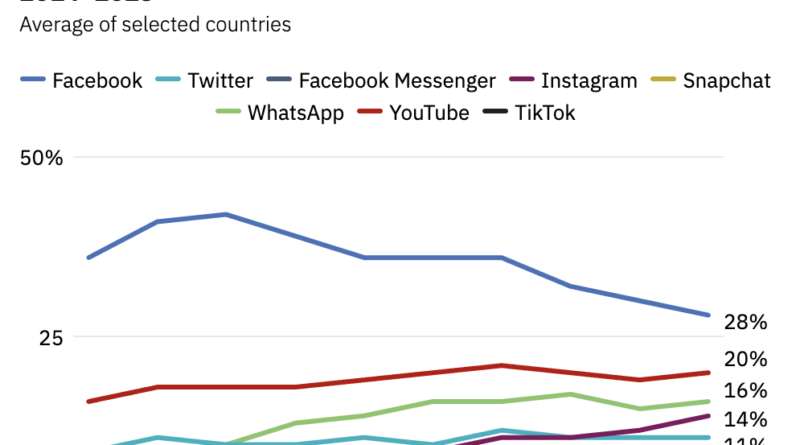
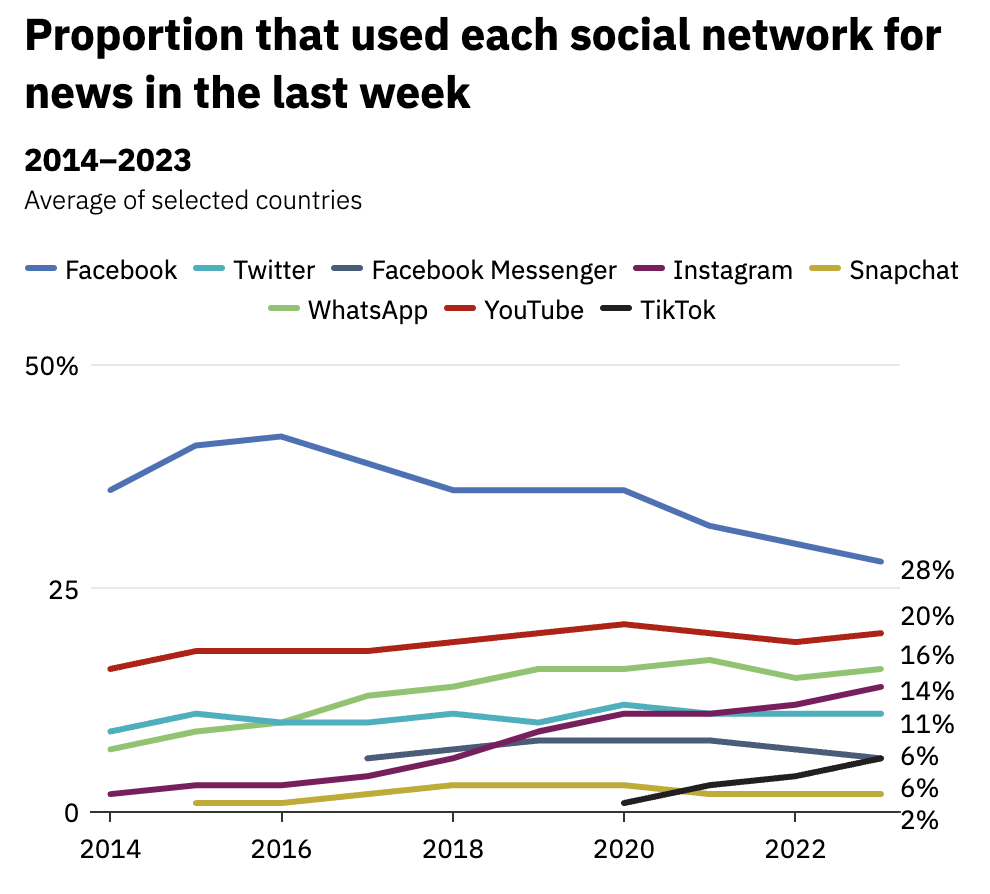
Legacy social networks like Facebook are seeing a drop in engagement. TikTok and other video-driven platforms are on the rise. There is an increasing reliance on influencers or celebrities for news over traditional journalists. People are skeptical of news selection algorithms, despite saying they prefer algorithmic news feeds. Public engagement in online news has dropped and trust in news sources continues to decline. Consumption of traditional media such as television and print continues to decline. A significant number of people avoid reading the news at all.
The report provides a comprehensive examination of the news industry and highlights the challenges and opportunities for publishers.
This article summarizes the report’s most relevant findings.
Trust moves from journalists to influencers
The way people access news is changing.
There is a decline in the number of people who prefer to start their news journey with a website or app, ten percentage points since 2018.
Younger audiences, in particular, prefer to access news through social media, search engines or mobile aggregators rather than the websites and apps of news brands.
Screenshot from: reutersinstitute.politics.ox.ac.uk, June 2023.
Despite the pervasive nature of social and digital media, weak public engagement and low trust persist.
People are increasingly turning to celebrities, influencers and social media personalities for news rather than journalists.
Distrust in algorithms
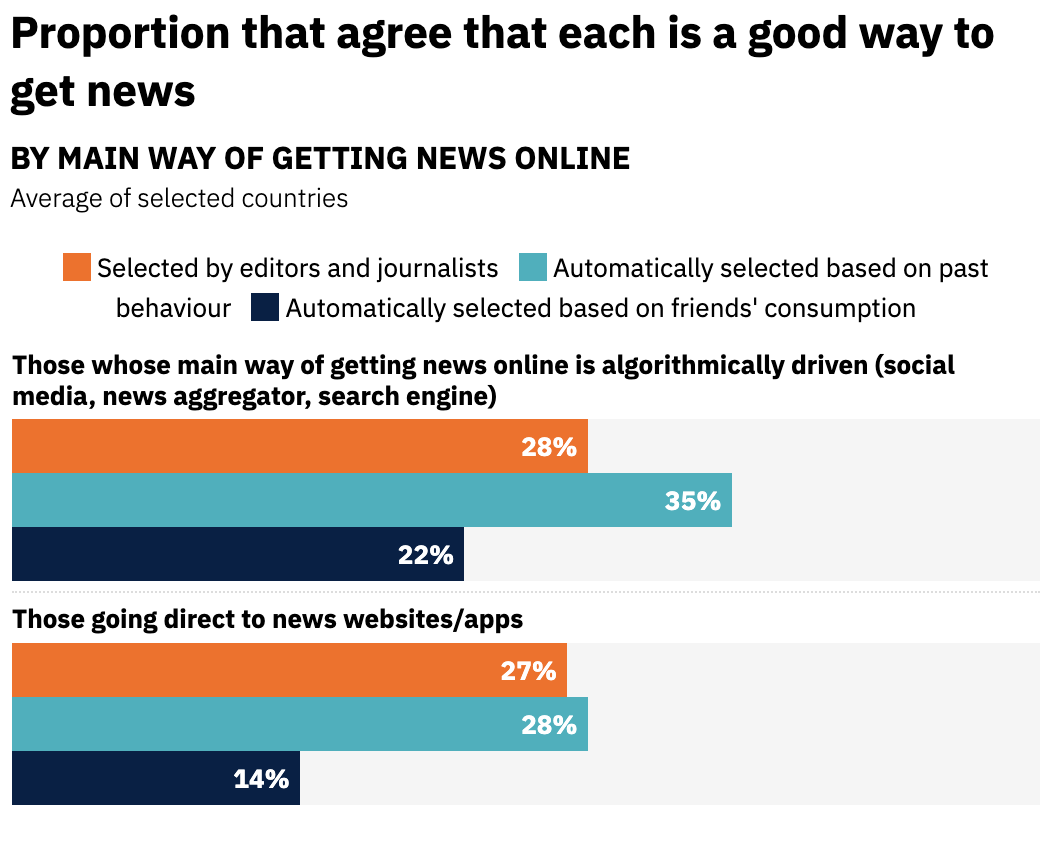
Despite the preference for news from social media influencers, people are wary of the algorithms used to curate news feeds.
 Screenshot from: reutersinstitute.politics.ox.ac.uk, June 2023.
Only 19% of respondents agreed that selecting news based on their friends’ consumption was an appropriate way to get news.
Because?
There are concerns that more personalized news could lead people to miss important information and challenging viewpoints.
When asked about news selection based on previous reading habits, the approval rate increased to 30%.
These figures were more positive than the approval rate for news selected by editors and journalists, which stood at 27%.
Participation in online news
The report notes a decline in online news engagement, with only a fifth (22%) of respondents actively participating.
 Screenshot from: reutersinstitute.politics.ox.ac.uk, June 2023.
In the past, the Internet was seen as a platform for active participation, with users posting and commenting on news content.
Today, only 22% of audiences actively engage, while 31% engage reactively, by reading, liking or sharing news.
Meanwhile, 47% do not interact with the news at all.
Trust online news
Trust in the news has declined, with an average of 40% of respondents saying they trust the news most of the time.
Public media brands enjoy high levels of trust, but their reach among younger audiences is declining.
The decrease in trust could stem from unbridled criticism of journalists and the media.
On average, about 53% of people in all markets say they have encountered criticism of journalists.
Levels of media criticism vary by market. In countries such as Peru, approximately 71% of people report frequent exposure to media criticism.
At the other end of the spectrum, only 22% of respondents in Japan reported the same.
The rise of news avoidance
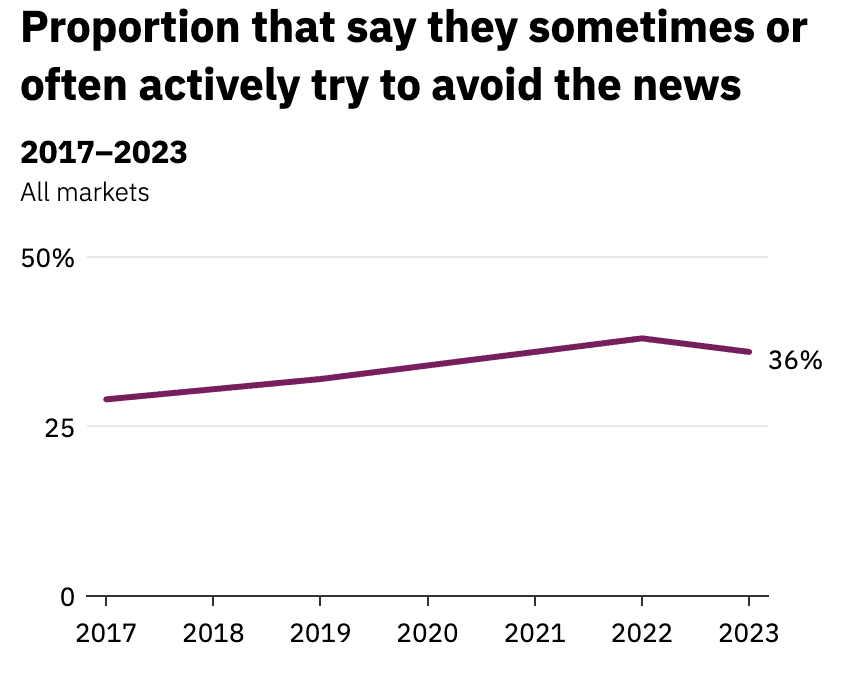
Another important finding is the growing tendency to avoid news.
 Screenshot from: reutersinstitute.politics.ox.ac.uk, June 2023.
About 36% of people surveyed across markets admit to avoiding news, either regularly from all sources or by restricting consumption to specific times or topics.
News avoiders prefer positive or solution-based journalism and show less interest in the top stories of the day.
Research suggests that the public may now avoid sharing or engaging in news because of viewing online discussions as toxic.
To sum up
Key trends in the Reuters Institute’s 2023 Digital News Report include declining engagement with news, growing skepticism toward algorithms, and increased news avoidance.
The decline in trust in news is pronounced among younger audiences, who now favor influencers, celebrities and social media personalities over journalists.
In this digital and social media age, nearly half of the public opts out of news, which calls for deeper exploration.
Whatever the solution to avoiding news and mistrust, these changes cannot be ignored if the industry hopes to thrive.
source: Reuters Institute
[ad_2]
Source link





