


Google released a new YouTube short, inviting more people to try the generative search experience through Search Labs.
Google SearchLiaison also announced on Twitter that Google had made several improvements to SGE over the past two weeks.
Two weeks ago, we started opening up access to SGE. Since then, we’ve made several quality updates, including a major improvement that cuts the time it takes to generate AI snapshots in half. We hope everyone who tries it will enjoy the fastest experience. If you haven’t…
— Google SearchLiaison (@searchliaison) June 8, 2023
Here’s what I found while testing the new and improved Google SGE.
The sources were not always accurate
Did Google cite sources in the generative AI overviews? Yes, but they weren’t always the right sources.
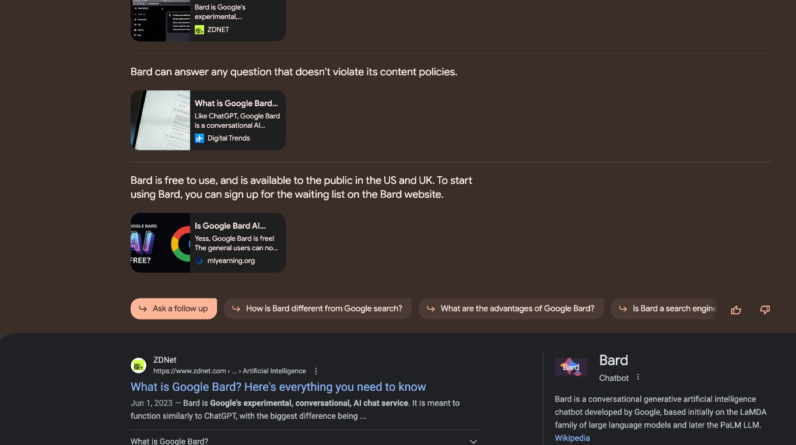
One of the first questions I asked SGE almost two weeks ago was what is Google Bard. I asked again and the answer was attributed to articles from four sources.
Screenshot from Google, June 2023
When I went through the text Originality.aipart of the text matches a PC Guide article, which was not listed in Google’s source list.
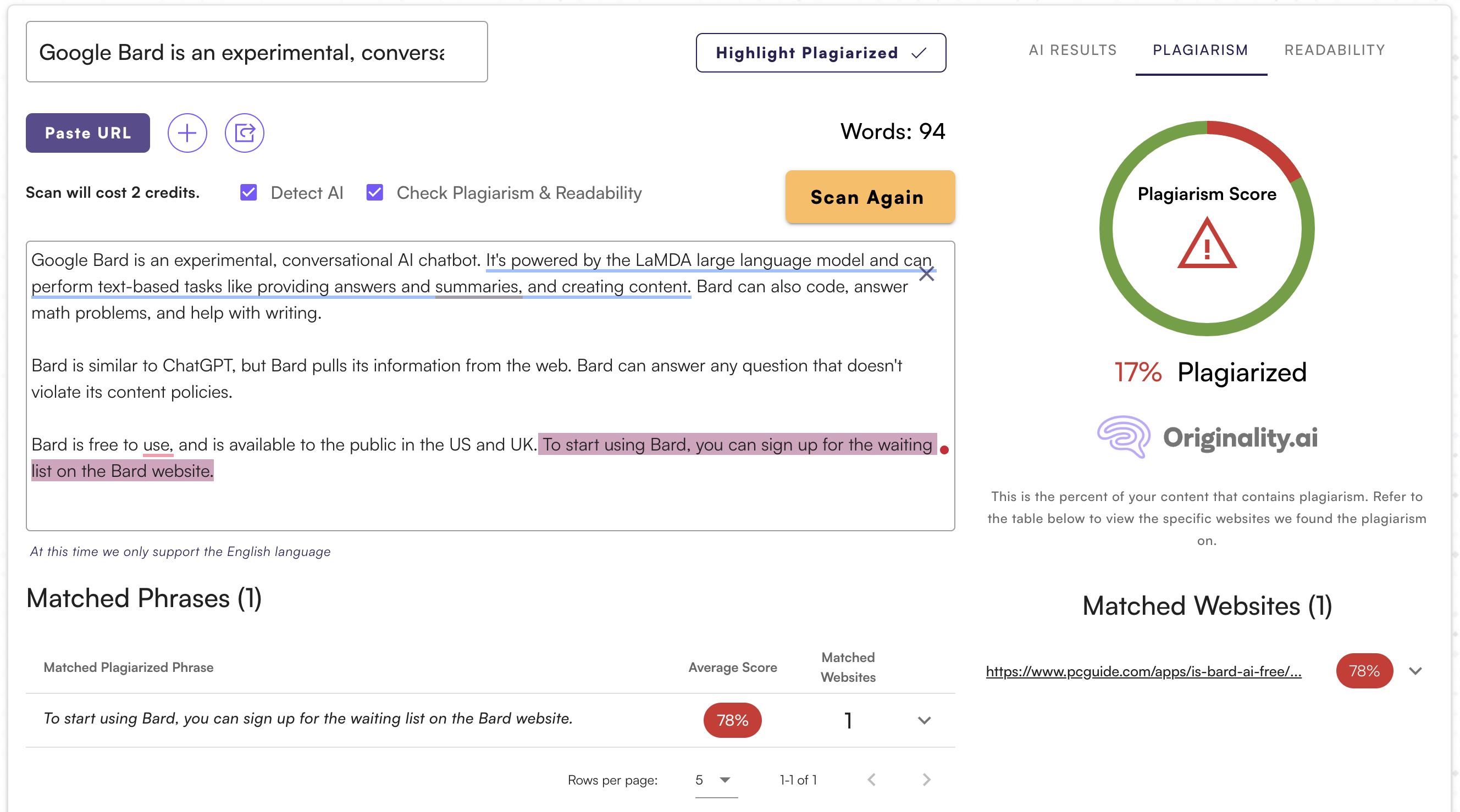 Screenshot from Originality, June 2023
Something similar happened when I checked the AI overview to find out what ChatGPT is.
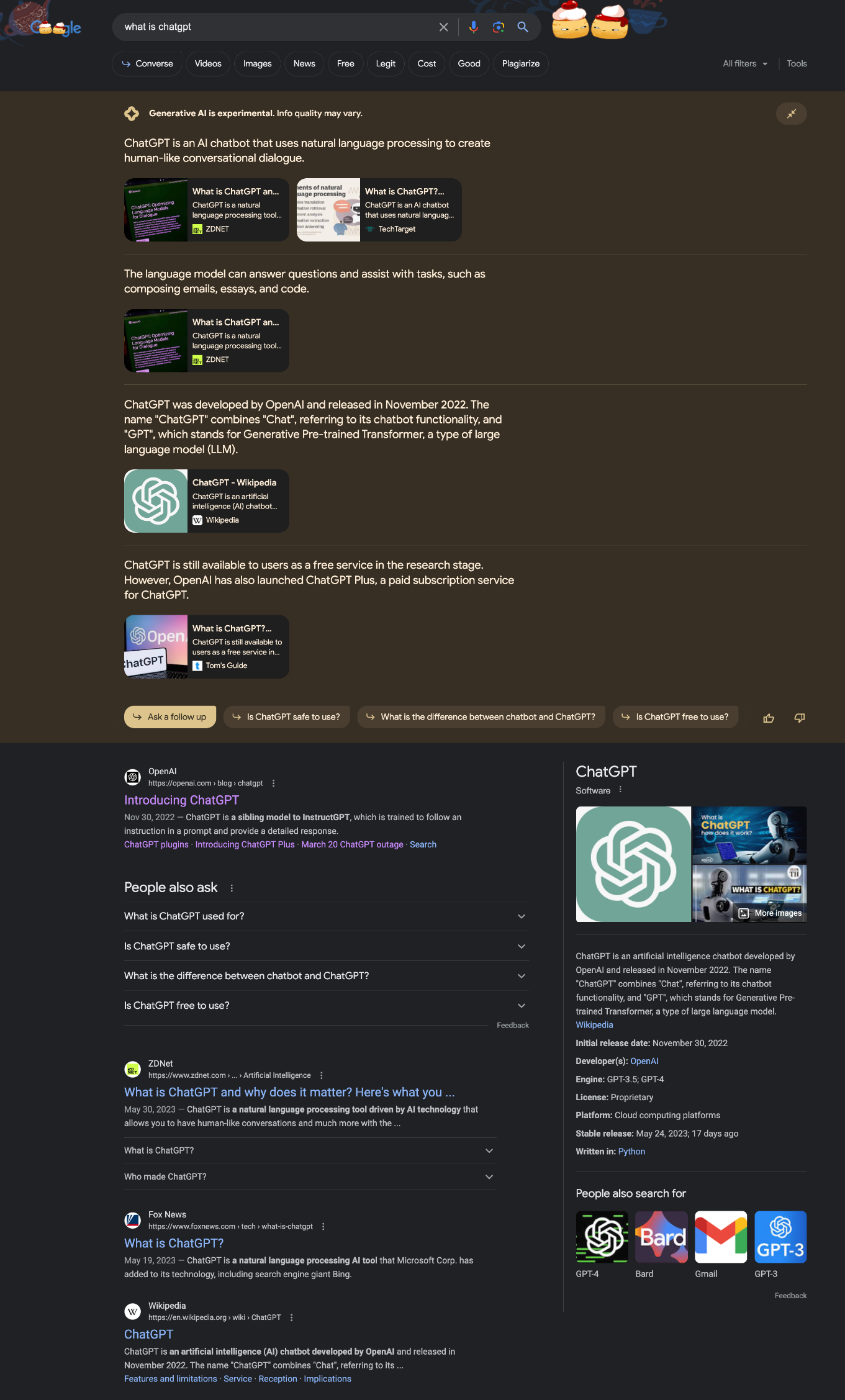 Screenshot from Google, June 2023
Discovered sources of originality not included in the AI generative text.
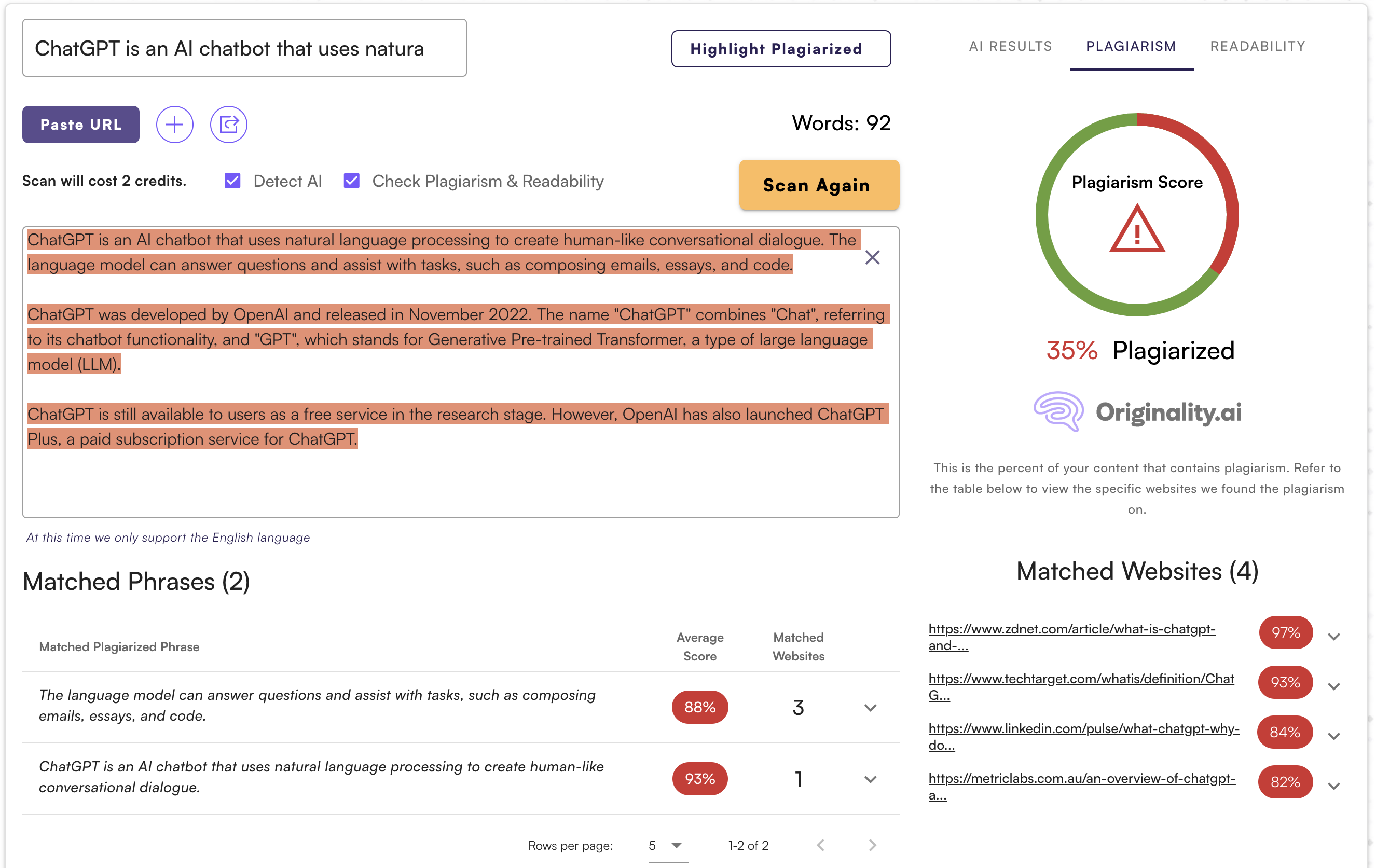 Screenshot from Originality, June 2023
There were also inconsistent sources in the answer to what is link building between what Google AI cited…
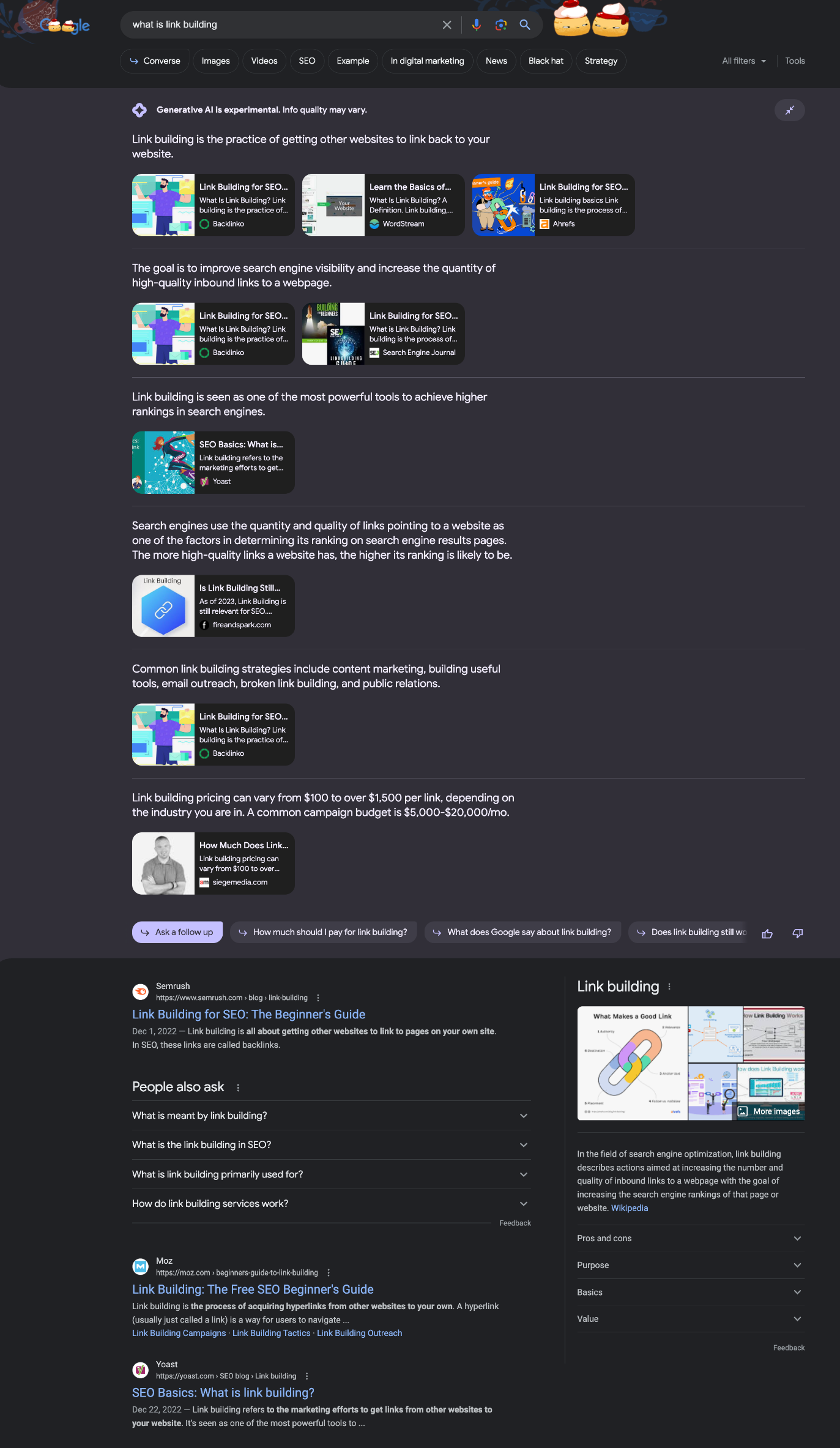 Screenshot from Google, June 2023
…and the one who detected the originality.
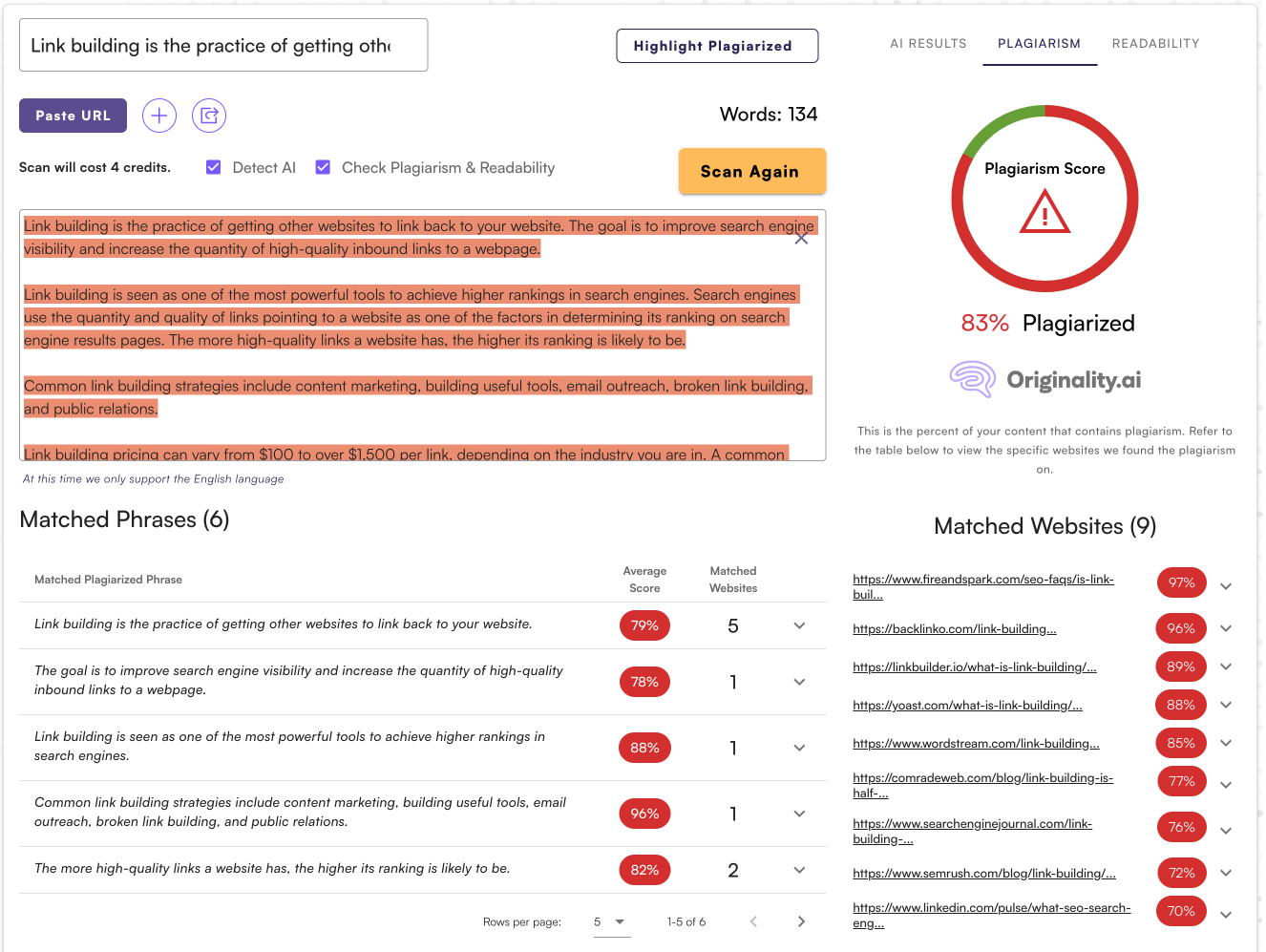 Screenshot from Originality, June 2023
This issue could be important for non-accredited authors and editors in generative AI responses.
Sponsored results appeared above some SGE answers
Instead of always appearing first, some SGE responses appeared below Google Ads sponsored results.
It happened in this search of what are the best SEO courses.
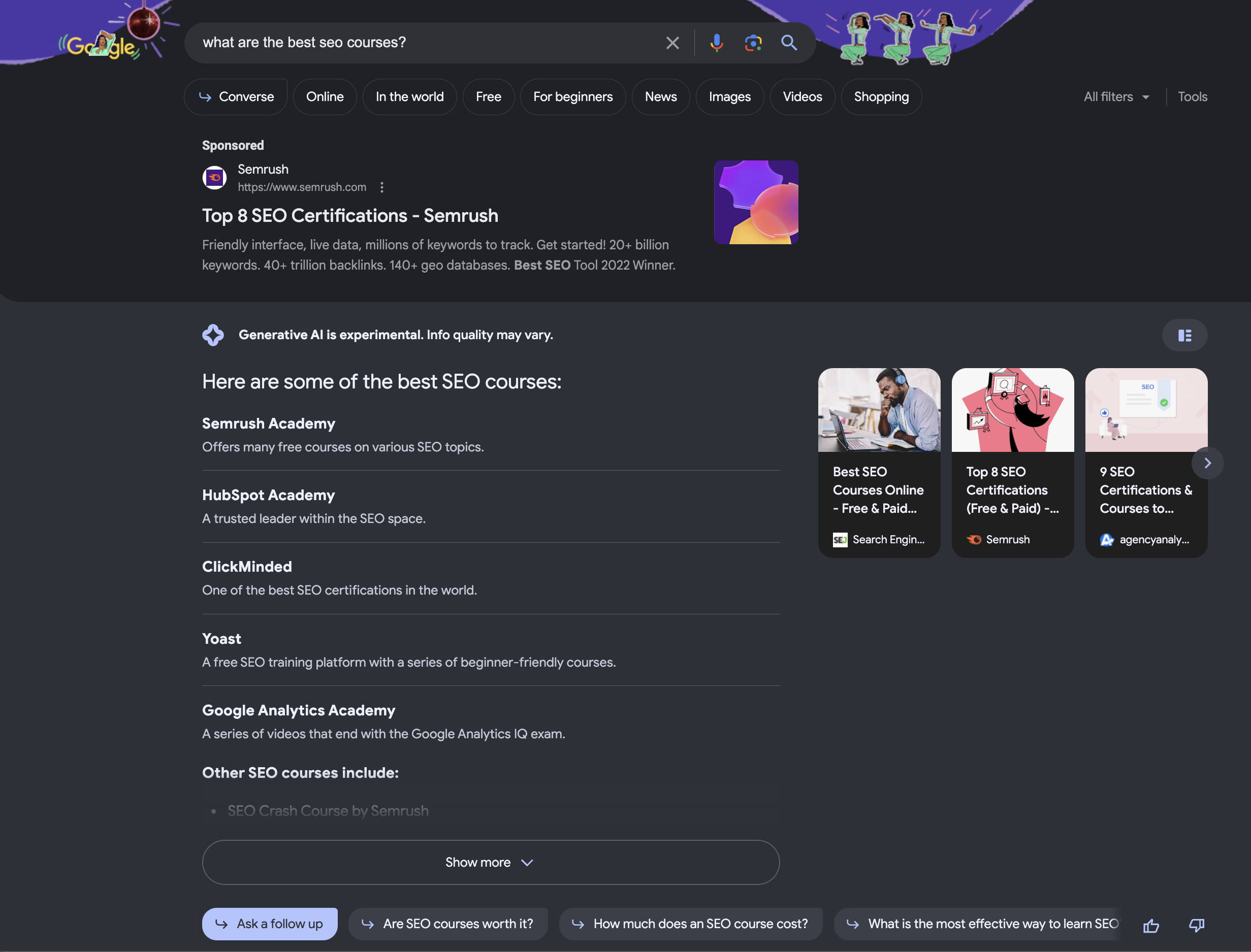 Screenshot from Google, June 2023
This query about the best place to buy a laptop showed sponsored shopping results before SGE’s answer with local search results.
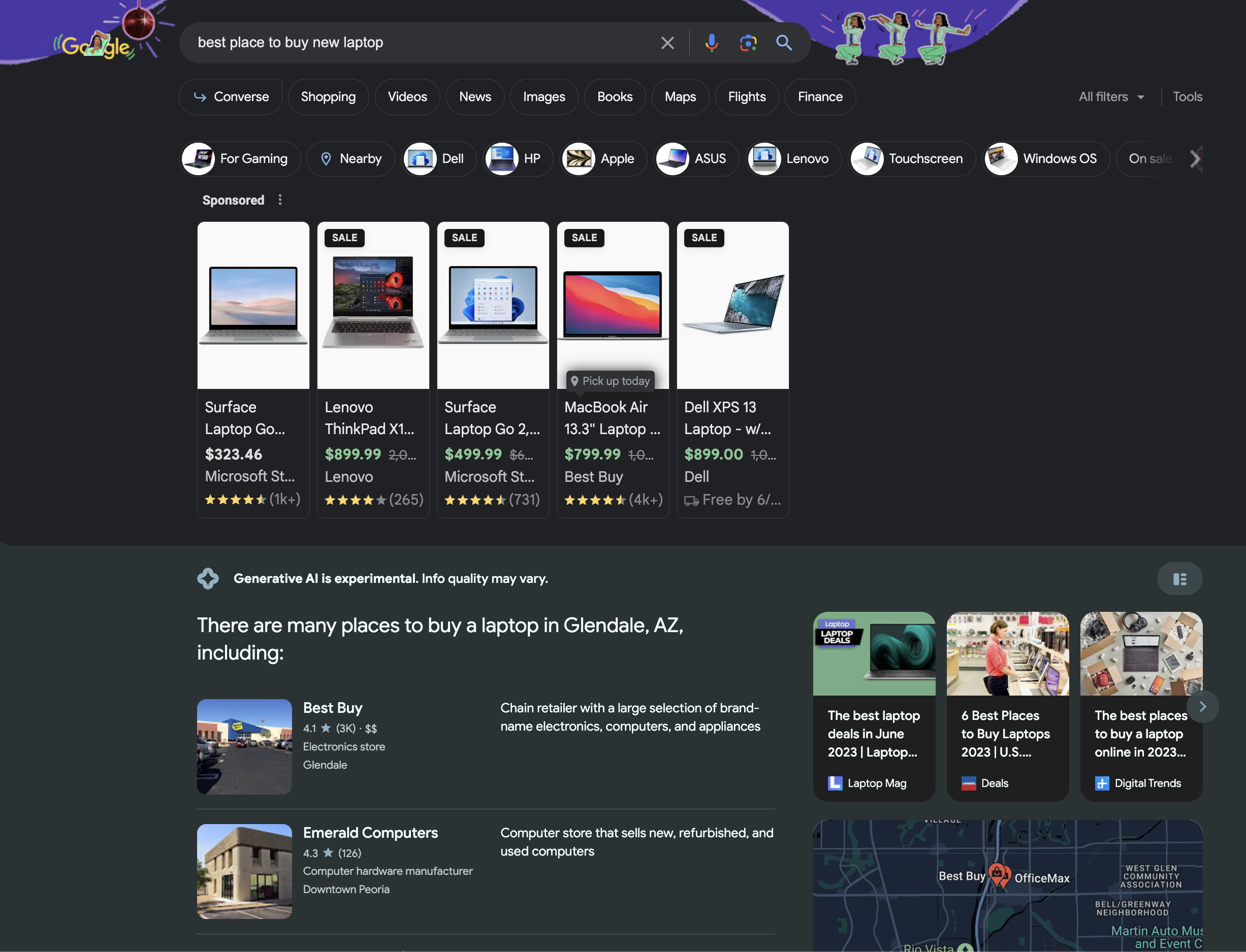 Screenshot from Google, June 2023
More brand websites appeared in the sources
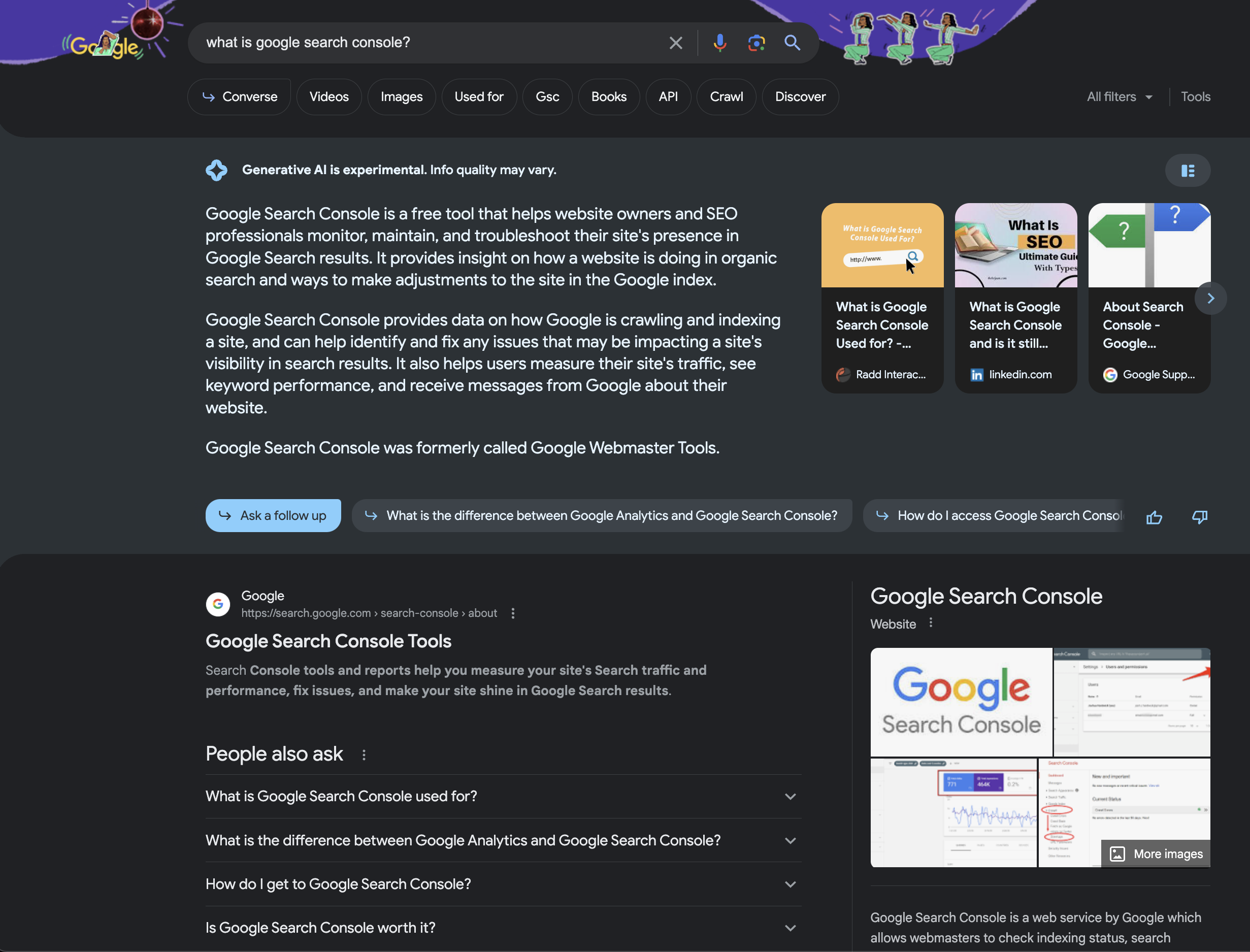
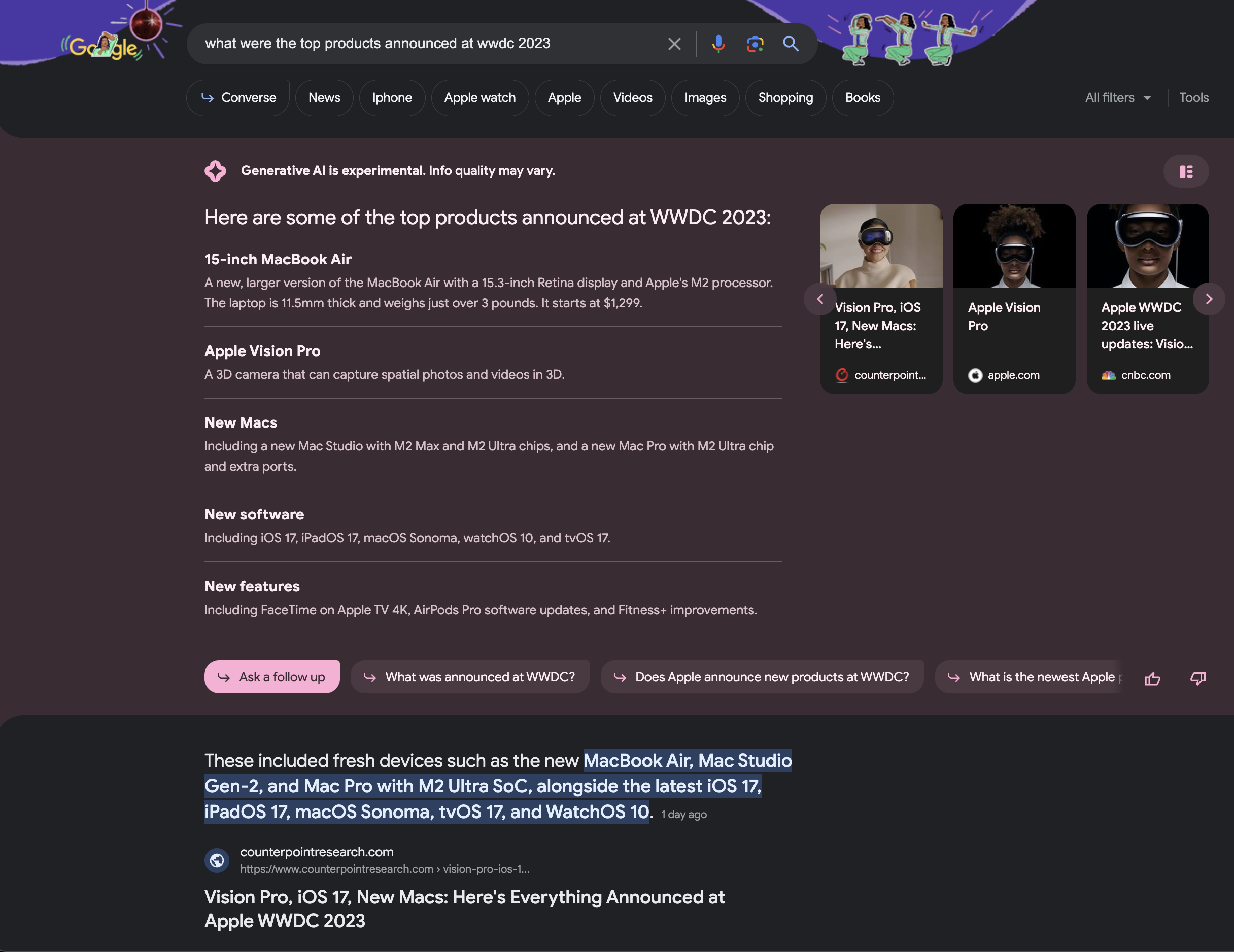
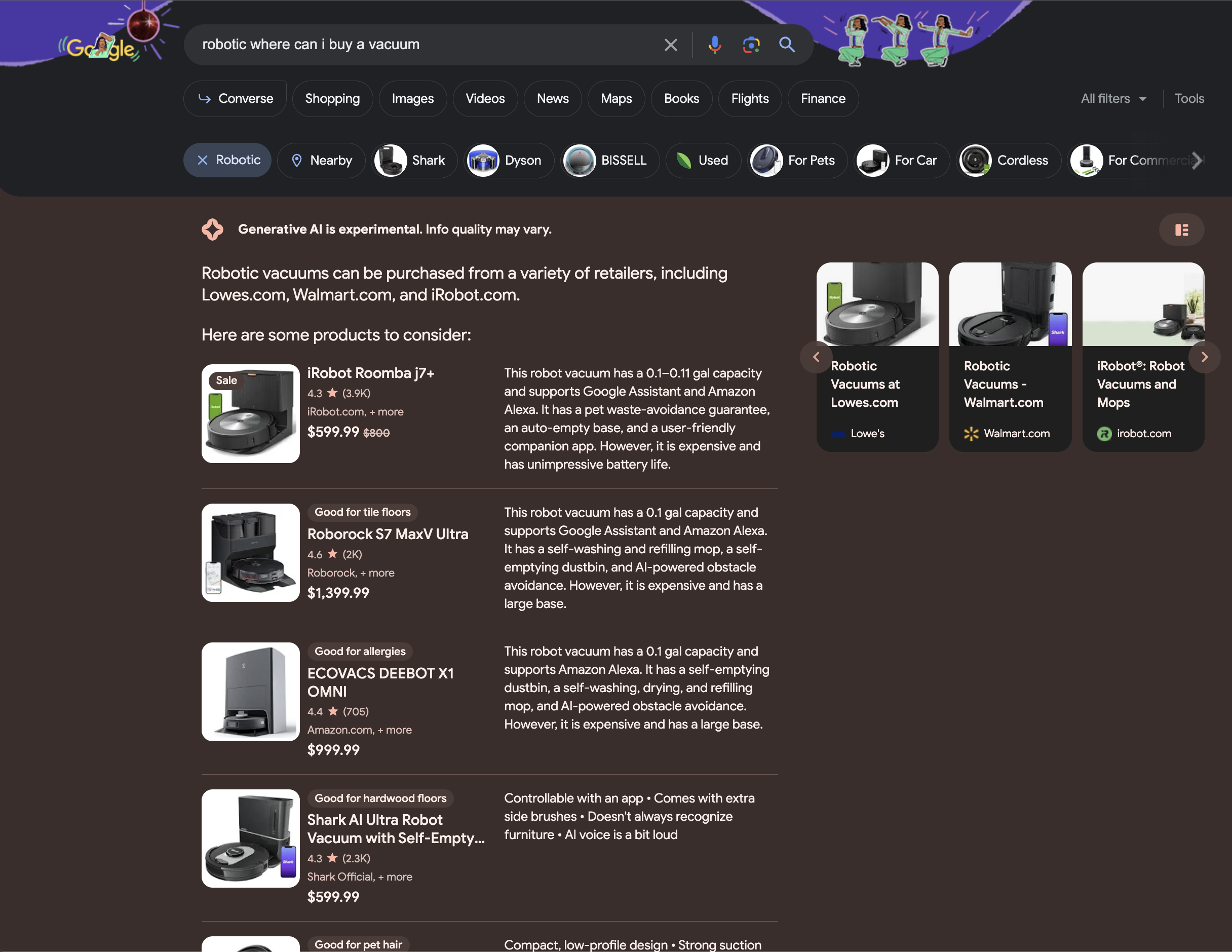
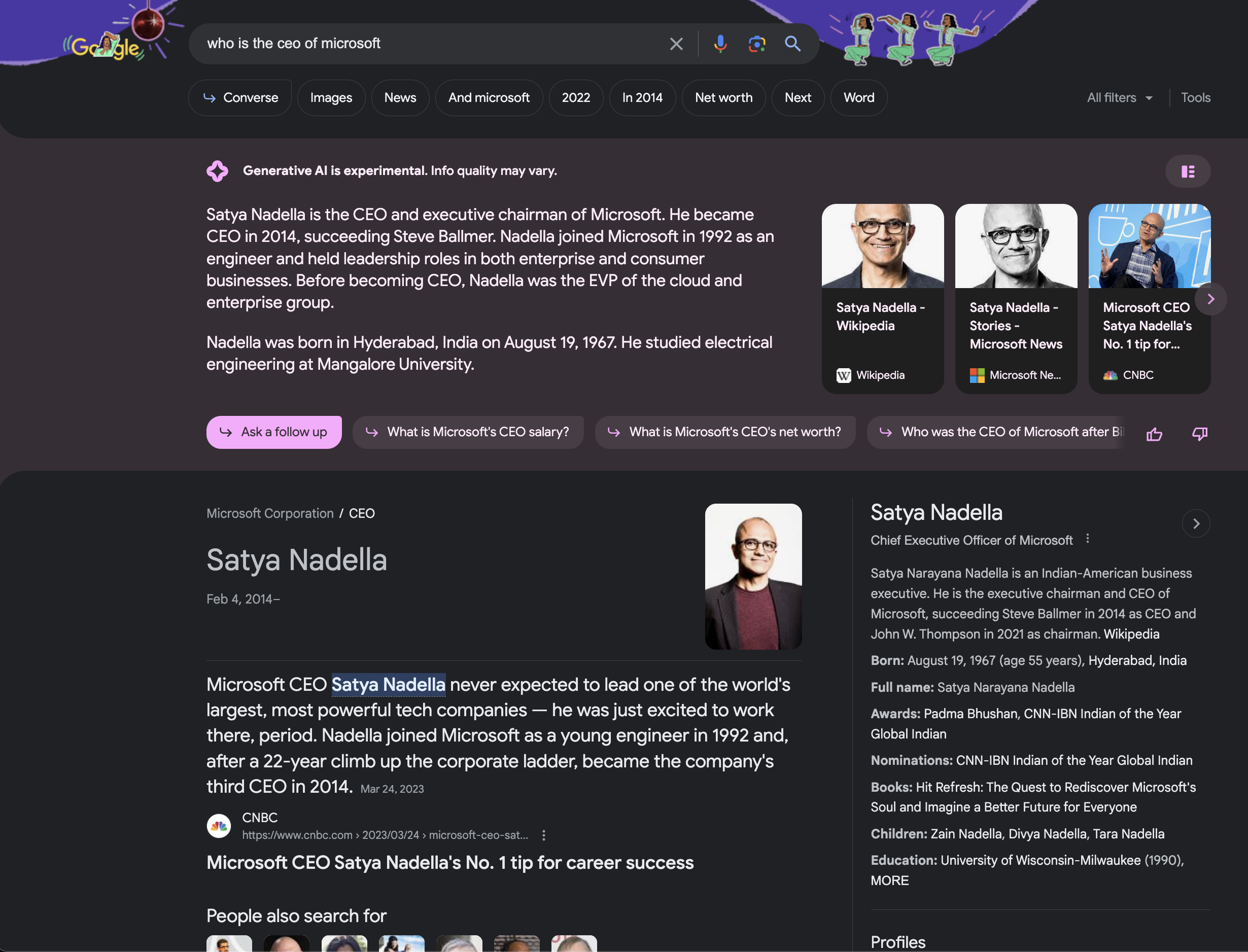
When I first accessed Google SGE, most of its answers were mostly linked to publisher websites. Now, some responses I received include links to official/branded resources.
For example, this Google Search Console search included a Google Support feed.
 Screenshot from Google, June 2023
When I asked about the biggest announcements from WWDC 2023, the AI overview included a link to the Apple Vision Pro page.
 Screenshot from Google, June 2023
I bought a robotic vacuum cleaner. The sources included links to two retailers and one manufacturer.
 Screenshot from Google, June 2023
Finally, I checked who the CEO of Microsoft was. Two links included in the response were links to news from Microsoft about Satya Nadella.
 Screenshot from Google, June 2023
More social networks appeared in the sources
In addition to including relevant brand websites in SGE responses, I noticed more results on social media.
For example, I asked about the current pricing of Twitter API v2. One source of response was a tweet.
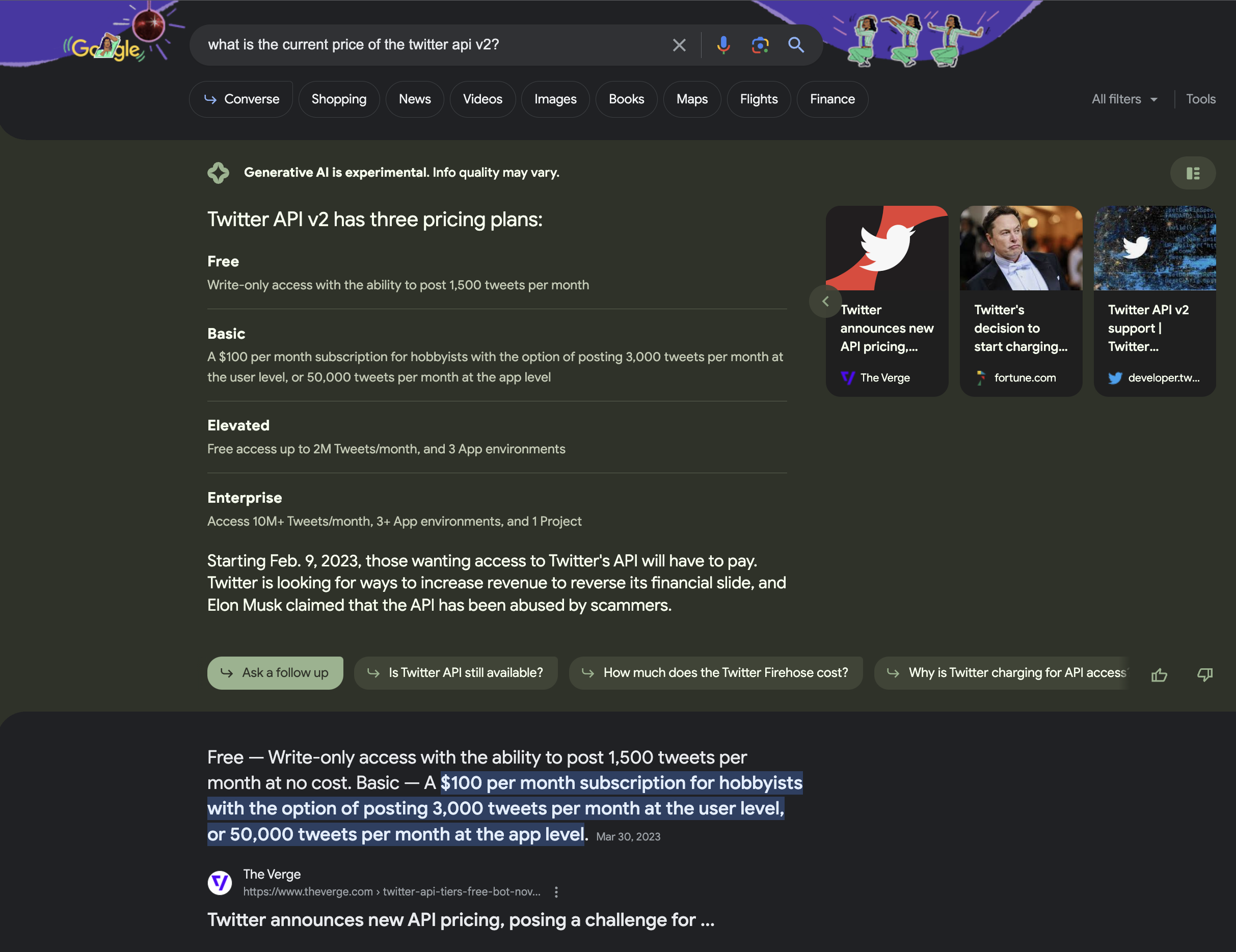 Screenshot from Google, June 2023
I wanted to find out who the CTO of OpenAI was. The response included Mira Murati’s LinkedIn profile.
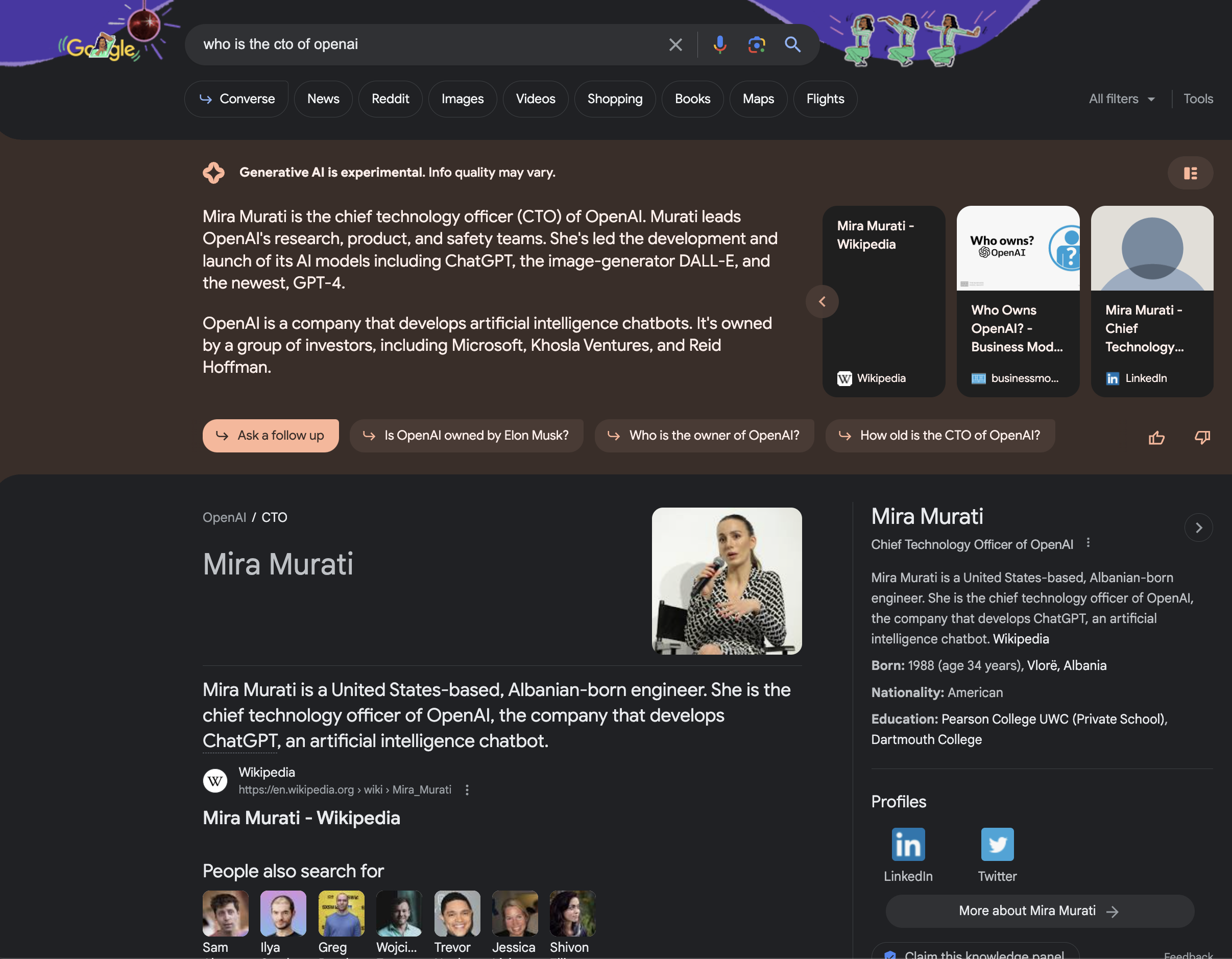 Screenshot from Google, June 2023
I checked to see if Best Buy had customer support on social media. Sources included Best Buy’s Twitter and Instagram profiles.
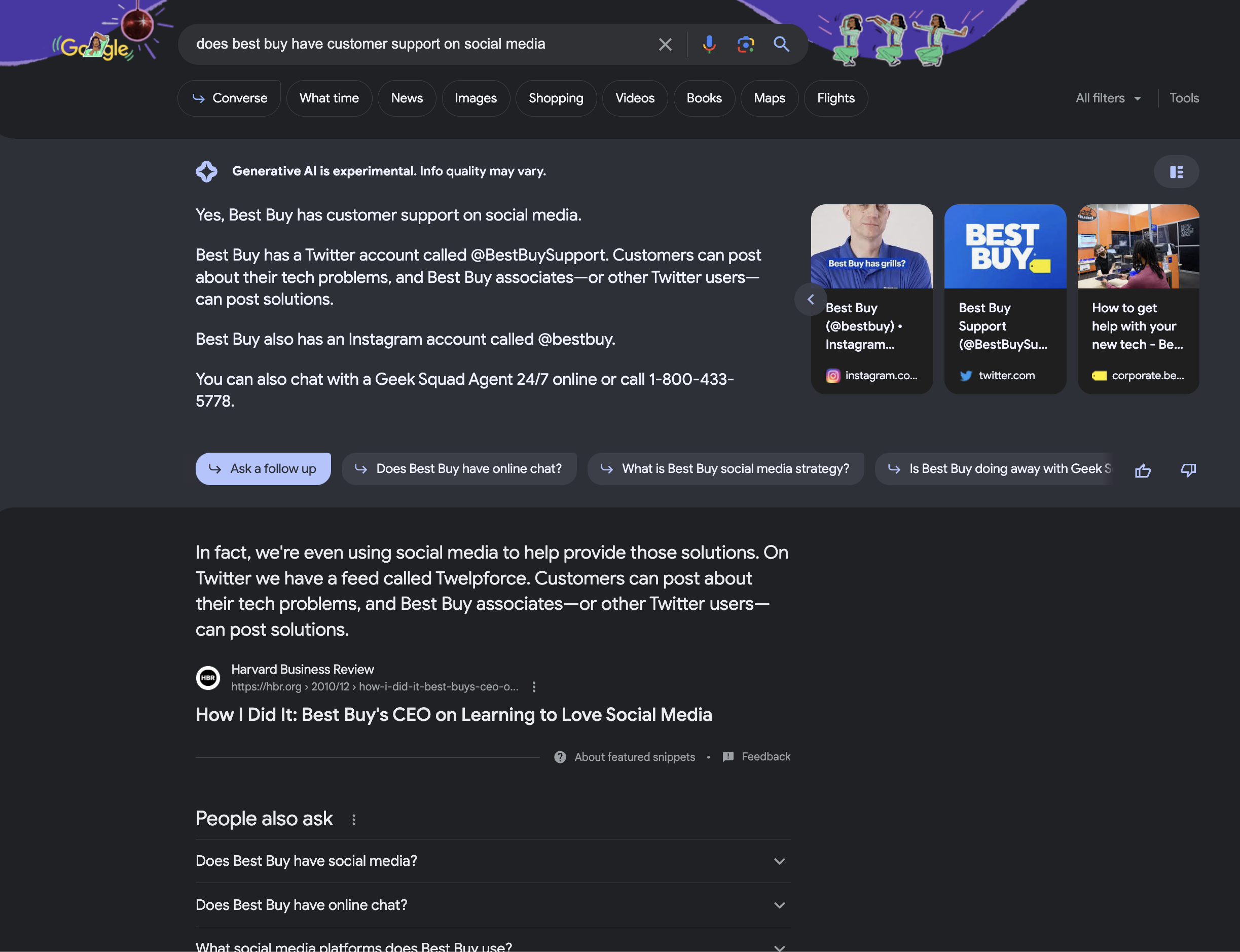 Screenshot from Google, June 2023
The speed was almost the same
Unfortunately, I didn’t notice a significant difference in speed compared to the last time I tried SGE.
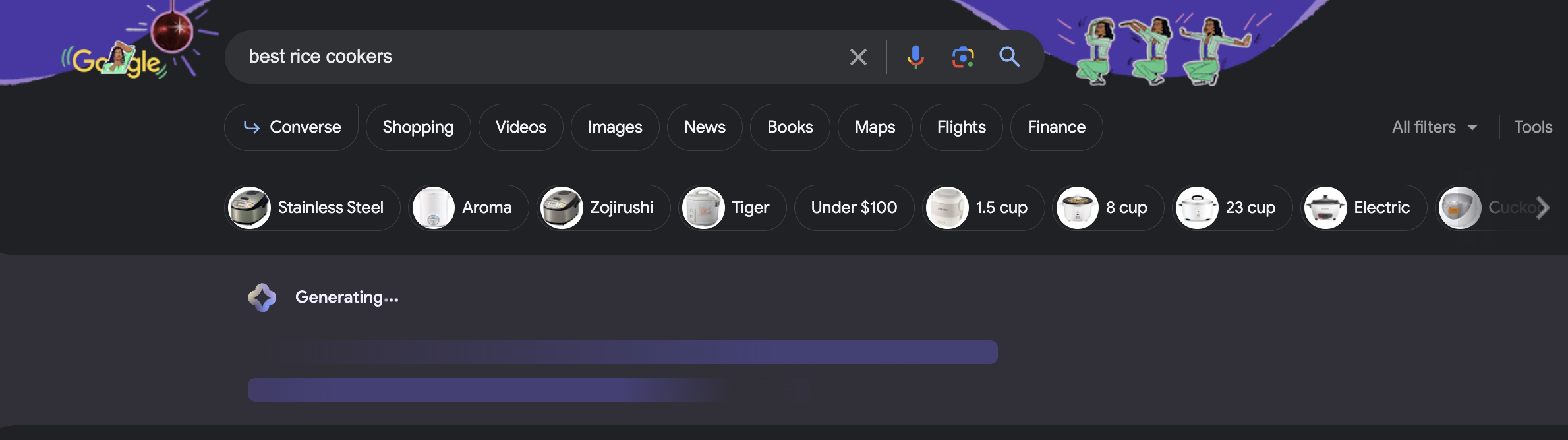 Screenshot from Google, June 2023
In general, Google SGE was quick to respond, even if there were odd questions it couldn’t answer.
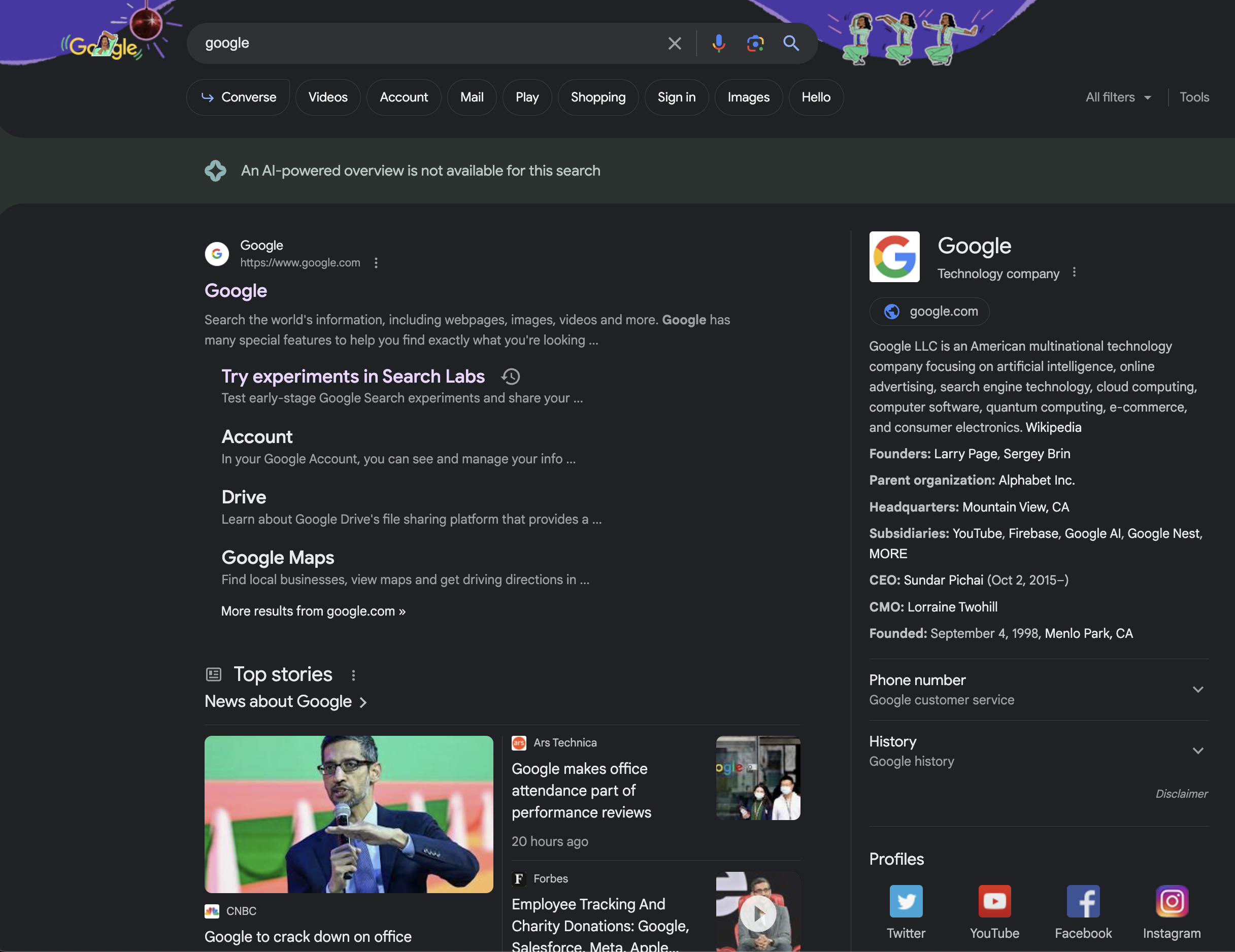 Screenshot from Google, June 2023
Google SGE continues to improve
Google’s Search Generative Experience (SGE) will continue to evolve, expanding the scope and diversity of its source materials and signaling a more generative future for search experiences.
The shift from relying primarily on publisher websites to including brand websites in search results provides users with a broader spectrum of information. It allows more direct access to information, helping consumers make better decisions.
The integration of social media as a source in SGE responses demonstrates Google’s recognition of the importance of these platforms in providing real-time user-generated data to provide more relevant responses.
Including sponsored results above SGE answers isn’t entirely a surprise, given Google’s continued emphasis on monetizing search results.
Despite these updates, the exact sources and expected speed improvements are not consistent across all searches, suggesting room for further optimization.
The future of Google SGE is one of continuous transformation, striving to make search experiences more global, engaging and faster.
However, it remains to be seen how these changes will affect the user experience in the long run and whether the search giant will continue to strike a balance between providing accurate results and maintaining a user-friendly experience.
Featured Image: PixieMe/Shutterstock
[ad_2]
Source link





