



07-27-2022 05:00
5:00
July 27, 2022
I am
Searches for information on Google began to increase immediately after Roe v. Wade was overruled.
In the four weeks since the Supreme Court’s Dobbs v. Jackson Women’s Health Organization ruling, searches for “medicated abortion pills” are up 70 percent; “abortion pills expire” are up 350 percent; “Amazon abortion pills” are up 80 percent. People Googling “states where abortion is illegal map” has increased by more than 1,050 percent in the past month.
As more people seek information about abortion access in a post-Roe world, anti-abortion organizations have an advantage because of their long-standing investment and expertise in the digital space. And as searches for abortion information grow, abortion clinics and other services are trying to get accurate information in front of people.
Crisis pregnancy centers, largely non-medical places that aim to dissuade people from having abortions, have been very effective at getting abortion seekers into their doors, partly billing themselves as medical clinics, although they often have little or no medical staff. Many offer free ultrasounds, but then present pregnant women with misleading or completely false information.
Crisis pregnancy centers they have invested heavily in Google Ads, a service that allows businesses to pay to appear at the top of sponsored search results. Their parent organizations often outsource Anti-abortion specialist digital marketing agencies or deploy their own staff to ensure it searches for terms related to abortion will surface their content.
Emily Loen co-founded the Abortion Access Hackathon, a group that uses technology to help improve reproductive justice, five years ago while doing educational work at an abortion clinic in California. The group now works with a coalition of partners, including the Access to abortionand has created #ExposeFakeClinics, a movement to leave honest reviews of crisis pregnancy focuses on Yelp, Facebook, and Google, documenting what services are actually there and aren’t. Because of the work of grassroots digital activists like Loen, Yelp no longer classifies centers as medical clinics, and Google uses a small banner at the bottom of any search result that uses “abortion” as a keyword to indicate if this business actually provides abortions.
“Google is doing some of the heavy lifting now that activists have done for years,” Loen told The 19th. “It doesn’t solve the problem, but it adds a level of protection and awareness.”
A recent Abortion Access Front project Loen worked on involved using volunteers to click on the website of Plan C, a company that provides information on how people in the United States can access abortion pills online. Organic traffic can help increase a site’s search engine optimization (SEO) ranking. At the time of writing, the top search result for “abortion pills online” is Plan C. It’s the first time this has happened at the six-year-old company, and it’s no accident.
Amy Merrill, Plan C’s co-founder and chief digital officer, told The 19th that one reason is that after Roe, the group is “paying a lot more attention to the ecosystem” — keywords, how people use the search They are also making heavy investments in Google’s informational ads.
“We’re actively thinking about the future of search and what people are looking for and how tools like Google will respond or iterate as well,” Merrill said. She added that there has already been a documented shift in search trends away from things like “abortion clinic near me” to “medical abortion” and “abortion management.”
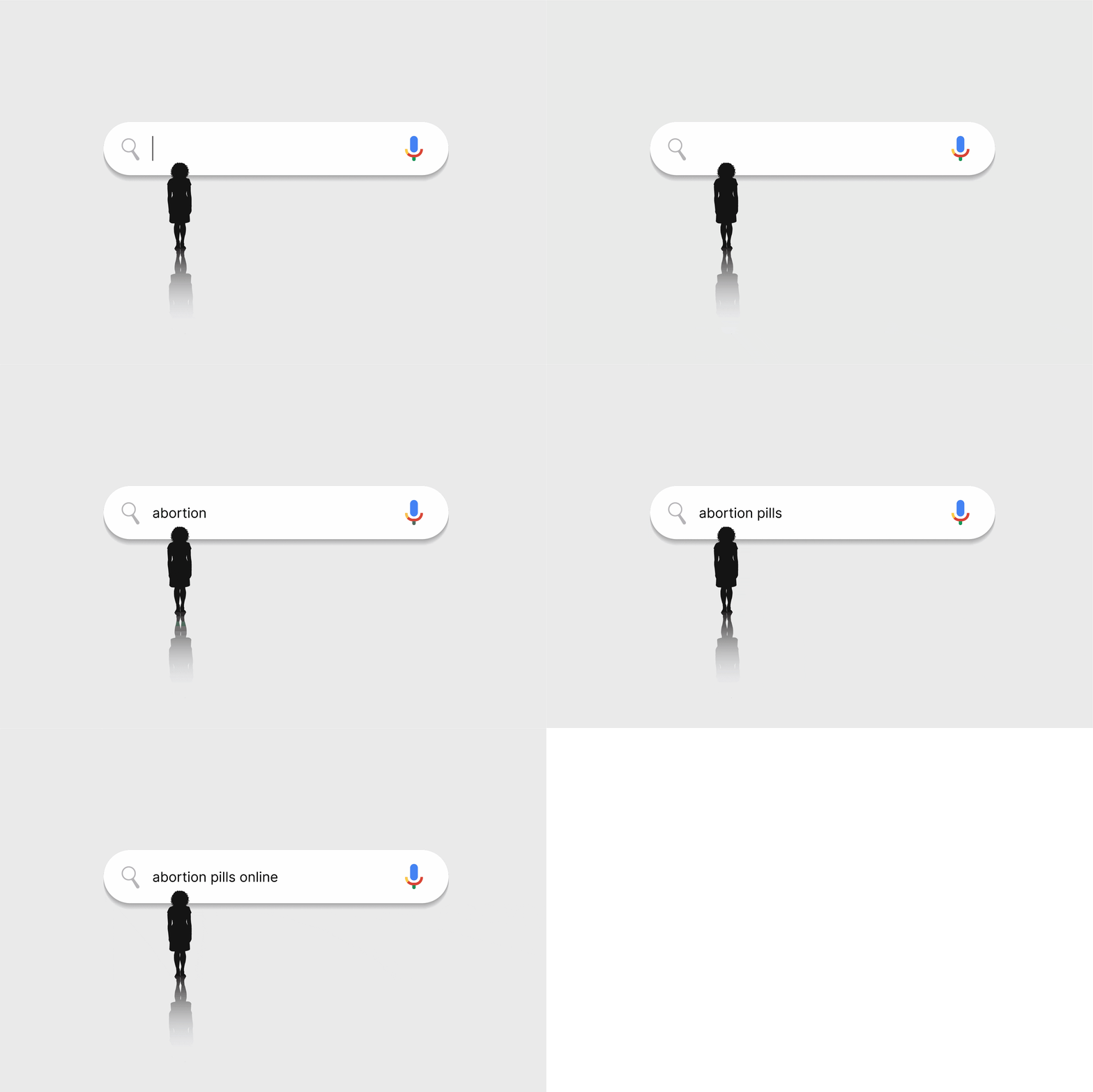 (Clarice Bajkowski for The 19th)
Power to decidethe campaign to prevent unplanned pregnancy, launched his AbortionFinder.org recourse two years ago. Lauren Kernan, the company’s director of content and UX strategy, said that because of the newness of their site, it’s already an uphill battle in terms of SEO.
“We don’t have the same established site authority as other big name sites in the space, and we’ve had to expand our search equity over time with search engines like Google,” he said.
Kernan said AbortionFinder.org’s social accounts were also frequently reported on host platforms, causing those accounts to “go dark for a period of time” while they are being reviewed, reducing even more so their ability to find them easily online.
“When a social account is disabled or temporarily disabled, links to AbortionFinder.org also disappear. This drop in backlinks can also cause our SEO rankings to drop, because backlinks are one of the ranking factors most important when searching.”
Another complicating factor is that the way people consume information doesn’t always go hand-in-hand with content that prioritizes SEO, Kernan said. “Long-form content traditionally ranks better in search engines, but users looking for information about abortion can be stressed and overwhelmed, looking for short, simple, clear information that is easy to scan. Long-form content is not the right one for these users.”
In the days following Dobbs’ ruling, Facebook’s parent company Meta faced criticism removing posts made by individual users about accessing medication abortion online both Facebook and Instagram. A Meta spokesperson told The 19th that the company wants its “platforms to be a place where people can access reliable information about health services.”
While Meta’s spokesperson says the company allows posts and ads that promote health services like abortion, as well as discussions and debates around then, “all content about abortion, regardless of perspective policy, must follow our rules,” including regulations on prescription drug content. Although Meta allows discussion related to mifepristone and misoprostol, including making search results available to users for tags using those terms, the company restricts “search terms for mifepristone and misoprostol to our commercial products to prevent abuse”. The company also continues to “prohibit the direct sale of prescription drugs [like misoprostol and mifepristone] anywhere on Meta’s platforms.”
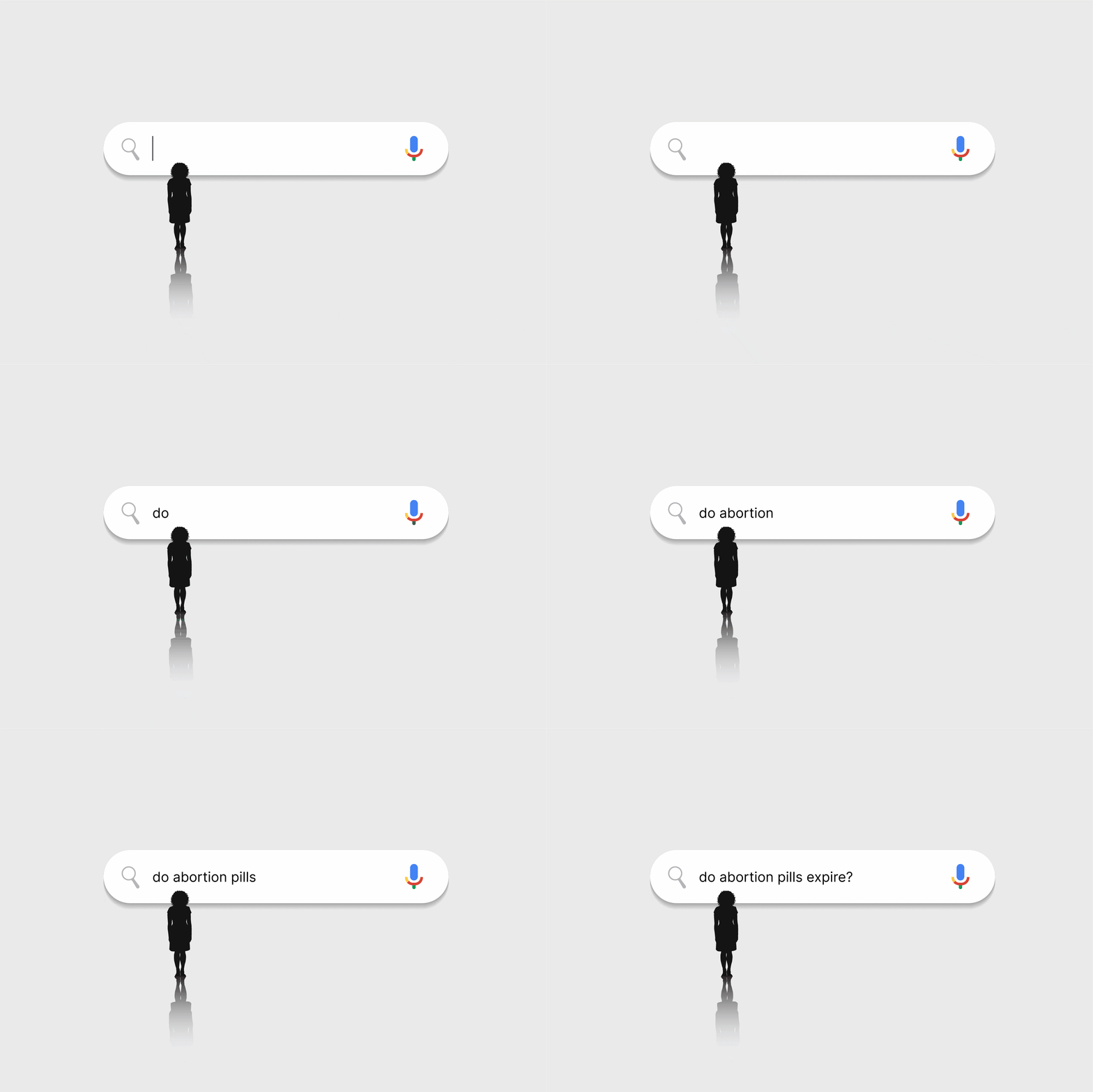 (Clarice Bajkowski for The 19th)
Jessica Ensley, director of digital outreach and opposition research at reproductive justice group ReproAction, told The 19th that her organization has seen “a huge boost in engagement across platforms and through organic search” after Dobbs. Traffic has increased especially to the organization’s pages related to self-administered abortion resources and his Fake clinic database, a resource the group constantly updates to track crisis pregnancy center locations. The group’s focus on SEO is greater than ever.
“We want people to easily access our resources by searching when they’re looking for content about abortion, abortion pills, drugs, fake clinics – we want people to have access to that information on our site and we’re seeing a huge increase in searches for those terms now that Roe has fallen.”
As more and more people look for information to check whether a clinic really offers an abortion or is a crisis pregnancy, Ensley said resources like ReproAction’s fake clinic database need to be methodical about language. that they use to describe these sites to optimize them. Search Results.
Kernan also talked about the challenge between what people need to find and the search terms being used. “Some best practices in terms of SEO are not always the best for user experience or user understanding. So sometimes SEO and user experience may require different headers, keywords and/or content,” Kernan said. “For example, the most searched term for users looking for abortions is ‘abortion clinic near me.’ But not all abortion providers are [physical] clinics, such as telehealth providers, that we really want our users to know and understand.”
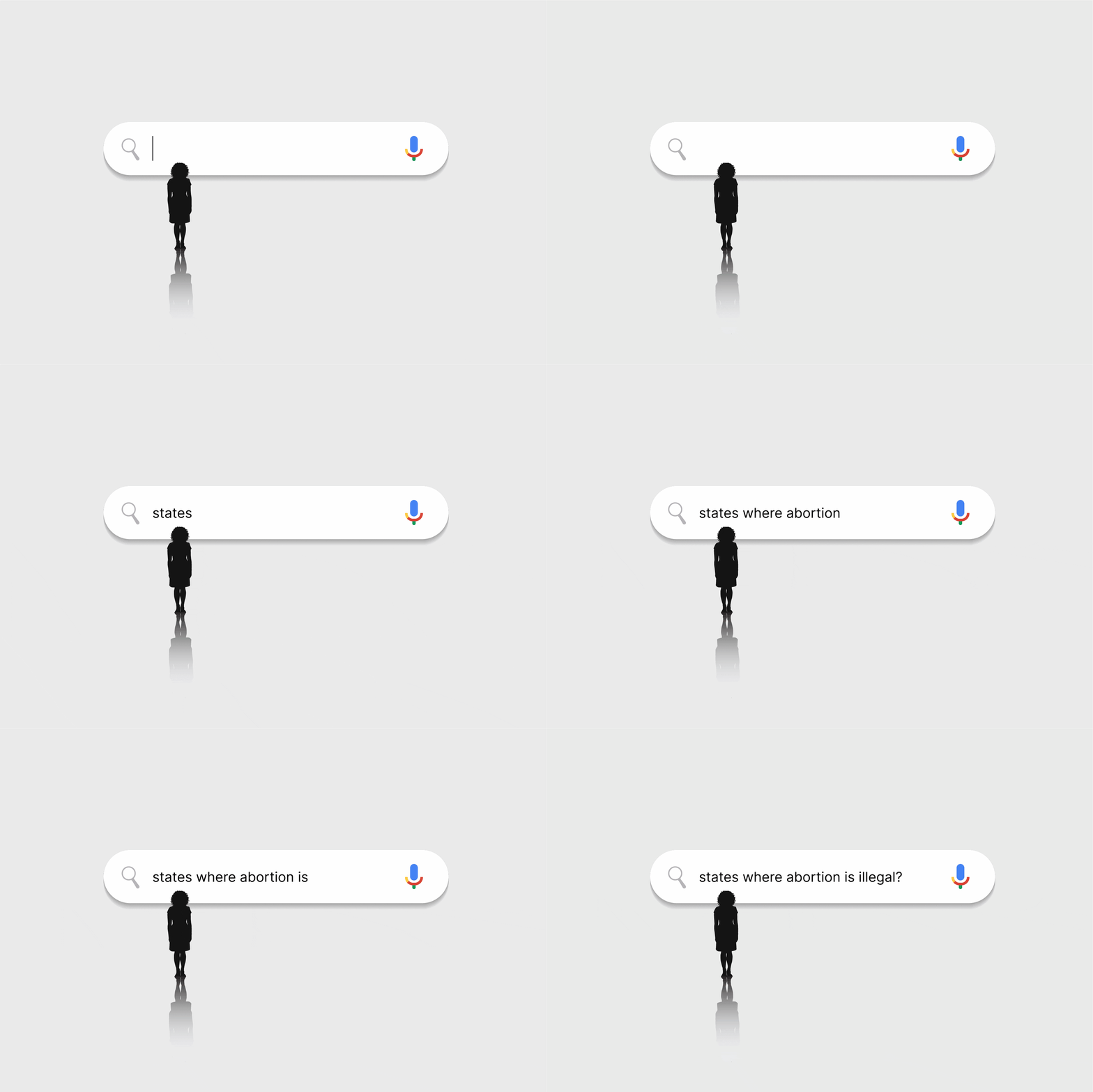 (Clarice Bajkowski for The 19th)
In addition to looking for where to get abortion care, Kernan said many people are looking to see if abortion is legal in their state right now. These types of searches often lead people to Abortion Finder’s state-by-state guide, which provides up-to-date information on the legality and accessibility of abortion in each state, along with the support options that can be available to abortion seekers. . These guides are optimized to address user inquiries involving state-specific requirements and barriers.
Two days after the Dobbs decision, the anti-abortion group drafted the National Right to Life Committee model legislation this would criminalize those who help people self-manage abortion, even by providing them with information online. “I hope the National Right to Life Committee and other anti-choice politicians and activists will [attempt] to criminalize factual information about abortion that is shared online or digitally,” Ensley said. “It’s going to be an uphill battle, but we’re not going to stop because it’s not only our First Amendment right, it’s the right of everyone to have the information they need to take better care of their health. .”
[ad_2]
Source link





