


Google has updated its structured data guidelines to reflect support for a site-wide return policy within the organization’s structured data. This eliminates the need to add redundant return policy information for all structured product listing data and can drive more traffic and sales to online merchants.
This does not mean that traders need to change their current structured data, the old method remains unchanged. This simply adds an alternative form that is more simplified and reduces the size of the product’s structured data.
Improved brand knowledge panel
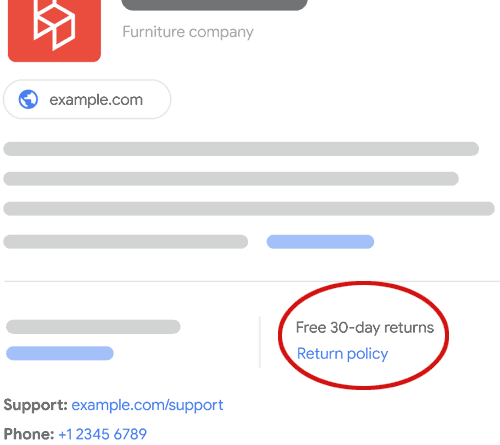
Google’s change to structured organization data will be reflected in the brand dashboard that Google displays when someone searches for a brand name. The updated brand dashboard will include a new entry that reflects the company’s return policy.
Screenshot of the Brand Awareness panel example
Advantages of the return policy at the organization level
As part of this change, Google is adding search features to Knowledge Panels and Brand Panels that can display a merchant’s return policies. This means that a merchant’s search function will be eligible to display a return policy, which in turn can encourage a higher click-through rate from search engine results pages (SERPs) and a higher rate of higher conversions.
Research conducted by the International Council of Shopping Centers (ICSC) in 2024 shows that online shoppers are highly influenced by a retailer’s return policy.
They uncovered:
“82% of respondents said that when shopping online, return policies influence whether they decide to buy from a retailer.
… If retailers charged a fee to ship purchases made online, nearly three-quarters (71%) of respondents said they would likely stop buying online from that company, while 6 in 10 said they would likely stop of shopping online with retailers. this shortened the free return window.”
It’s clear that a return policy can be a way to drive more sales online, and with Google’s new support for a site-wide return policy, structured data helps communicate this information to online shoppers right from the search
Google’s ad explained:
“A return policy is an important factor that shoppers consider when purchasing products online, so last year we enabled the extraction of structured data return policies for individual products. Today we’re also adding support for organization-level return policies, which means you’ll be able to specify a general return policy for your company instead of having to define one for each individual product you sell.
Adding a return policy to your organization’s structured data is especially important if you don’t have a Merchant Center account and want to be able to provide a return policy for your business. Merchant Center already allows you to provide a return policy for your business, so if you have a Merchant Center account, we recommend that you define your return policy there.
…If your site is an online or local business, we recommend using one of the OnlineStore or LocalBusiness organization subtypes.
We hope this addition will make it easier for you to add return policies for your business and allow them to be displayed in Google shopping experiences.”
Google updates the organization’s structured data documentation
Google has added a new section to the organization’s structured data documentation to reflect support for this new way of displaying return policies in search results.
The new documentation says:
“Merchant’s Return Policy
Use the following properties to describe the general return policies for your entire organization, if applicable to your company. If you have specific policies for individual products, use the merchant listing tagging.”
Read Google’s announcement:
Add flagging support for organization-level return policies
Read the new MerchantReturnPolicy documentation on the official Google Organization Structured Data page:
Organization Structured Data (Organization) – MerchantReturnPolicy
[ad_2]
Source link





