


As is the case with B2B keyword research and other niche-specific SEO activities, home services SEO has both:
Specific nuances of the home services niche. Elements that apply universally to SEO and local SEO.
This article addresses general SEO best practices and tactics that are uniquely effective for home service providers.
SEO Best Practices for Home Service Providers
When doing SEO for a home services company, you want to focus on a few key areas at a high level:
There are many general local SEO best practices that will apply to any home services niche, including:
Dig Deeper: The hierarchy of SEO needs for local businesses on a budget
Let’s examine some more specific (and often underutilized) tactics that home service businesses can use.
1. Cost pages
A tactic often used for local SEO is to create city + service pages that target your main service.
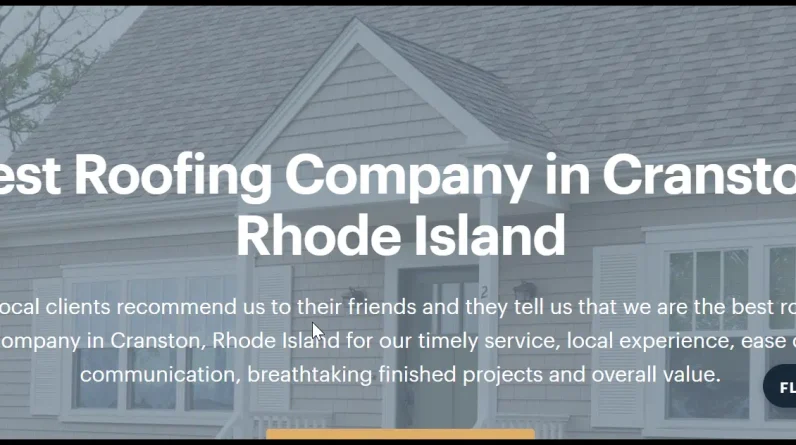
So a roofing company based in Providence, RI would create pages for cities surrounding Providence, targeting terms like Cranston, Rhode Island or Seekonk, Mass.
This is a great tactic for home service businesses, but a little less common is to create “cost” pages that break down the costs of your specific service overall and by region, even over time.
These pages do a few different things:
Help educate potential customers (if they are geo-specific, then potential buyers in your market). Reach potential customers deep into the buying process. Attract passive links from sites looking to quote cost data. Generate relevant traffic frequently.
You can create these pages with your own data related to your service and create detailed cost charts:
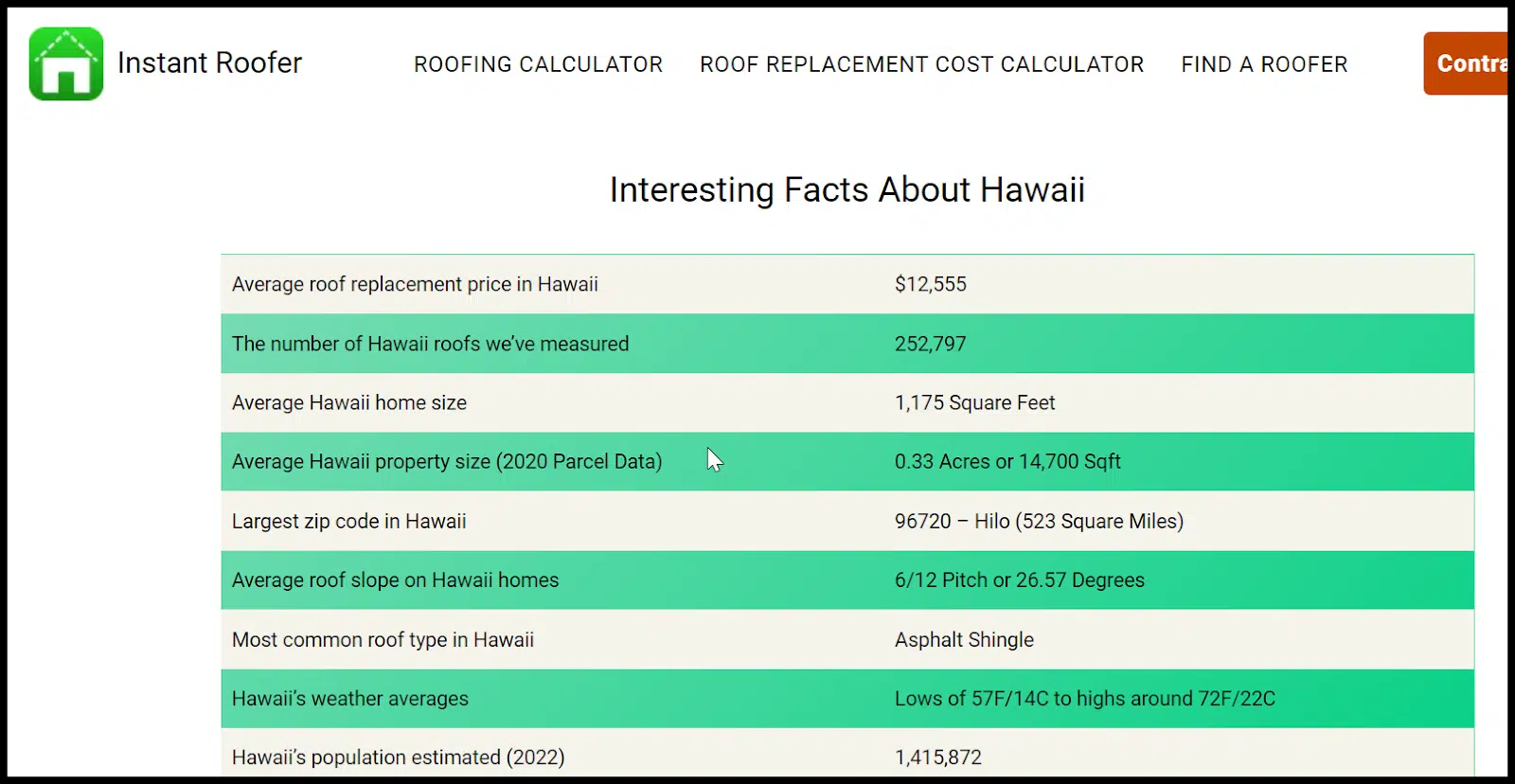
It also includes information such as:
Financing (especially if you or a partner offers financing). Factors that affect cost (materials, common problems that create a larger service, labor, and demand in a specific area). Buying guide style “questions to ask” about the cost of a specific service.
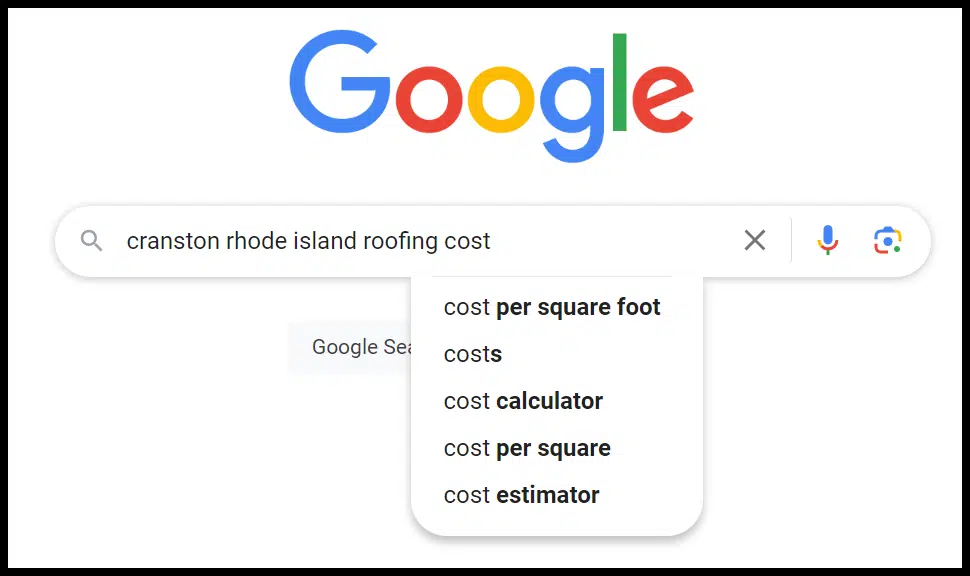
Find some of the most common cost-related modifiers in your niche to help you create page subsections:
Deeper: Localized SERPs: Gain traffic and leads with service area pages
2. Calculators
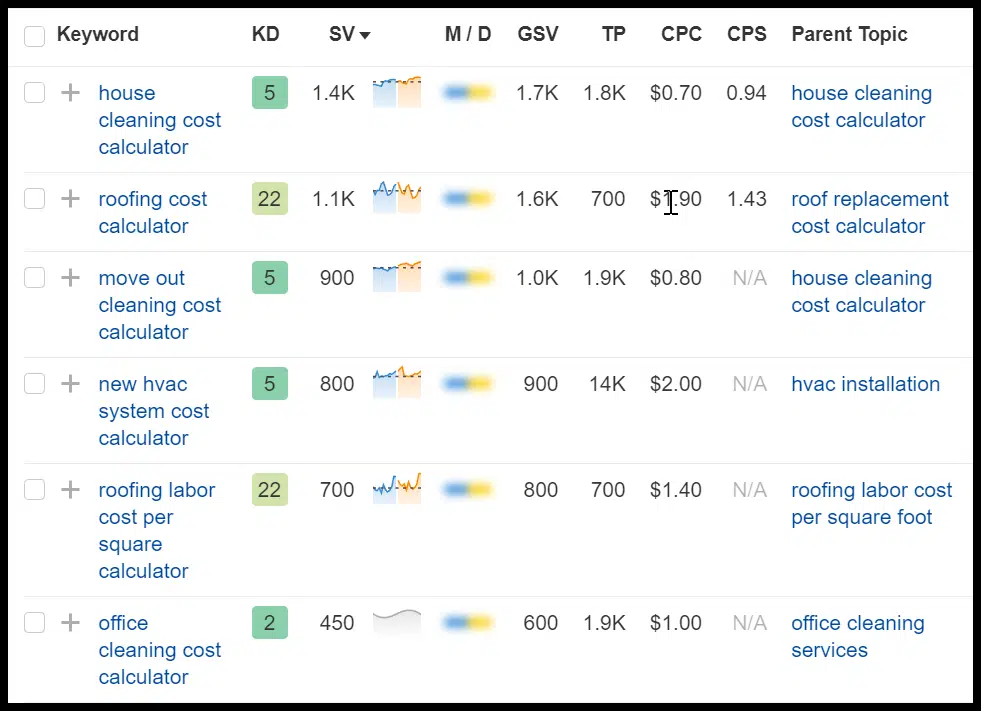
Creating a cost calculator is another way to capture cost and calculator related searches, increase engagement on your site and build domain links.
If you’re not sure how to design your cost calculator, you can use an AI tool like ChatGPT to help with your local SEO efforts:
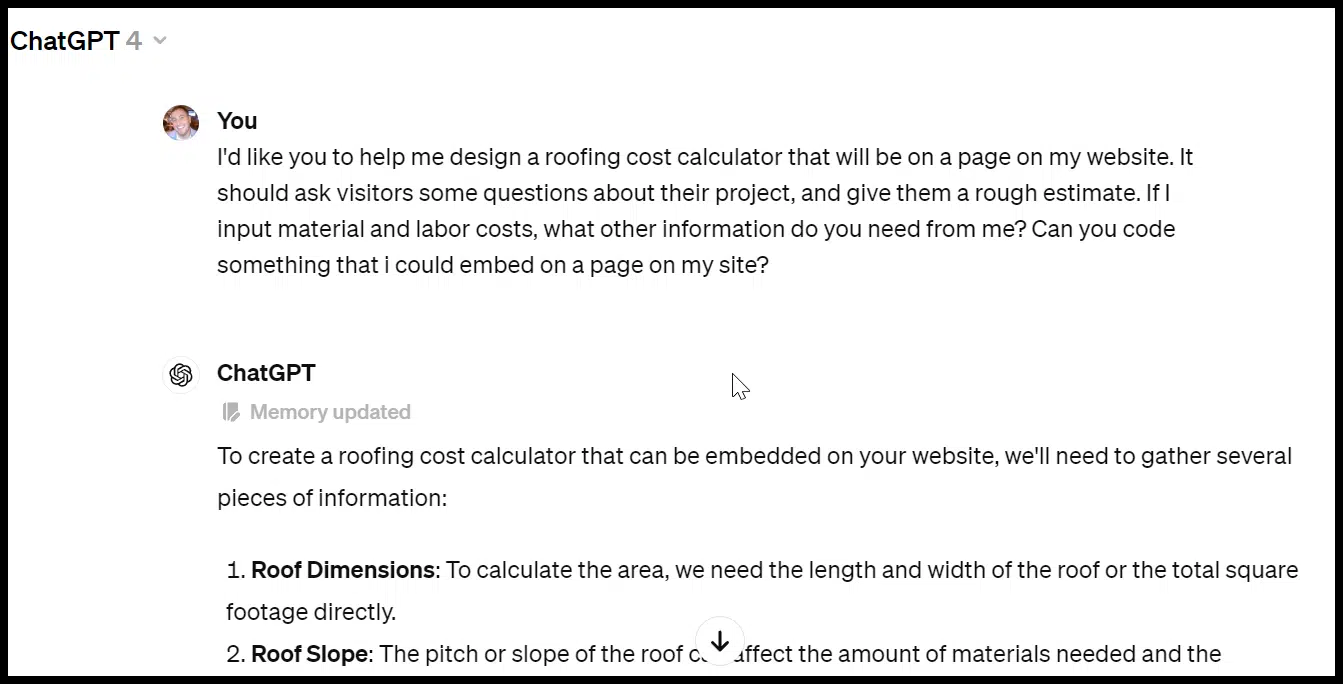
When creating your calculators, consider a few key elements:
Answer the questions your customers ask most often when it comes to the calculator you’re building. Being the most comprehensive calculator can be a way to stand out and generate links and shares. Cost is usually the most obvious calculator option, but there may be others, such as material calculators, tools to quickly determine measurements, and value calculators (eg, how much a potential customer will save with plates plots). Make the calculator fast loading and easy to use.
3. “Best of” lists.
Your site’s home page and location and service pages may rank well for queries like {Location} + {Service}. Here’s a result for Nashville Roofers:
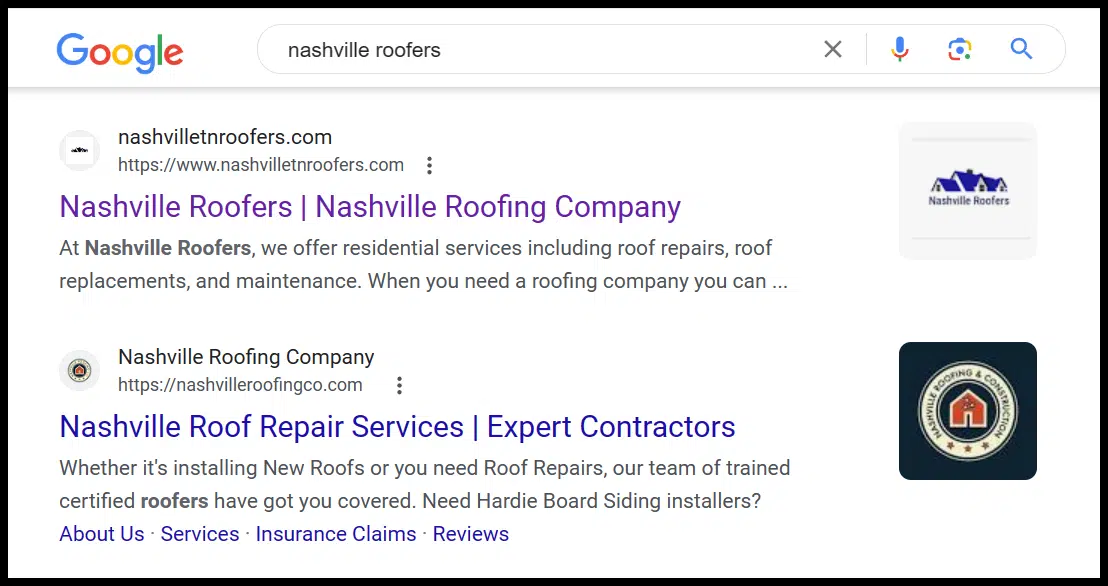
In the same market with the same players, a “best of” query (which in many markets will only show listings on third-party sites like Angi) has a roofing company site ranked #1 among companies of Nashville Competitive Roofing:
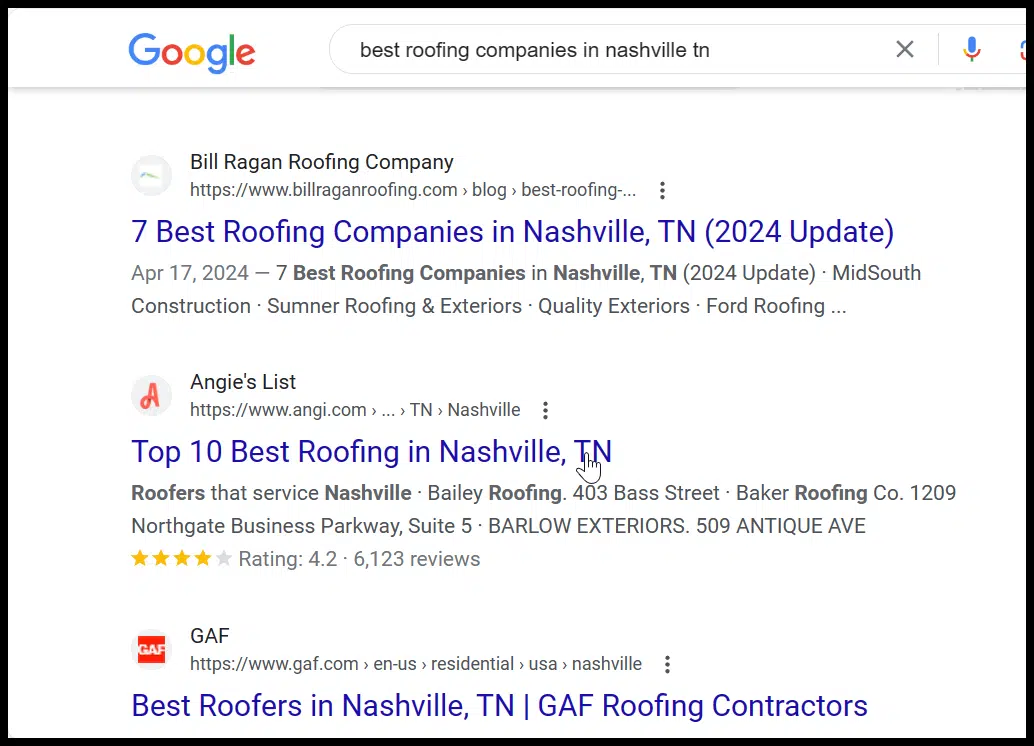
Many companies don’t want to talk about competitors. Still, if you’re willing to be unbiased and honest and highlight your own points of differentiation, this can be another way to rank well in competitive markets.
Get the daily search newsletter marketers trust.
4. Relevant topical information content
Building deep subject authority around your core competencies with informative content is valuable in the home services niche (as it is in other niches).
As a service provider, you have two key advantages to creating this type of content:
As you build local citations and update your NAP information between providers, you’re seen as a service provider, not a “skinny affiliate site.” You have a great experience today! As an owner, you may not have time to create content yourself, but there are many ways to add your expertise to the content your team or a third party helps create.
This content then supports your lower funnel service + city/town pages, gives you content to share through social channels, often creates passive links and generates traffic that you can feed into a remarketing audience for paid channels .
5. Building local links
Links are still a cornerstone of any SEO strategy, even one that focuses heavily on the local level.
The good news for home service businesses is that in many locally focused SERPs there is much less competition than in some national query spaces.
Traditional link building tactics like guest posting, niche edits, and digital PR are all used by home service businesses, and they still work to varying degrees when executed correctly.
Some of the unique opportunities available to locally focused home service businesses involve focusing efforts on:
The founder of the company. The main cities where the company is located. Suppliers and partners of the company.
If you have a small business, you can work on building a profile on sites like your alma mater or hometown to get links back from those sites.
You can also ask vendors and partners for links from their site/partner pages, opportunities to guest post on their site, etc.
Local links from businesses, event websites, and publications related to your business’s area and goals are also incredibly valuable.
Again, the positive here is that many of your competitors will have relatively low link counts, so adding just a handful of new links per month will allow you to quickly gain traction in local SEO markets.
6. Optimization of text on the page and anchor
In general, on-page SEO best practices for home service businesses are largely similar to general SEO best practices. You want to optimize meta titles, create smart internal links, and mark up content when necessary.
A potential problem I’ve seen in local SEO in general and specifically in the home services niche is the use of aggressive anchor text and what some call “over-optimization” (which is a bit of a misnomer, but basically means tap the target keyword and close it). too aggressive variations).
Small businesses often don’t have a lot of money to pay for SEO and get more junior SEOs working on their accounts.
Some professionals have a tendency to flag keyword usage or close keyword modifiers on the page, which can seem spammy and manipulative, like the kind of low-quality AI that Google is trying to combat with recent updates to algorithms
Here are a number of headlines on the same page from a site geared toward Providence roofing terms:
“Providence, RI Roofing Contractors That Get The Job Done Right” “Residential Roofing in Providence, RI” “Providence Trusted Roof Replacement Services” “Problems Our Roofing Contractors Solve with Residential Roofing Services in Providence” “Why hire our professional roofer in Providence?” “Leading Residential and Commercial Roofing Services in Providence, RI”
Just wait. Where are these roofing services located again?
The anchor text of external links can be subject to a similar problem. If you are a home services business, make sure you understand where your SEO provider is getting their links from.
If they use tactics like guest posts and niche edits where they control the anchor text, make sure they are deliberate about the terms they use to link to your site.
Let’s say you’re targeting “Providence Roofing Company” and you’re cramming close variations of the phrase on your home page and key landing pages, marking that phrase as the anchor text for your external links and using that text aggressively on internal links. In this case, you are very likely to run into problems (even if this approach works initially).
Home service inquiries can be extremely valuable, and businesses that leverage a combination of general and local SEO best practices, along with some of the niche-specific tactics outlined here, can create a tremendously profitable (and scalable) channel. for your business.
Dig Deeper: How to extract GBP review information to increase local SEO visibility
Contributing authors are invited to create content for Search Engine Land and are chosen for their expertise and contribution to the search community. Our contributors work under editorial supervision, and contributions are checked for quality and relevance to our readers. The opinions they express are their own.
[ad_2]
Source link





