


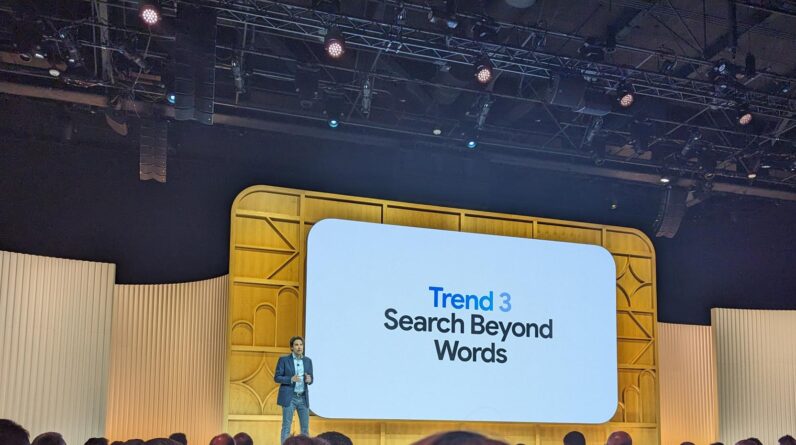
After ten years of watching Google Marketing Live virtually from my computer, this year I had the opportunity to attend the event in person.
If you’re not familiar with it, Google Marketing Live is an annual event hosted by Google that showcases its top product announcements for Google advertisers.
This year, Google has introduced 30 product updates for Google Ads. While not all were mentioned during the conference call, there was one central theme of the updates:
AI
Most product updates can be categorized into these main components of Google Ads:
creative
Media
measurement
Now that the event is over, I’ve had time to digest these platform announcements and really think about how to use them as an advertiser, or at the very least, what these updates might mean in the larger realm of marketing.
Below are my top product updates I’m most looking forward to in 2024.
AI creative ads
As expected, Google announced several updates specifically around ad creatives and functionality for advertisers. This includes:
Image editing with artificial intelligence. Advertisers can edit images (including product feed). AI-generated images will appear in recommendations for top-performing campaigns. Add and remove objects, stretch backgrounds, and resize images to fit many sizes, orientations, and aspect ratios.
New brand standard guidelines. Advertisers can provide Google AI with branding, color and font guidelines. The option to upload sample images as a reference point for generative AI will also be available.
Animated image ads for demand generation campaigns. If you have a Merchant Center account, you can run animated image ads on YouTube shorts and video ads. Animated images will be automatically generated from the images in your product feed.
Integrations with creative platforms. Google now has partnerships with Canva, Smartly, and Pencil Pro to integrate into the Google Ads resource library. This means you can create assets on these platforms and export them to Google Ads.
In terms of timing, not everything advertised is available immediately.
According to Google, the new brand standard guidelines will be rolled out in the coming months.
AI media ads
During the live presentation, one of the most animated parts was Philipp Schindler’s demonstration of his generative AI technology.
It sparked the imagination about non-traditional ways of searching and interacting to find new information.
Photo taken by the author, May 2024
With this comes new advertising space available to advertisers.
Some of the key Google Ads media ads include:
Shopping ads will show in Google Lens and Circle to Search. This is a new advertising space and experience in visual search results. Your shopping ad will show products when they’re relevant to the photos and screenshots users search with.
Search and shopping ads will appear in AI overviews. Another new location has been unlocked, now in the United States. Ads from existing AI-powered Search and Top Performance campaigns may be shown in the “Sponsored” section of the AI Overview when they are relevant to both user search and search results the AI Overview.
Creating conversational campaigns. Although this was announced last year, Google released more data showing that SMBs using the conversation tool are 63% more likely to run search campaigns with “Good” ad strength or “Excellent”.
New loyalty promotions. Advertisers running Maximum Performance and Shopping Standard campaigns will have a way to tailor promotions such as special pricing or exclusive members-only offers.
Just like creative ads, not all are posted immediately.
Shopping ads and loyalty promotions will be running in the coming months in visual search results.
By now, we’ve probably all heard some shocking departures from AI overviews. Google is starting the rollout of this ad placement as a small experiment in the United States and will leverage its learnings from all inputs to deliver a better experience as it matures.
AI Measurement Ads
While I thought there would be more hype with improvements in measurement, there was only a brief comment about more detailed reporting on top performing campaigns.
A more robust scheme for measurement ads includes:
Asset level reporting in Performance Max. Over the next few months, you’ll be able to see conversion metrics for each creative resource. This is a huge win for advertisers after years of not being able to report at this level of detail.
Performance statistics in Merchant Center Next. More personalized recommendations and generated insights are coming to Merchant Center Next, along with conversational reporting requests, with more visual insights, faster.
New audience signals in app campaigns. Another big win for app advertisers! Advertisers can now link to a wide range of audience lists, including first-party data audiences. Google AI will learn from audience input to show ads to users most likely to convert.
New measurement diagnostic center. Advertisers can validate and troubleshoot any measurement settings in Google Ads. You’ll also see the durability and readiness of your measure in this hub to create and activate your own data audiences.
Attribution of marketing mix models. Google announced its new open source Marketing Mix Model (MMM), Meridian. It will help you measure the impact of your entire marketing strategy and make informed campaign decisions.
Better iOS measurement with SKAdNetwork enhancements. New reporting updates are available to the Google Ads API and third-party app attribution partners, and a new beta version is available to integrate your SKAdNetwork conversion value scheme into Google Ads. This will help improve iOS app campaigns using tCPA or tROAS bidding strategies.
Summary: What this means for advertisers
In the one hour and 15 minute presentation, we were presented with a wide variety of new updates. As you can see below, these updates affect many different campaign types and are either available today or coming in the coming months.
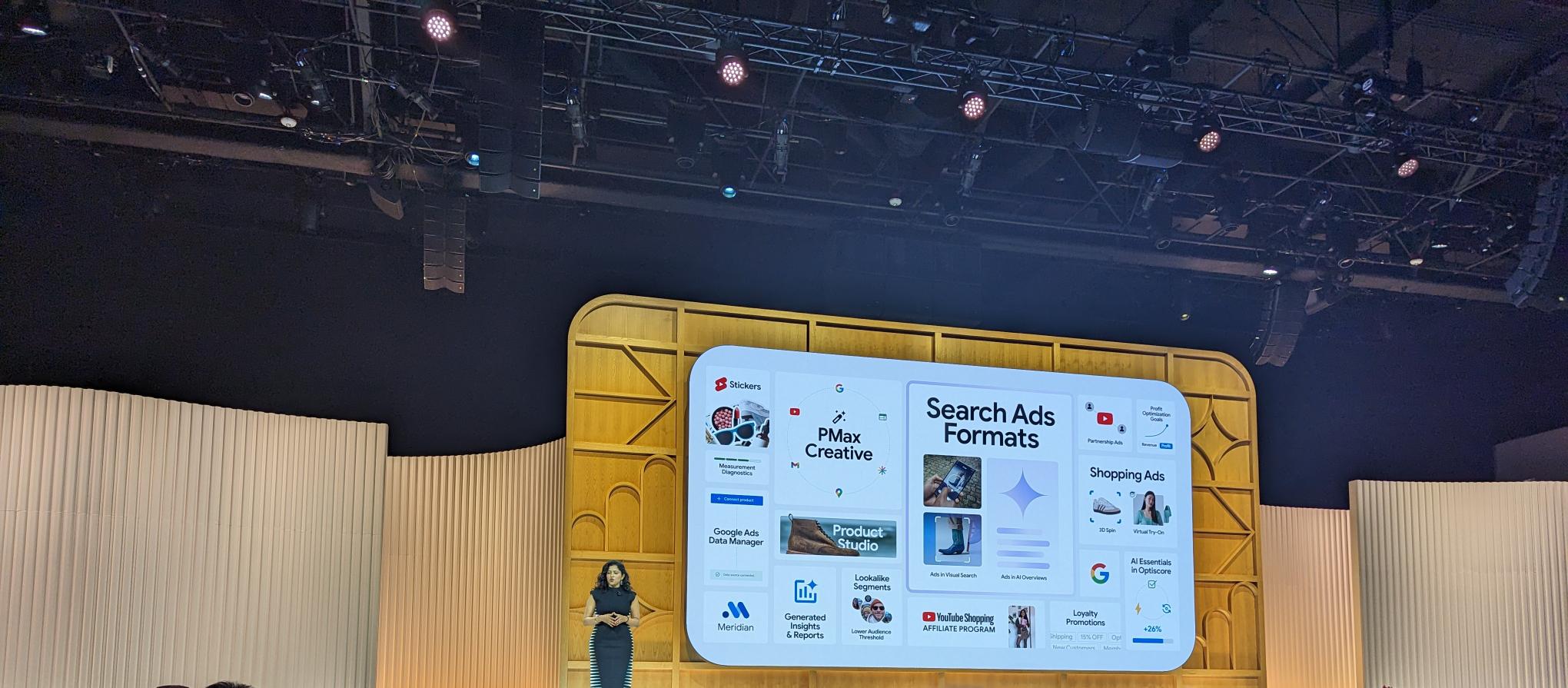 Photo taken by the author, May 2024
So with these updates, is there a bigger theme at play?
In the grand scheme of the Google Marketing Live updates, a few important themes stood out to me.
1. Video content is key.
Many updates to Google Marketing Live revolved around content creation, automation, and animation.
Basically, Google seems to be “all-in” on video content, specifically YouTube Shorts.
If you don’t incorporate video content into your marketing strategy, you may fall behind your competitors and see less engagement.
Some advertisers avoid video content because it seems tedious, too complicated, or under-resourced.
With Google’s updates, anyone can get started with video content from their phone. Google tools can convert images into video content.
Incorporating video into your Google Ads strategy can help you better connect with your target audience.
2. AI strategies are a must.
During the conference, Google said, “AI is not a vendor.”
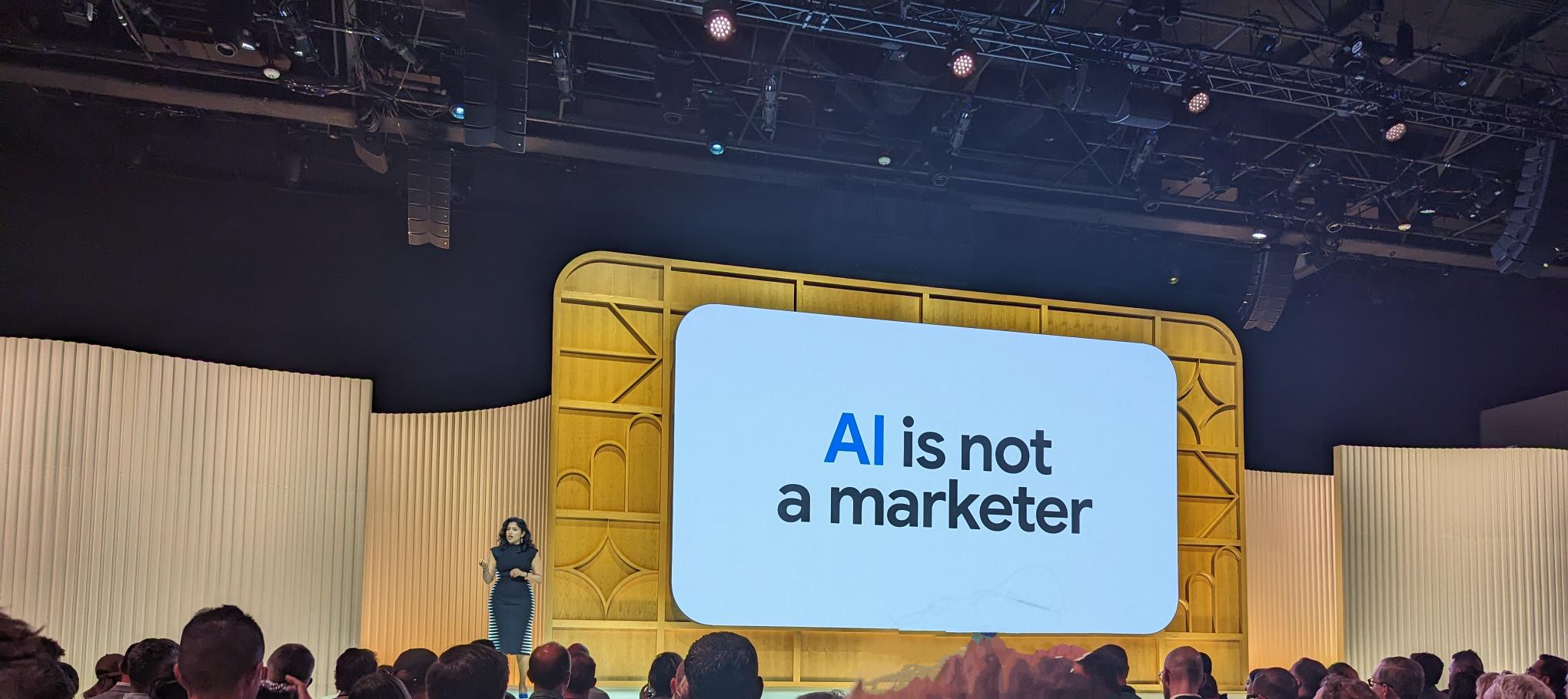 Photo taken by the author, May 2024.
Basically, your jobs are safe right now, advertisers.
So while AI is not a marketer, we as marketers need to have an AI strategy to keep up with these changes.
Trying to outsmart the Google Ads system or maintain too much control will prevent your campaigns from growing and scaling as needed.
To have a successful AI strategy, consider some of these main points:
Always make sure the target and measurement settings are correct. Set realistic bid strategies so Google can learn from these entries. Send the right signals to Google within your campaign settings.
AI outputs are usually only as good as the inputs it receives. This is where you, the seller, come in.
Used correctly and strategically, these new AI tools can help you scale your workload, learn faster, and make more real-time decisions to optimize your campaigns.
You can find the full summary of Google Ads product ads on the page official article from Google.
Featured Image: Veroniksha/Shutterstock
[ad_2]
Source link





