


If you’ve been following SEO trends for the past couple of years, you’ve probably heard the term “AI” more than enough times. While I’ll admit it’s getting a little repetitive, it’s not without good reason.
AI technology will shape the trajectory of almost every industry in the modern economy. Some industries are further along the adoption curve than others, but at some point, the world we see today will be woven seamlessly with AI.
With this imminent future in mind, it’s important to talk about how we use generative AI effectively.
My agency has dealt with clients on both ends of the AI spectrum. Some want to avoid it in their content production at all costs, while others think it can do it all for them.
Unfortunately, neither is true.
This begs the question, “How should we use AI for our SEO content production?”
Here are six principles to ensure you get the most out of technology while still producing effective, Google-friendly content.
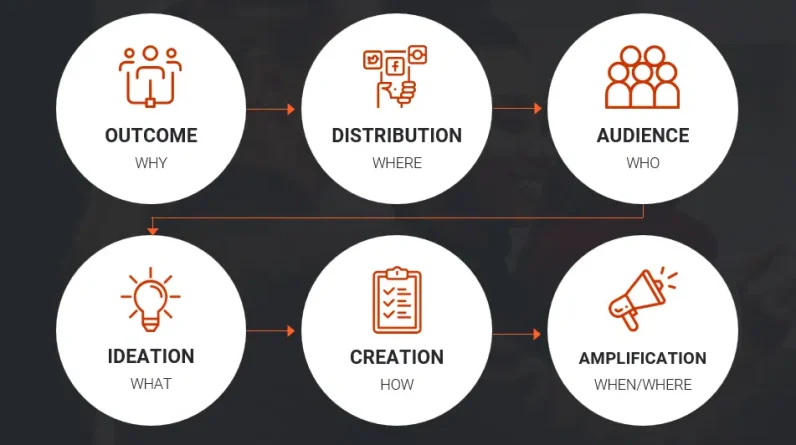
1. Know the desired outcome
Whether your content is AI or human-made, the creation process should always start with an understanding of why it’s being created.
I’ve come across a lot of useless content produced with no real end goal and no connection to a brand’s larger marketing goals.
With the rapid adoption of AI, the number of brands mass-producing useless content will increase. Some embrace the mantra of quantity over quality, using AI to produce greater volumes of content.
But more content isn’t always the answer if there’s no goal attached to that content.
Different forms of content have different goals, and each and every piece, whether AI-enhanced or not, should have a purpose and a supporting strategy.
Here’s a breakdown of the content types and the strategy behind them:
Basic site content: The purpose of this type of content is to educate potential customers about products or services.
Blogs and informative content: These pieces aim to reach new audiences related to your products or services. A blog topic that is relevant to your audience, products and services and has the right promotion behind it can expose your business to new market sectors.
Shareable content: Use these results as a way to grow authority and reach through backlinks and social engagement. To be effective, this type of content usually approaches a trending topic in your industry from an interesting perspective or shares proprietary data in a unique or fun way.
Thought leadership content: Take advantage of this type of content to position a person or brand as a leader or pioneer in their space. You can reinforce the strategy behind this content by including quotes or interviews with subject matter experts (SMEs).
Dig Deeper: Creating AI Content: A Beginner’s Guide
2. Leverage audience insights
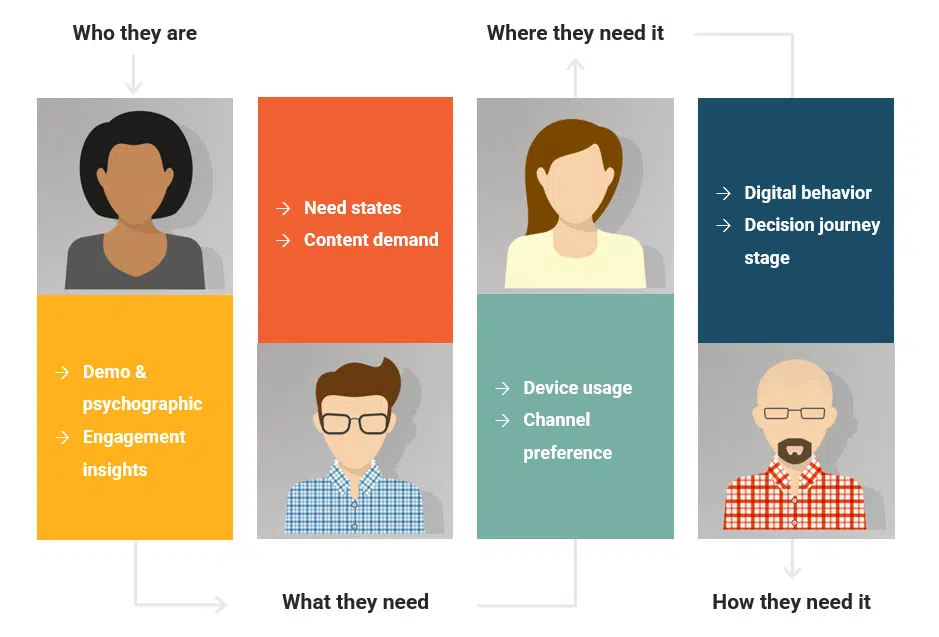
Your content creation process should always be heavily based on research and audience knowledge. As it is essential to know Because you’re creating content, it’s very important to think about it WHO you’re creating it, especially if you’re going to leverage AI to help you.
Some methods to get information about your audience are:
On-site surveys CRM data Data about “highest value” customers and/or customers with the longest relationship with the brand Data about new customers (became customers in the last week) Data about customers who entered the funnel but didn’t convert Analytics data (audience, demographics) Social data Customer intelligence Ideal target audience survey data – look for commonalities beyond demographics – psychographic
Once you have data points from various areas, you can create a customer persona. This persona is a detailed description of a person who embodies your ideal customer.
Creating this customer profile and keeping it in mind as you write your content serves as a constant reminder of who you’re talking about, keeping your tone and voice accurate and effective.
When using AI, this persona information should be linked directly to your prompts to ensure the output is less generic and more tied to your customer persona.
To further integrate your persona attributes with your content, you can have the AI generate your personas entirely. Given the chance, that might make more sense.
Most generative AI platforms are designed to combine large amounts of data. As they crawl through these large data sets, algorithms look for patterns.
If you can work with a more sophisticated platform and feed it with as much customer data as you have available, you may end up with a better person than you ever dreamed possible.
3. Get a paid account

Privacy and security should be an important consideration for anyone looking to incorporate AI into their daily lives. This is especially true for content creators who want to take advantage of AI.
As you can see above, knowing your audience and leveraging your proprietary data for content production is critical to the performance of your content.
But with the wrong kind of plan, what you’re feeding into your AI tool of choice could be leveraged as training data and made public. You can avoid this by signing up for a plan like ChatGPT Team, which costs $25 a month.
At our agency, before using any AI platform, we thoroughly review the terms and conditions to ensure that our use complies with them and that our data, and by extension that of our clients, is not ‘use to train the platform.
Get the daily search newsletter marketers trust.
4. Don’t expect to find a silver bullet all in one message
Contrary to popular belief, there is usually no “holy grail” of cues that will make AI give you the results you want.
For the best results, your team should be continuously asking during every stage of your content production process.
The help provided by the AI may look different at each stage. For example, you can use AI prompts for content to inform your research during the content ideation and description process. These platforms can help with research, such as giving lists of keywords and suggesting headings and subheadings that might perform well in the SERPs.
AI can also be useful in the drafting stage. Starting with your customer persona as input, consult a generative AI platform with an appropriate question for each section of your blog.
The generated output will serve as a great starting point for your writing. However, it is important to ensure that you proofread and edit this content to give it the ever-necessary ‘human touch’.
Some AI platforms, such as Claude and Gemini (from Google), will allow you to upload your schematic as part of your message. Simply attach your schema file and frame your message in a way that tells your platform to write based on the uploaded file. What you get won’t be perfect, but it will be a solid foundation to work from.
What if you’re not generating new content?
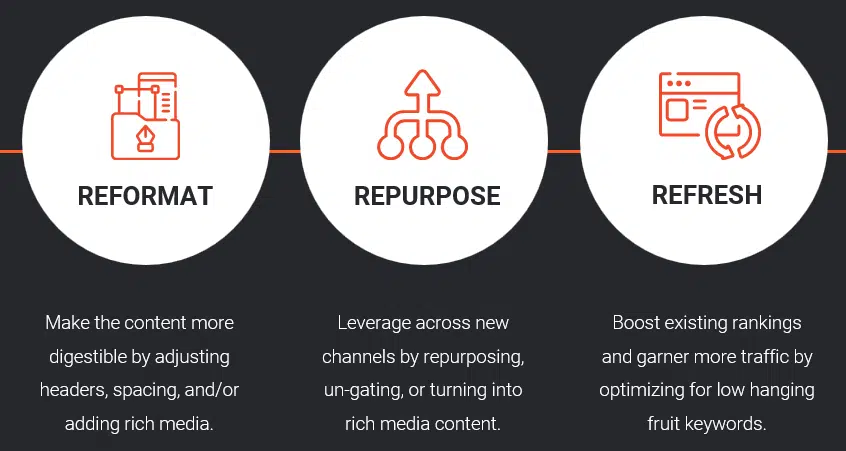
If you need to edit and update existing content, you can and should use AI. The right AI platform can cut through the fluff, bring more clarity to your content, and identify what can be added to strengthen your content.
These refreshing tactics could help give your current content the facelift it needs to perform well in this new era of Google AI overviews.
5. Strengthen the EEAT
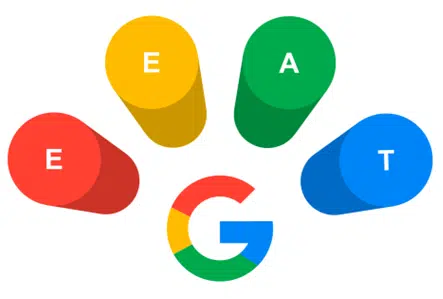
Simply put, Google wants to reward content from people who have and demonstrate first-hand knowledge and experience in the field.
Yes, we are talking about EEAT, which stands for experience, expertise, authority and trust.
Many companies are already using generative AI platforms to mass produce blog content. Thus, EEAT could become even more important as we ride the wave of AI technology.
To differentiate your content and provide a superior user experience to a competitor’s bot ramblings, work with:
Experienced authors
Hire a subject matter expert to help with content production or use an expert to review it. If you work for an agency, ask your clients to provide a subject matter expert to formally review your content when needed.
If you’re in-house, ask who has the depth and expertise to weigh in on the issues you’re dealing with. You can also develop standard interview questions to ask your client about each topic, ensuring you have a bank of expert insights to improve content performance.
LinkedIn is also a great platform to identify and hire experts in certain fields to help write or professionally proofread your content.
SMEs
Reinforce your content with statistics, quotes, resources or statistics from SMEs.
If you can’t get in touch with an in-house SME or one of a client’s team directly, there are other ways to get information and quotes.
You can take advantage of sites like Connectively (formerly HARO) or respondent.io to ask questions directly from an industry expert. You may need to verify their credentials, but it’s an easy and low-cost way to add depth to your content.
Your client’s YouTube channel (if they have one) can also be a real goldmine of quotes.
data
Leverage custom or proprietary data. Access to unique data in your space positions you with an experience that Google will value.
Either in-house or through a third-party data collection company, take a survey. Brainstorm topics in your industry and develop a quiz.
6. The human touch is essential
AI can help you achieve 60-70% of your goals with specific tasks, but a human touch is still essential throughout the process. Even as technology advances, issues like AI hallucinations leave us at a point where a human touch is essential to produce stellar content.
Your goal should be to use AI to prepare your work for success, improve content, and save you time. But it’s critical to make sure you have the right staff to check for plagiarism, optimize for readability, and edit the final spelling and grammar.
The most important thing to remember is that AI is not perfect. It takes a human hand to oversee the content and make sure it hits all the major benchmarks of good internet writing, like EEAT, and polish the piece so it sounds conversational, on-brand, and delivers the experience of ‘user your readers and SERPs are looking for.
Dig Deeper: How to survive search results when using AI tools for content
Get interested in AI
Keep fueling your interest in AI.
Take it upon yourself to be your team’s AI professional.
AI isn’t going anywhere. He’s getting smarter every day.
Stay on top of AI news and trends, familiarize yourself with new platforms, and keep going responsibly Explore new and exciting ways to implement AI to transform your workflow.
The opinions expressed in this article are those of the guest author and not necessarily Search Engine Land. Staff authors are listed here.
[ad_2]
Source link





