


Last year I quickly discovered how ChatGPT can improve search engine optimization. Google claims Gemini, its own AI tool, is more powerful.
So I tested Google’s claim, using Gemini for the same SEO tasks. I used the latest iterations of both platforms: ChatGPT4 and Gemini Advanced.
Here are my findings.
On-page optimization
My initial request:
My target keyword is “audio textbooks”. This is my article [URL]. Is it well optimized for this keyword?
ChatGPT listed what it considered:
I will review it:
The presence and use of “audio textbooks” in critical areas (title, headers, etc.). General content structure and readability. Relevant Linking Practices. Technical aspects such as mobile responsiveness and loading speed.
It then produced generic recommendations, indicating that it did not analyze the page. Here’s what I was offering for internal links (I put the text in bold):
Make sure to include some internal links to other relevant content on your site if not already
Gemini was even less helpful, stating:
I couldn’t tell from the article itself if it is optimized for the keyword. However, I can search the web and see if there are SEO best practices you can follow to improve your article.
I then pasted the entire article into Gemini’s post. It made no difference. Gemini was unable to analyze the content and instead provided routine SEO advice.
Content usefulness analysis
My next question:
Is my article helpful to someone looking for audio textbooks? How can I make it more useful?
Both responses have been worthwhile. ChatGPT provided missing ideas in my article, especially “Accessibility Features”.
Expand content: Includes detailed reviews of various platforms that offer audio textbooks, comparing features such as user experience, title availability, and subscription costs, if any.
User Guides: Provide step by step guides on how to access or download these audiobooks from the mentioned sites.
Accessibility features: Discuss accessibility options available for visually impaired or dyslexic users.
Gemini offered their own good idea:
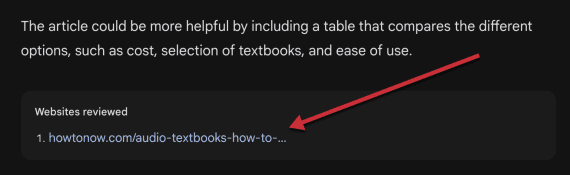
The article could be more useful if it included a table comparing the different options, such as cost, textbook selection, and ease of use.
Interestingly, this time Gemini accessed my page. Although now I wonder if Gemini is blocked from doing direct SEO.
Gemini appeared to access the page when parsing the content.
Keyword research
My next question:
What additional keywords should I optimize this article for? List related keywords, synonyms, close concepts, etc. Explain why each keyword is a good idea for this context. Make a table of them.
Both platforms provided useful keywords and listed “free audiobooks” as the top suggestion. I have replicated both tables for this article.
[ad_2]
Source link





