


Google leads AI advertising with machine learning built into campaigns and ad types. Even with manual solutions, results often suffer without the help of AI-based algorithms.
Without AI assistance for PPC bids and creative decisions, your conversion rate will typically be lower than competitors who use machine learning to their advantage.
AI is changing how ad campaigns work and what SERPs look like with Google’s launch of Generative Search Experience. Here are tips for mastering the art of generative AI to keep your PPC business or clients ahead of the curve.
Best practices for using generative AI
As important as AI is, decisions based on people and machines require a careful balance. Giving control to AI can set your campaigns down a path of irrelevant search queries and low-quality traffic.
Success with automation starts with human guidance. As a marketer, you need to ensure alignment between campaigns, brand guidelines, and goals when using the efficiency of machine learning.
Generative AI tools like ChatGPT, Gemini, and Microsoft Co-Pilot are great places to get preliminary ideas for marketing campaigns, but they require guardrails.
Never use AI for the final product
Recently, I was hiring for open positions on my team. In the application process, I included the question:
“What’s the most interesting thing about you that isn’t on your resume?”
No fewer than 20 times, my recruiting team eliminated applicants with the same answer (with slight variations each time):
“The most interesting thing about me that doesn’t appear on my resume is my passion for astrophotography. I love capturing the beauty of the night sky and sharing it with others as it allows me to combine my love of photography with my fascination with the universe.”
While using generative AI for ideas or starting points can be a huge time saver, these tools produce the same results for everyone. In advertising, your brand needs to stand out from your competition.
Make sure your copy, content, and designs go through a rigorous human review process to avoid looking generic. Never use AI to replicate copyrighted content. You don’t want your brand to end up on a list of AI failures.
Use step-by-step directions
Receiving useful results from generative AI requires detailed instructions. AI is only as powerful as the information you feed it, and requests may take a few iterations to get right.
Watch the evolution of the directions below to see how each improves to get you closer to platform-ready ad copy.
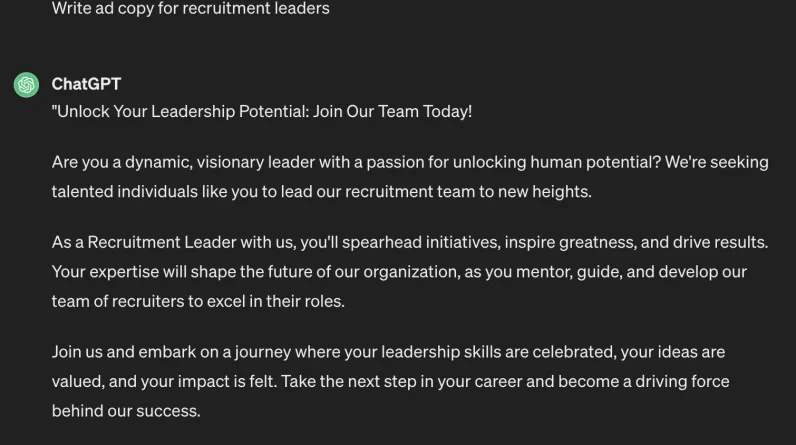
It looks more like landing page or email copy than search copy:
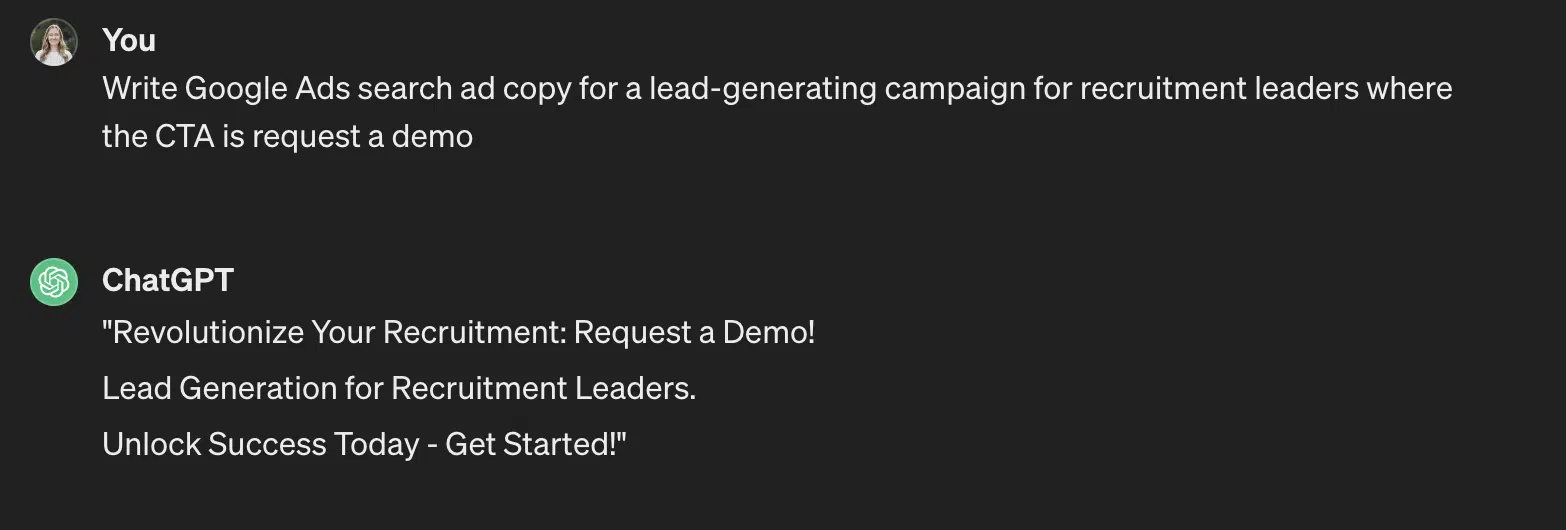
This copy is generic and the CTA does not align with my campaign:

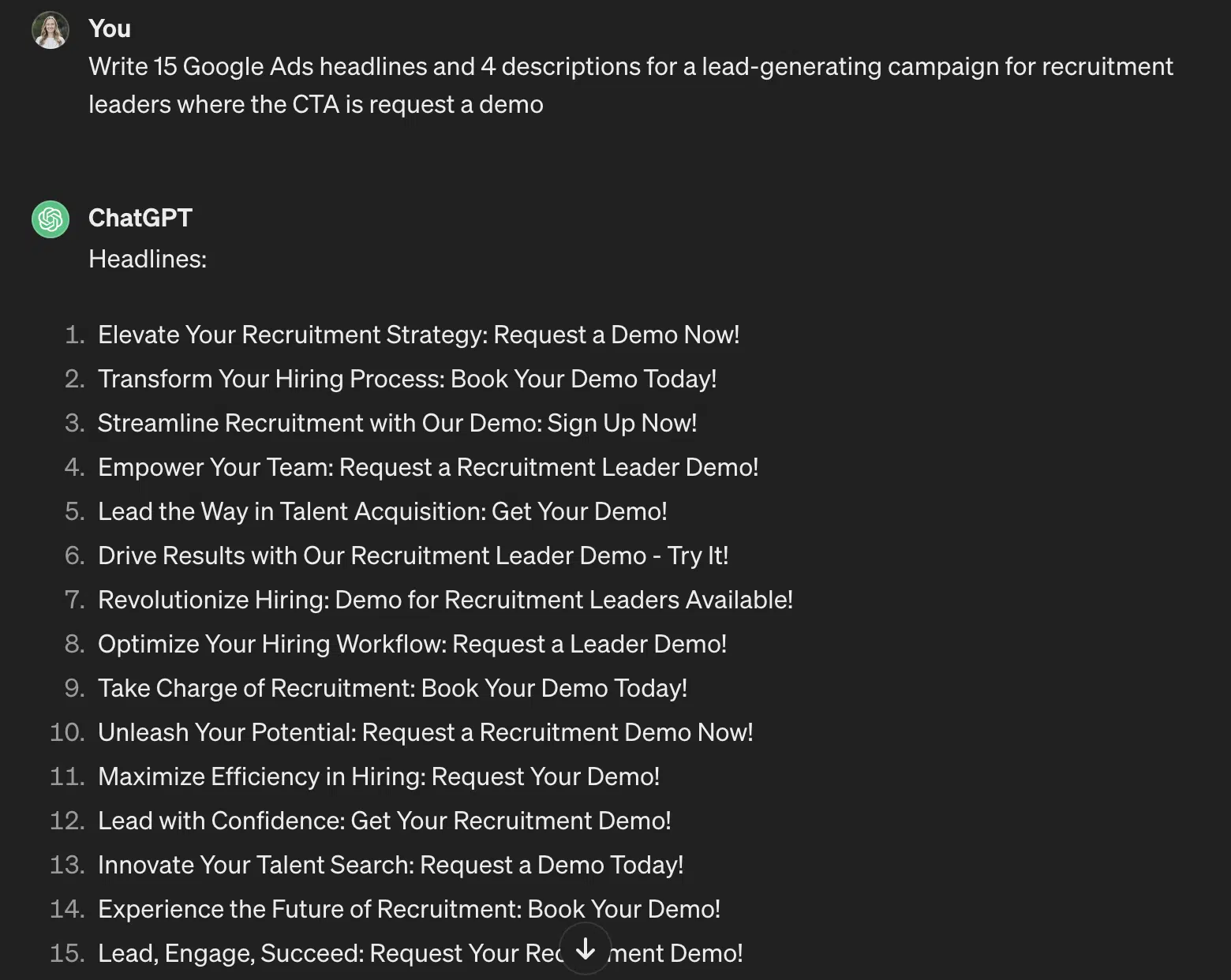
The results are improving, but I need more iterations to maximize the number of titles and descriptions in responsive search ads to take full advantage of the potential of AI:
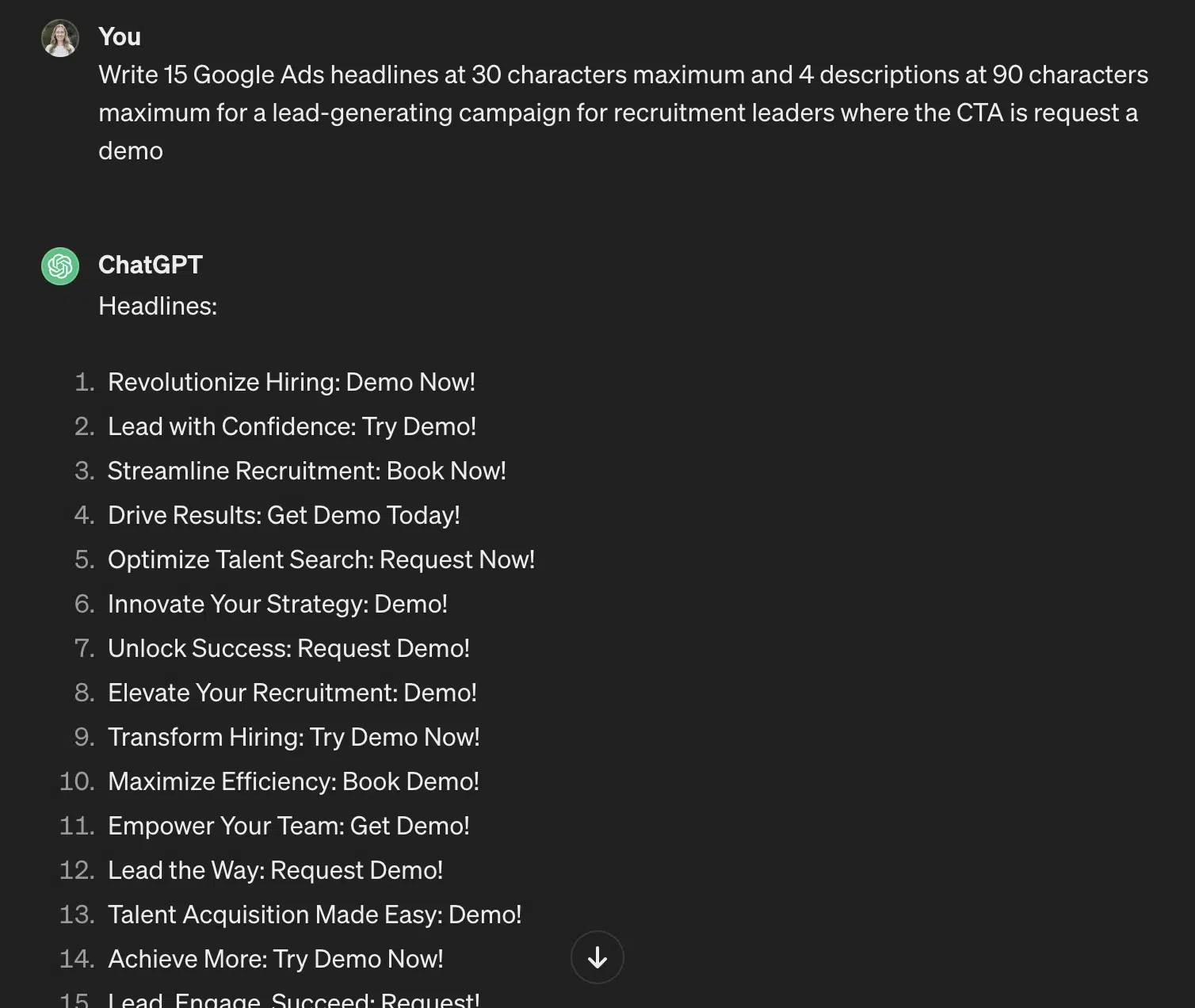
These titles do not meet Google’s character length requirements:
This copy is missing keywords from the ad group, which will make the ad poor:
Repeated CTAs and exclamation marks are redundant and unnecessary. Not enough variety for the copy to relate to a user:
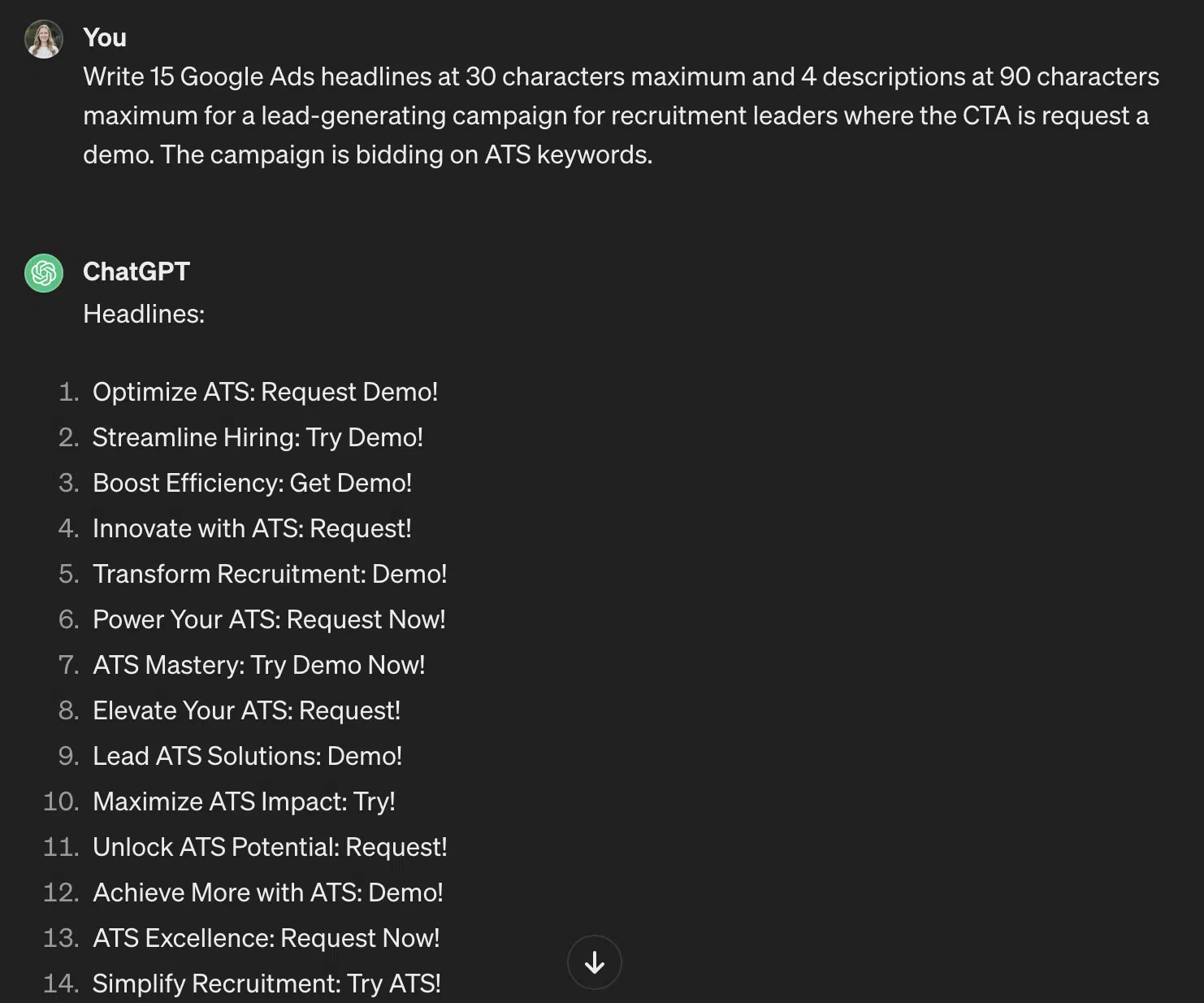
Finally, after providing the system with more details, it produces a platform-ready copy.
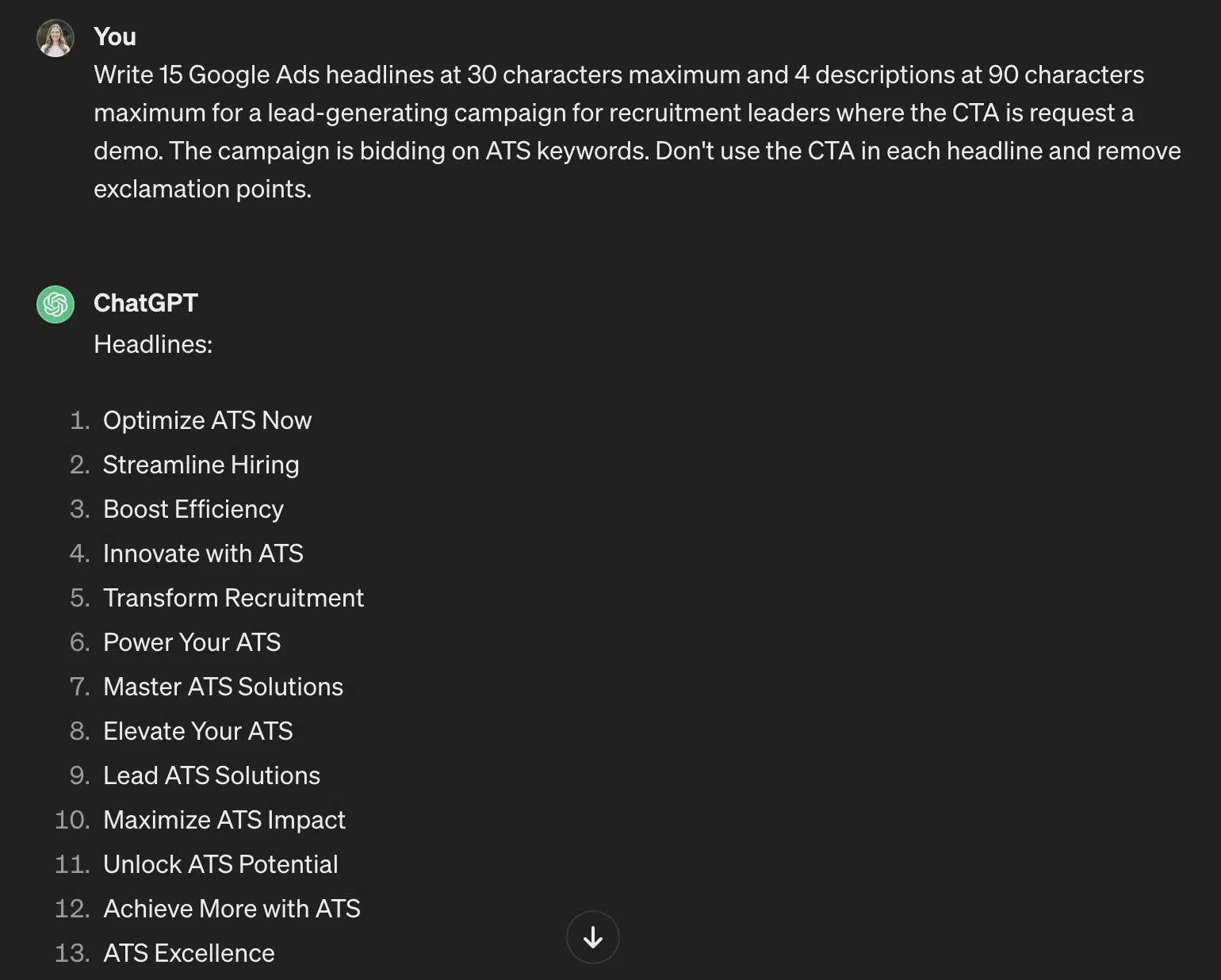
The final step is to review the copy carefully and rework as needed to include the brand name in the headlines and align the brand messages before creating the ads in Google Ads:
Here are some other details you can include in your prompts to further customize your results:
Link to landing page. Company or brand data (name, industry, etc.). Audience details (job titles, company size, demographic information, etc.). Branded tone of voice.
Dig Deeper: ChatGPT for PPC Marketers: 15 Strategic Tips to Use Today
7 Ways to Use Generative AI in Search Advertising
With the need for detailed guidance in mind, here are seven ways to use generative AI tools in search advertising:
1. Drafting
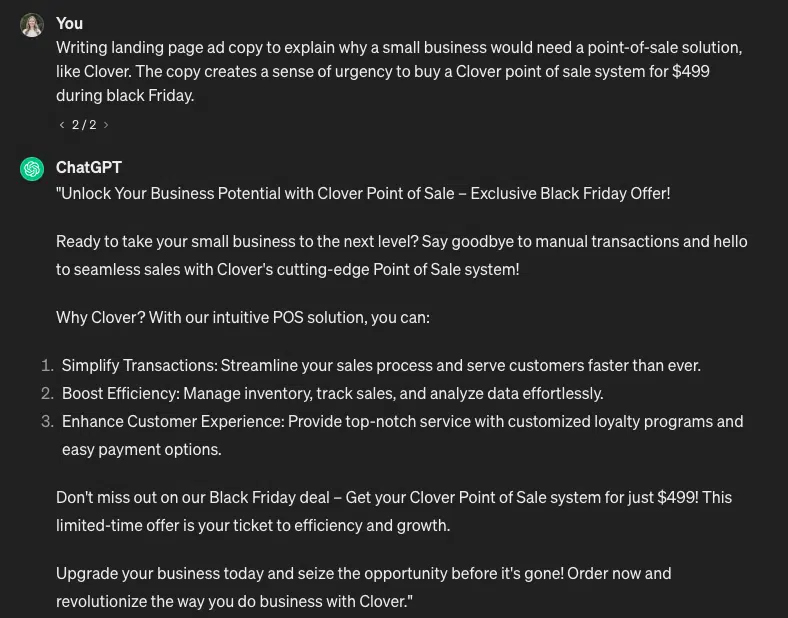
Take the example above to use AI to write ad copy and apply it to your landing pages. This sample message mentions the audience, product, and offer.
From there, a human can edit the copy to include more keywords and remove words and phrases that don’t align with brand messaging.
2. Keyword research
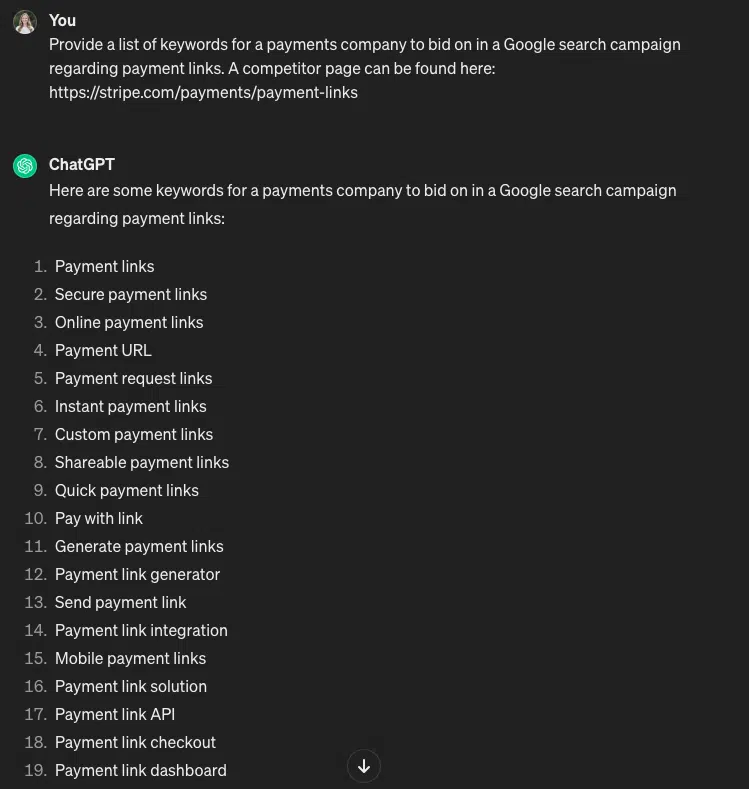
While Google Keyword Planner is a great resource for keyword research and forecasting search volume, the terms it produces may be irrelevant to your brand due to a lack of context.
To account for these discrepancies, conduct research in a variety of ways to ensure keyword alignment with your audience. In this example, the message provides the topic and a related competitor landing page.
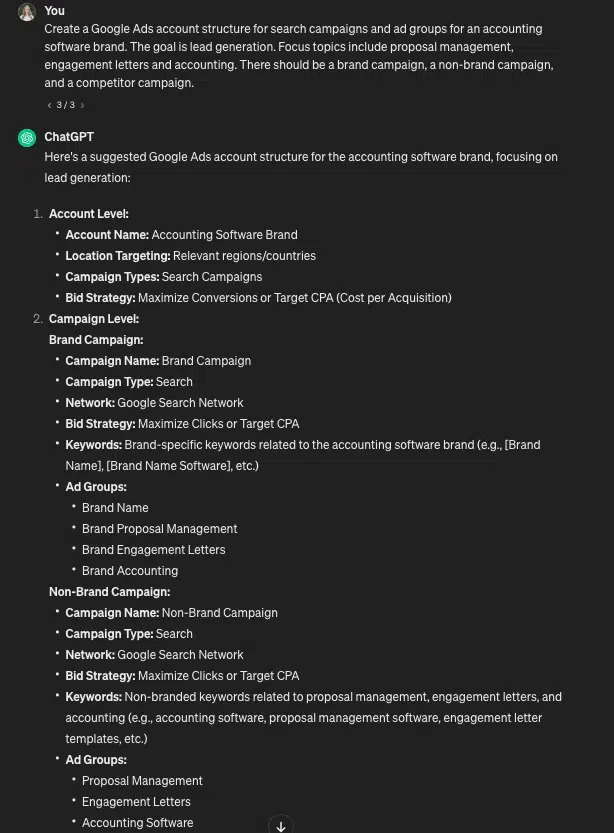
3. Build an account structure
Starting a new account from scratch or planning an account restructuring? This message details the brand’s industry, objective, and focus topics, along with additional campaigns that the structure should include.
This is a good starting point for designing campaigns and ad groups before you fill in your keywords. ChatGPT gets bonus points for providing keyword ideas.
Get the daily search newsletter marketers trust.
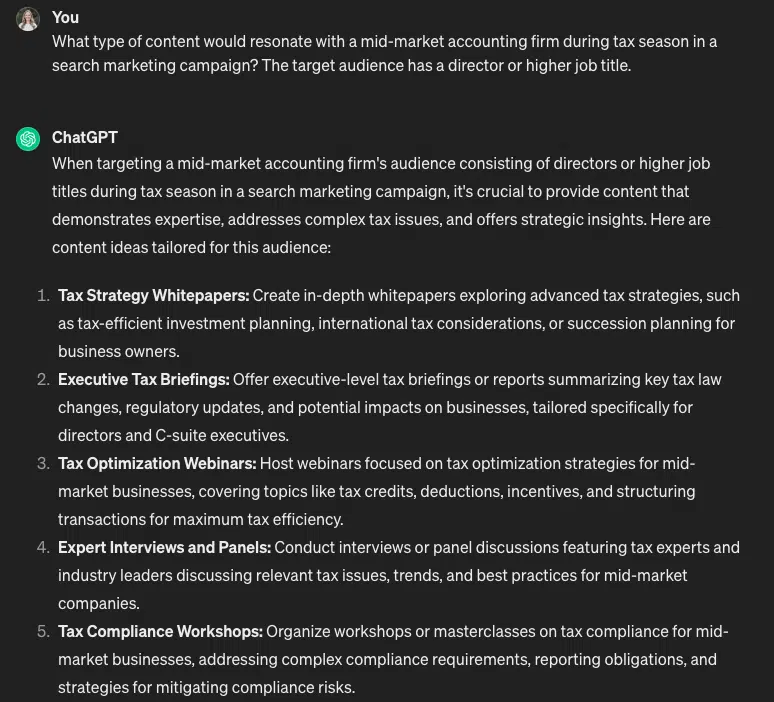
4. Content creation
Your content needs to stand out in a sea of messaging and creativity as the competition for audience attention is greater than ever.
This message details the audience’s job titles, company size, and industry. He also mentions the theme of the campaign (tax season), which presents unique challenges for this audience.
Consider listing your audience’s issues, challenges, likes, and dislikes to improve the outcome of your AI tool.
5. Linguistic translation
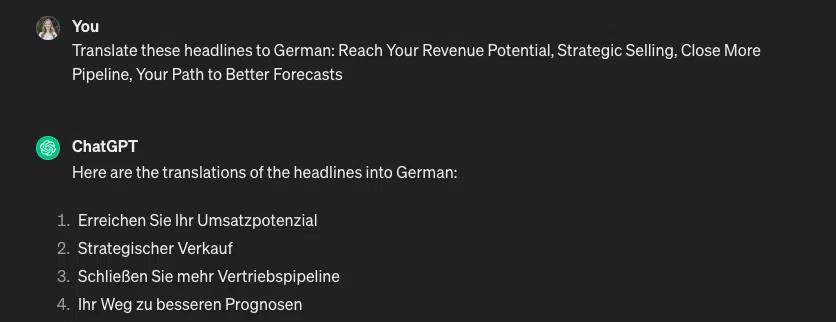
Always have a human native speaker of the language review the translation output of your AI tool.
While the AI is a huge time saver in this case, the system lacks the context for the verb. As a result, the translation may not be aligned with the intended meaning.
6. Investigation of hearings
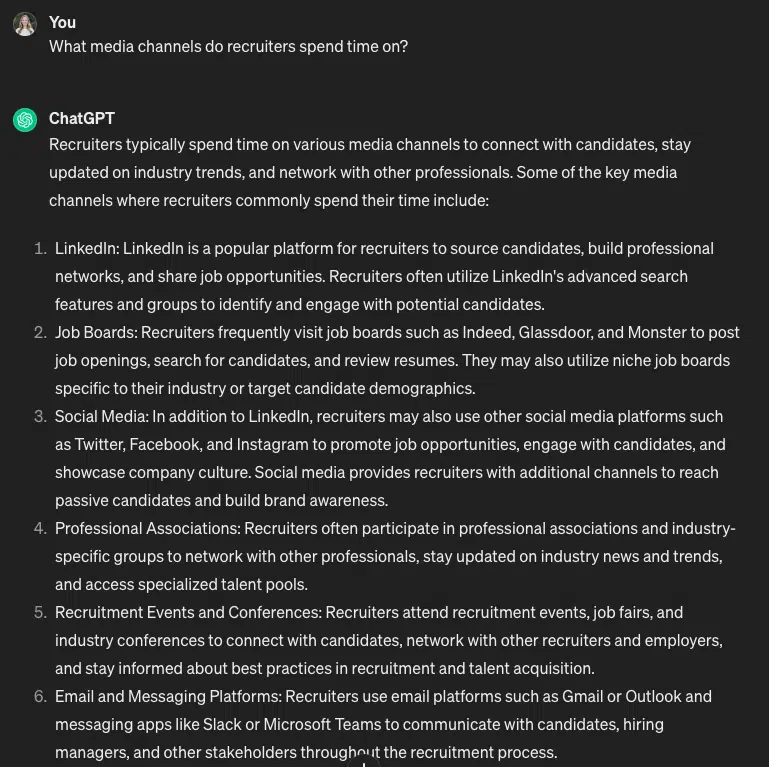
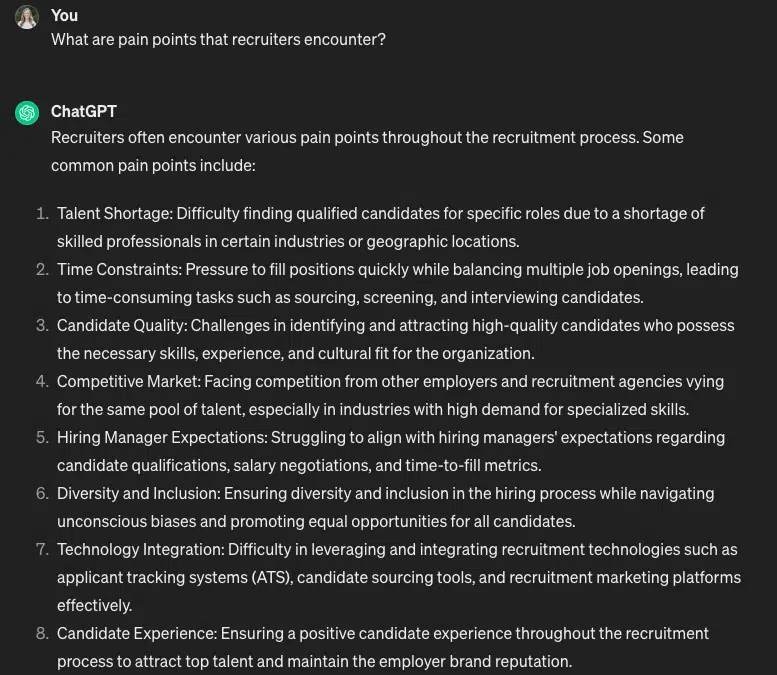
Survey-based audience research tools like MRI-Simmons offer the best way to tap into real audience information. However, generative AI can help you get to know your audience better.
While other tools like Sparktoro or Resonate can describe more details about these channels, the AI output can create a media plan for budget allocation.
This message asks about the pain points the target audience faces in their work. It helps align messages with these issues to improve relevance and CTR.
7. Show locations
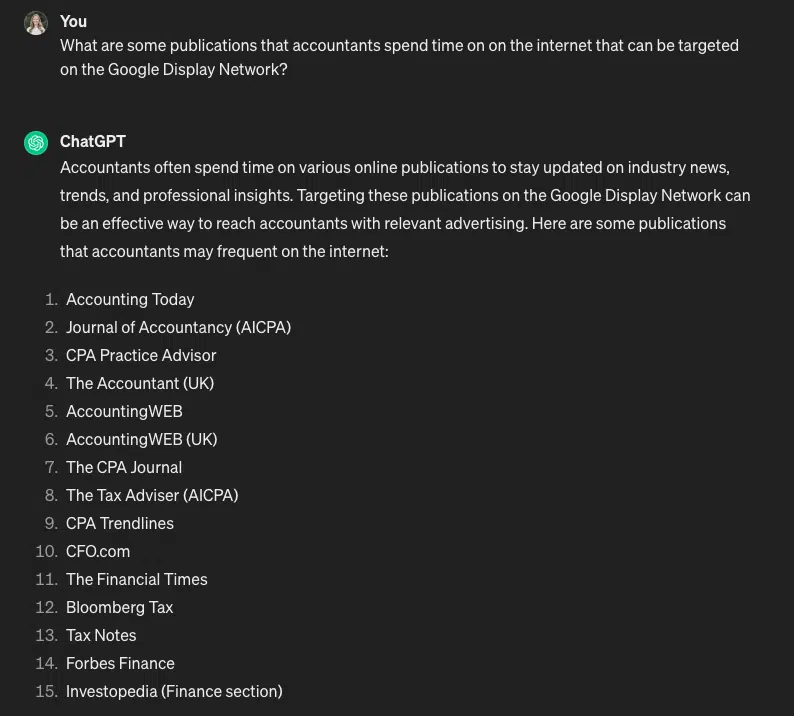
Get to know your audience better with a cue designed to find where they spend their time. You can then focus your GDN investment on specific industry niches.
Using generative AI in PPC
Generative AI is a game-changing tool that saves time. But remember not to rely on it for the final product. Always work alongside machine learning to guide it to better results for your brand performance.
Dig Deeper: Increase your PPC with ChatGPT: The Art of Asking Disconfirmation Questions
The views expressed in this article are those of the guest author and not necessarily Search Engine Land. Staff authors are listed here.
[ad_2]
Source link





