


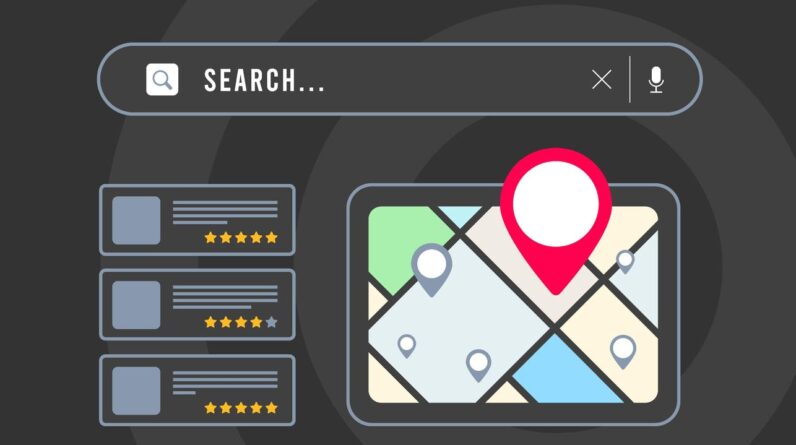
Small and medium-sized businesses can benefit greatly from local search optimization on Google Maps.
getty
Although many businesses were forced to connect solely to the Internet during the Covid-19 pandemic, small and medium-sized businesses across the country are now recognizing the importance of mapping programs to help consumers know where you find the business and allow them to look for reviews online. In fact, communicating a business’s location and providing access to reviews are an increasingly important aspect of marketing for most small businesses. As a result, location-based mapping technology has become increasingly important.
Worldwide, Google Maps, which is based on satellite technology, has more than one billion users in more than 220 countries. Additionally, 41% of smartphone owners use the app once a week or more, and Google Maps is the top choice of more than two-thirds of consumers using search consoles. Due to the propensity of consumers to use a mapping application to find a certain type of business, Google Maps has become a very important geo-targeting device for many businesses with local business areas. As shown in the Wall Street Journal video below, Google Maps has revolutionized location-based information technology.
The importance of a high ranking in the Google Search Console should not be underestimated. According to Podium, the top three organic results (usually called “Google Maps Pack”) receive almost 80 percent of all clicks. The theory of consumer behavior tells us that the limits of both human memory and willingness to exert effort in research favor information that is easily accessible and memorable. As a result, a wide variety of business types, especially “brick and mortar” businesses (eg commercial businesses, medical offices, HVAC professionals, landscapers, and many more) benefit from being listed on search results
The case of a landscape designer (hardscape specialist) in Newark, DE is illustrative of how a high listing on Google Maps can make a difference. The company estimates that it generated an additional seven figures for its fund income by following the rules recommended by Dynamic Wave Consulting – a digital marketing agency based in Philadelphia as part of a geo-specific and personalized marketing plan. Dynamic Wave (led by owner/operator Bruce Leto, Jr. and art director Jonathan Snyder) began by adding locations to the landscaper’s Google Business profile, optimizing search order results through hyper-focused landing pages and campaigns of Google Ads enriched with keywords. This streamlined and targeted strategy leads to a fully responsive business website.
Similarly, a small Manhattan-based HVAC company added nearly $900,000 to its bottom line by 2023 using a similar strategy. This HVAC company also set up a “Google Local” or “Google Guaranteed” account, a “fast track” to the top of Google’s listings (as indicated by a check mark green). According to Leto, Jr., many companies that implement this type of geotargeting strategy characterized by an SEO-enriched digital marketing approach have benefited from this.
Leto, Jr.
Bruce Leto, Jr., Owner/Operator, Dynamic Wave Consulting.
Kaitlin Noel
emphasizes the power of local search results to drive business. “Having an optimized Google Business profile is paramount in today’s off-page search engine optimization (SEO) algorithms for your business,” he says, “Think about it: when you’re looking for an electrician or a chiropractor, or even a restaurant – how often do you search for “nearby” results instead of broad nationwide searches? You don’t want your competition to dominate your business directly on Google, especially if a few tweaks, keywords and landing pages destination could make a big difference in your results.”
Dynamic Wave has developed five quick tips for businesses striving to improve their Google Search Console rankings that are effective in getting a first page Google Maps listing:
1) Have a clear location and business area
Google tends to “favor” businesses that have a verified address and serve a specific geographic area. The verified address tells Google that the business is legitimate and operational. So having a physical address (rather than just a website address) associated with it. with your business on their Google Business Profile will help you get a higher listing.
Having a physical address and an identifiable local business area is helpful.
getty
Leto, Jr. he notes that having a geo-specific commercial area can give an extra boost. It says, “Google wants to know that your business is centrally located and, most importantly, operational.” He says, “if your business is entirely online and serves a general audience across the country, it’s harder for Google to algorithmically recognize which audience (and geographic areas) you’re trying to reach.”
2) Create geographic or service specific landing pages
Creating hidden, SEO-rich pages focused on a company’s website can be effective in streamlining leads and directing potential customers to a specific goal or action that the company is trying to incite to the consumer to take (eg make a purchase or reservation). . Some companies have “pop-ups” or “light boxes” on their website that ask a potential customer to fill out a contact form for a free 15-minute project estimate or to book an appointment with a medical spa specializing in cryotherapy in Virginia Beach, for example. These techniques are usually effective.
WSI Marketing, a leading digital marketing company, observes “Landing pages convert more traffic because they focus on a goal or call to action by providing information about a specific offer or item. It has limited navigation and simplicity keeps a visitor focused on the goal rather than get distracted by several links that away from the page.” Basically, the idea is that SEO-focused programs can increase your digital footprint and give your brand wider exposure.
3) Establish social proof through reviews and testimonials
Based on the latest Google algorithms, specific and relevant persona content can complement and increase a company’s Google Business Profile. Posts about holiday discounts, project initiatives (such as vent cleaning or kitchen remodeling), or even awards a business has received can be identified as “quality content,” which Google tends to rank well. Additionally, reviews from customers, prospects and customers are another source of content, which can improve your listing and visibility on Google Business. If customers leave positive and relevant reviews about a business on Google with service-related keywords and tags (even relevant to the company’s service areas or location), this will give Google an algorithmic reason to push a business higher to “nearby” or “near me” on Google Maps.
Positive reviews can help with location on Google Maps.
dpa/picture alliance via Getty Images
Leto, Jr. observes: “Typically, we’ve found that once a business starts accumulating close to the magic hundred of relevant reviews (with text specific to the services offered, location-based keywords), it starts to generate more notable and organic. potential customers through your website or Google My Business profile (which are not related to paid search ads) Consistency is key here – the goal of effective SEO is always to improve your digital footprint and brand ubiquity.”
4) Link content updates regularly and wisely
Google’s recent algorithmic changes are also “triggered” by content updates (i.e. products, photos or backlinks, a form of “off-page” SEO), which are linked to your website via the a company’s Google Business Profile. Therefore, when adding an update or product offer to GMB’s Google My Business listing, a business must ensure that it has a specific location and/or service listed on the holder.
For example, a surf shop in New Jersey could add a relevant Google Business update such as “Ocean City, NJ – August 2024 Surf Camps” if they are interested in attracting registrations through the local South region Jersey (and with the summer calendar in mind). This “product” offering via the surf shop’s Google business profile lists the “what” (Surf Camps available this summer) and the “where” (Ocean City, NJ). Again, this example demonstrates the importance of specificity and keywords when it comes to off-page SEO, specifically.
Leto, Jr. he further explains: “We’ve seen businesses that are struggling to generate leads make a few location-based adjustments to their Google Business Profile, and suddenly they’re getting a bunch of new, organic leads over the next few weeks.”
5) Make responsiveness a key goal
In the context of Google Maps listings, responsiveness isn’t just about making staff available after hours. Dynamic Wave advises clients that it is essential to ensure a website is fully responsive. It is important to optimize your website for responsiveness not only for desktop but also for mobile and tablet devices. The problem is that if a website isn’t fully responsive (or takes too long to load), it can negatively impact a business’s ranking and performance on Google.
While it is necessary to properly message the key locations offered, potential customers, and service offerings on the company’s own website (on-page SEO), optimizing a business profile from Google can help directly improve Google Maps ranking, a form of authorized “outside”. page” Search Engine Optimization. When you think about it from the perspective of customers and clients, how and where a business may be losing out to your direct competitors, improving your profile can help generate organic leads (from Google Maps directly) that can help a company at all levels of the sales funnel.
Together, these five tips can be very helpful for geo-targeting and ultimately increasing sales.
[ad_2]
Source link





