


In B2B marketing, the traditional approach of casting a wide net is increasingly being challenged by a more targeted and personalized strategy: account-based marketing (ABM).
This method focuses on identifying and engaging with specific high-value accounts, treating each as its own distinct market.
But is ABM the right approach for your business?
This article explores the potential benefits and challenges of implementing an ABM strategy, along with key factors to consider when evaluating its suitability for your organization.
Understand account-based marketing
At its core, ABM is a strategic approach that focuses on targeting high-value accounts with personalized and relevant marketing efforts.
Unlike traditional marketing methods that tend to cast a wide net, ABM is laser-focused, treating individual accounts as unique markets unto themselves.
The Advantage: Advantages of ABM
Improved guidance: ABM allows digital marketers to tailor strategies to the specific needs and problems of target accounts, resulting in more precise targeting.
Improved customization: Personalization is crucial in today’s digital landscape. ABM allows marketers to create personalized content and messages for each targeted account, encouraging stronger connections.
Increased sales and revenue: By focusing efforts on high-value accounts, ABM can generate higher conversion rates and higher revenue. The personalized approach tends to resonate more with decision makers, making the sales process easier.
Better alignment of sales and marketing teams: ABM encourages collaboration between sales and marketing teams, ensuring a unified approach to specific target accounts. This alignment can lead to better communication and a more streamlined sales process.
The downside: the challenges of ABM
While the benefits of ABM are significant, it is essential to also consider the challenges that come with implementing this type of strategy:
Resource intensity: ABM requires substantial time, effort and resources. Marketers must assess whether their team can commit to the level of personalization and attention required for effective ABM.
Accuracy and integration of data: Successful ABM is based on accurate and integrated data. Digital marketers must ensure that their data management systems are robust enough to support the complexities of an ABM strategy.
Longer sales cycles: The personalized nature of ABM can sometimes lead to longer sales cycles, meaning marketers must weigh the potential benefits against the patience required for the strategy to pay off.
Get the daily search newsletter marketers trust.
A contrary approach to ABM
The LinkedIn B2B Institute”B2B trends 2030” tackles contrarian ideas for the next decade. Here are the key takeaways from the 43-page report:
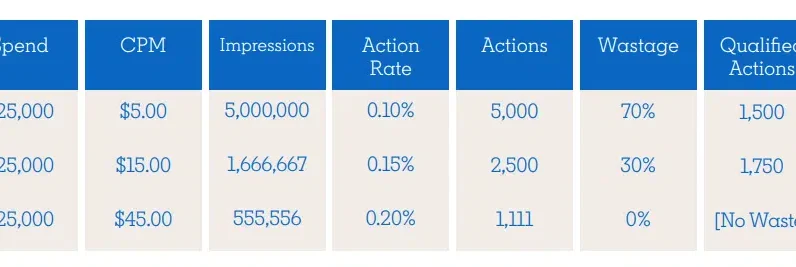
Most third-party data is unreliable; it’s wildly inaccurate and expected to get worse due to the changing privacy landscape. Employees change roles frequently, resulting in an unstable purchasing committee. Also, we tend to buy from brands we know. While you know IT professionals will be using your product, depending on your company structure, the buying process can involve people with different backgrounds, experiences, and decision-making power. Although hyper-targeting is more expensive, this opposite approach recommends going broader. This does not imply zero orientation; rather, it suggests focusing on category scope to avoid imaginary efficiencies.
Dig Deeper: 6 areas to consider before increasing investment in B2B payment media
So is ABM right for you?
The key to identifying whether you are ready for ABM comes down to this.
Unless you can seamlessly pass account information from the top of the funnel to the bottom, and then automate the transfer of that information to the sales/business development team, you cannot execute ABM properly , point.
Ultimately, you must have the ability to exclude or update accounts from all targeting based on their status with the sales team in order to provide the desired customer experience.
The following notes are also important when considering ABM:
Identify high value accounts: Assess whether your business model is based on a small number of high-value accounts rather than a larger volume of smaller accounts. ABM is most effective when it targets a select group of key accounts.
Resource assessment: Consider the resources available to implement ABM. Evaluate your team’s bandwidth, technology infrastructure, and budget to determine whether you can commit to the demands of an ABM strategy.
Analyze the sales cycle and lifetime value (LTV): If your product or service involves a complex sales process with longer decision-making timelines, ABM may be a suitable strategy for nurturing and engaging key accounts over time, assuming you have an LTV that allows you to “wait ” the correct account.
Where to start?
The best place to start is LinkedIn. It is the go-to platform for B2B sellers.
LinkedIn easily integrate with your marketing automation platform, CDP or CRM, which enables seamless audience sharing. These audiences can include email addresses (both business and personal) and account names.
While you can manually upload audiences using a CSV file, doing so can hinder the effectiveness of your ABM efforts.
You can technically add email addresses to all the major advertising platforms (like Google Ads, Microsoft Ads, X, Reddit, etc.), but none offer the match rates you can find on LinkedIn, where they typically exceed 70% .
If your company leverages tools like 6Sense, Terminus, or DemandBase, you can also target decision makers or influencers across the different sites and platforms they use on a daily basis.
Dig Deeper: 7 LinkedIn Advertising Pitfalls: Where B2B Ads Setup Can Stumble
Decide on ABM
While ABM offers a powerful strategy for B2B marketers, its success ultimately depends on careful consideration of resource availability, target account characteristics, and commitment to personalization. They are simply necessary to be successful.
Additionally, the LinkedIn B2B Institute report sheds more light on key considerations, such as the challenges of third-party data and the need for a balanced approach, given the dynamic nature of buying committees.
With this information, you are ready to make an informed decision. Leveraging the benefits and challenges discussed, use strategic assessment to determine if ABM aligns with your digital marketing goals; then reconsider the question, “Is ABM right for you?”
Dig Deeper: B2B Trends 2024: 6 Key Areas for Marketing Success
The views expressed in this article are those of the guest author and not necessarily Search Engine Land. Staff authors are listed here.
[ad_2]
Source link





