


SEO has been a buzzword among digital marketers for years. It’s something everyone is talking about and looking for in the digital marketing community. meIn fact, the term “SEO” receives between 10,000 and 100,000 searches each month on Google. This clearly indicates the level of interest people have.
However, if you’re someone who hasn’t yet joined the SEO bandwagon and want to know what all the buzz is about, you’ve come to the right place. After reading this post, you will know all your SEO basics and the science behind how it works.
What is SEO? | The Ultimate Guide to Search Engine Optimization:
What is SEO?
Simply put, SEO (Search Engine Optimization) is the process of optimizing your website to get more organic traffic.
This can include changing the design, layout, content and other technical and non-technical aspects of your website to get the best results. Your website should be able to attract enough traffic on its own, without you paying for it.
This is a sustainable way to get more website traffic in the long run and worth the effort. This is why marketers are so invested in SEO and spend so much time and effort on it.
The whole game of SEO is a race to get your website’s landing pages to rank on the first page of a search engine’s results for a particular search query.
Let’s say you search for the term “Best New York Lawyers” on Google. You will see a search engine results page (SERP) that shows you websites relevant to your search query.
This is exactly what you will see:
Source: google.com
Let’s analyze these results one by one.
The first set of results are paid search ads that people pay to appear right at the top of Google’s SERP for that particular keyword.
Below you can see a google map along with the business listings of different attorneys. The next section is Google’s “People Also Ask” section which shows other search queries related to this one, along with the answers.
Finally, you will see ten different organic search listings for your search query. These ten organic search listings are what people compete for when investing in SEO.
For any given keyword, there may be thousands of people who want to be among those ten search results on the first page of Google’s SERP. So when you put effort into SEO, this is the end result you want.
Of course, you can manipulate the game and try to get it to appear in one of the three sections that were at the top. However, ads cost a lot of money and cannot be run in the long run, especially if you don’t have deep pockets. And, these are part of it search engine marketing (SEM) and not SEO.
You can definitely list yourself on Google My Business and try to get it listed in the Google Maps section. This is a part of SEO called “local SEO” that is especially useful for local businesses, which is a topic for another time.
The focus of this article will be mainly on how you can get maximum organic traffic, with the help of SEO. But before we get into the details of how you can do this, you first need to understand how search engines work.
How do search engines work?
When a user types a search query into a search engine like Google, the search engine looks at millions of entries to display the most relevant search results in descending order of relevance. They have their own algorithms of how they do it and they often keep changing.
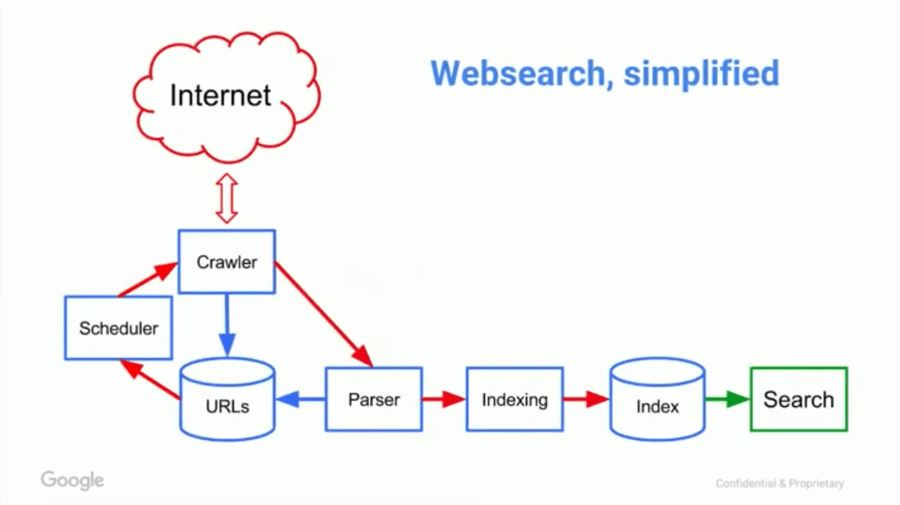
Image source: ahrefs.com
However, the basic rule remains the same: relevance. Any search engine will show the pages it thinks are most relevant first. They do this by performing a number of functions, as explained below.
Dragging
This is the process by which a search engine finds content on the Internet.
Indexing
This is the process by which a search engine makes sense of online content and stores and organizes it.
For every page online, the search engine will try to understand the content and categorize it as best it can. This way, the search engine has an entire index or database of results that it can now display for the search queries it receives.
classification
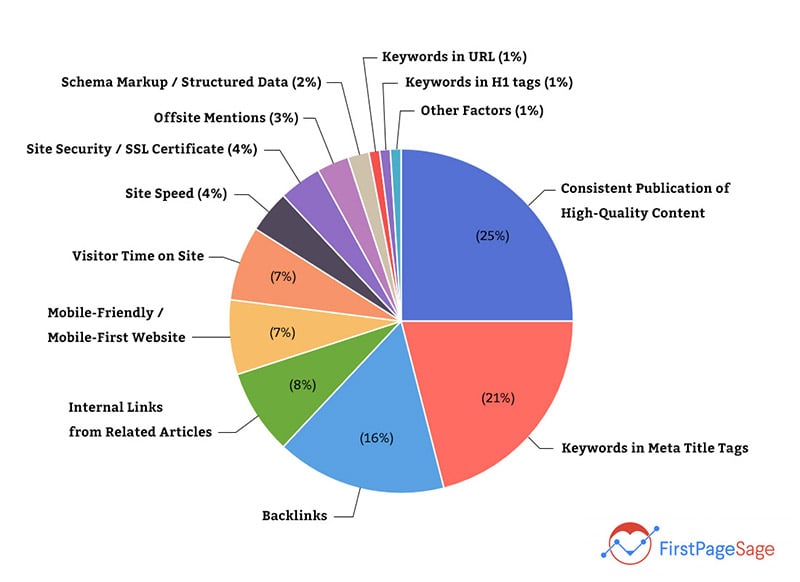
Source: firstpagesage.com
Ranking is the process by which a search engine decides which of the indexed pages to display first for a particular search query. The algorithm behind this changes often, but as marketers, you need to stay up to date with the latest changes.
SEO Basics: How to Make SEO Work for You
As stated above, the dynamics of SEO keep changing and you need to stay up to date with the latest trends and algorithm changes. However, there are some fundamental principles of SEO that remain the same.
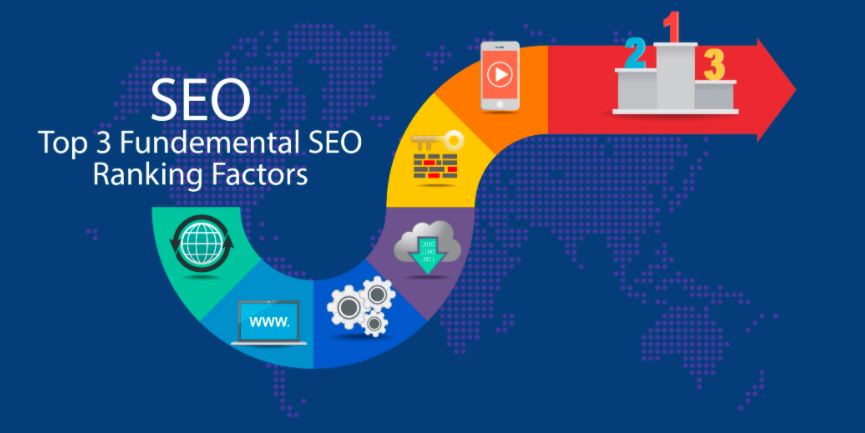
Source: adsentialmarketing.com
These SEO fundamentals or strategies are the foundation of how you can make it work for you and get more organic traffic for your website. Use the strategies mentioned below to cover the basics of SEO for your website.
Entry links
Backlinks basically mean the links from other websites in your niche that drive traffic to your website. People link to other websites to direct their users to other useful content or to give credit to some information they have cited from your website.
The more reputable websites that link to you, the better your website’s reputation. This is why you should try to get backlinks from high domain authority websites in your field.
The quality of your website links or landing pages is very important when it comes to search engine ranking criteria. The more high quality backlinks you have, the better your chances of ranking well.
Relevant content
We cannot stress enough the importance of relevant content when it comes to SEO. This is probably the most important criterion of all when it comes to improving your search ranking.
All search engines strive to show the most relevant results to their users. This is the number one criteria for all search engines. This is why you should focus on improving the quality of your website content to win in SEO.
What we mean by quality is that if you want a given page to rank for a given keyword, it should provide value to people searching for that keyword.
Simply stuffing random keywords into your content is no longer enough to rank well. Your content should be useful and relevant to the people you are targeting.
And search engines are very good at detecting whether or not it’s relevant and useful. Let’s say you rank well simply because you’ve stuffed your content with keywords. You also get traffic based on this.
However, these people will not stay on your website and will leave as soon as they see that your content does not solve their purpose. Search engines pick up on this online behavior and take it into account when evaluating relevance.
Therefore, any content you create should be created with a specific target audience in mind. Think about what they would like to read when they search for a particular keyword.
If you simply start creating content with this mindset, you won’t have to rely on shady keyword stuffing tactics anymore. If your content is useful and relevant, it will rank. Simple as that.
User experience
This is another very important criterion that search engines take into account when ranking pages. How users respond to your website.
Some of the things you need to ask yourself to understand whether or not people are having a good experience browsing your website include:
Do they spend time there or just leave the landing pages?
How many people actually check out other pages on your website and not just the one they landed on?
Are your web pages taking too long to load?
How easy or difficult is it for people to navigate your website?
It sounds complicated, but it really isn’t. It all boils down to a simple and user-friendly web design.
SEO is not just about keywords and links. There is a whole side of SEO that deals with website design and user experience: technical SEO. Many beginners often ignore this aspect and focus only on keywords and links. However, your SEO initiatives are not complete without looking at this aspect as well.
Your goal should be to make it as easy for a person to navigate and navigate your website as possible. This may take some time to flesh out, but it’s worth the time and effort.
Links, content and user experience are the three legs on which SEO is built. You do it right and have all your bases covered.
what next
Now that you know all the basics of SEO, you need to start implementing them on your website. Start with the three fundamentals of SEO (backlinks, content, and user experience) and get them right.
However, your work is not done yet. Once you’ve accepted these aspects, you can investigate other SEO tactics and strategies SEO is not something you do once and just hope it lasts. This is an ongoing effort and you should be prepared to keep investing your time and effort into it for the long term.
All the best for your SEO initiatives!
About the author
With over 15 years in content marketing, Werner founded Influencer Marketing Hub in 2016. He successfully grew the platform to attract 5 million monthly visitors, making it a key place for brand marketers globally. His efforts led to the company’s acquisition in 2020. In addition, Werner’s expertise has been recognized by leading marketing and technology publications, including Forbes, TechCrunch, BBC and Wired.
[ad_2]
Source link





