


YouTube has announced the introduction of a new tool in Creator Studio that requires creators to disclose when their videos contain realistic AI-generated or altered content.
As stated in the YouTube ad:
“Viewers increasingly want transparency about whether the content they’re watching is altered or synthetic.”
To address this growing demand, YouTube will now require creators to inform their audience when a video includes content that could easily be mistaken for a real person, place or event, but has been created or modified using generative AI or other synthetic media.
Labels and disclosure requirements
Disclosures will appear as tags in the extended description or directly in the video player.
Screenshot from: blog.youtube/news-and-events/disclosing-ai-generated-content/, March 2024.
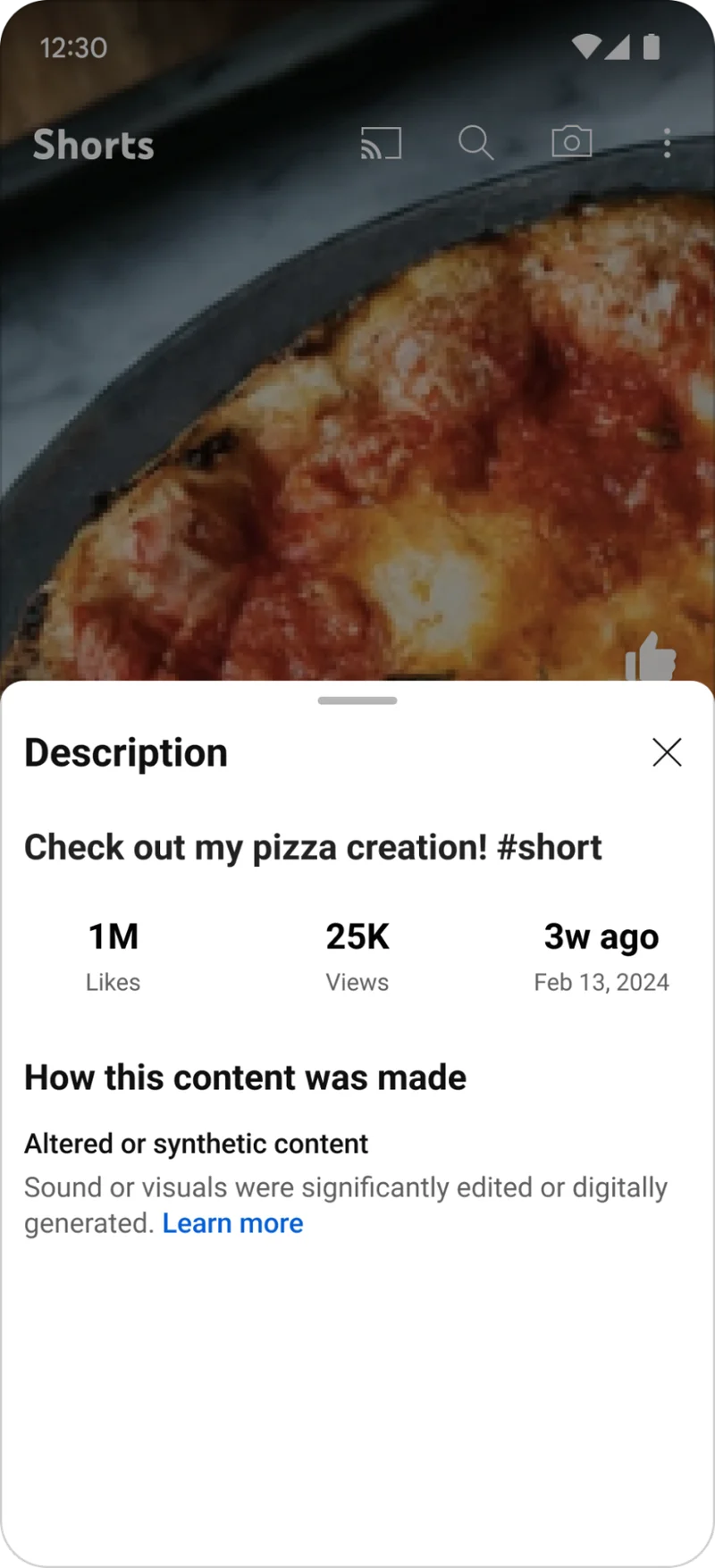 Screenshot from: blog.youtube/news-and-events/disclosing-ai-generated-content/, March 2024.
YouTube believes this new label will “strengthen transparency with viewers and build trust between creators and their audiences.”
Some examples of content that will need to be disclosed include:
Digital alteration of a video to replace one person’s face with another’s. Synthetically generate a person’s voice for narration. Altering images of real events or places to make them look different from reality. Generate realistic scenes that represent significant fictional events.
Exceptions to disclosure
YouTube recognizes that creators use generative artificial intelligence in various ways throughout the creative process and will not require disclosure when the artificial intelligence is used for productivity purposes, such as generating scripts, content ideasor automatic subtitles.
In addition, disclosure will not be required unrealistic or inconsequential changes, such as color adjustments, lighting filters, special effects, or beauty filters.
Deployment and application
The tags will roll out across all YouTube surfaces and formats in the coming weeks, starting with the YouTube app on mobile devices and eventually expanding to desktop and TV.
While creators will have time to adjust to the new process, YouTube may consider enforcement in the future for those who consistently fail to disclose their use of AI-generated content.
In some cases, especially when altered or synthetic content may confuse or mislead people, YouTube may add a tag even if the creator has not disclosed it.
YouTube is working to update its privacy process to allow people to request the removal of synthetic or AI-generated content that impersonates an identifiable person, including their face or voice.
To sum up
As viewers demand more transparency, marketers must be upfront about using AI-generated content to stay in good standing on YouTube.
While AI can be a powerful tool for content creation, marketers should strive to balance leveraging AI capabilities with maintaining a human touch.
FAQ
How does YouTube’s new AI-generated content disclosure policy affect content creators?
The policy requires content creators to disclose whether their videos include AI-generated or significantly altered content that mimics real-life scenarios. Disclosure tags will be added to video descriptions or directly in the player. Failure to comply with disclosure requirements could result in enforcement action by YouTube.
What are the exceptions to YouTube’s mandatory AI content disclosure requirements?
AI used to produce non-realistic or animated content, including special effects and production assistance, is exempt from disclosure. This also applies to minor adjustments such as color correction, lighting filters or beautification enhancements.
What action will YouTube take if creators don’t disclose AI-generated content?
In cases where AI-generated content may mislead viewers, YouTube may add a disclosure tag if the creator has not done so. Creators will have a grace period to adapt to the new policy, but persistent non-compliance may result in enforcement action. YouTube is refining its privacy guidelines to allow people to request the removal of AI-generated content that uses their likeness without consent.
Featured Image: Muhammad Alimaki/Shutterstock
[ad_2]
Source link





