


While many factors contribute to experience, expertise, authority and trustworthiness (EEAT), SEOs focus more on content-based cues. However, internal linking is often overlooked.
A powerful yet vastly underutilized strategy, internal linking is crucial to showing your website’s EEAT and increasing your SEO performance. It involves strategically placing hyperlinks within your website content to connect relevant pages on your site. These links have a dual purpose:
Guide users to explore related information on your website. They signal to search engines the importance and interconnectedness of your content.
By leveraging internal linking within a well-structured content strategy, you can unlock the key to proving your website’s EEAT and establishing yourself as a trusted resource.
Maximizing EEAT through content structure
EEAT is reshaping SEO strategies, emphasizing the need for high quality and meaningful content. It’s about crafting stories that resonate, showcasing your expertise and establishing a connection with your audience, making them trust you as an authority.
A website’s ability to effectively demonstrate these essential qualities to users and search engines depends largely on the organization, presentation and interconnection of its content.
The saying “jack of all trades” highlights the challenges faced when content structure is neglected in EEAT research.
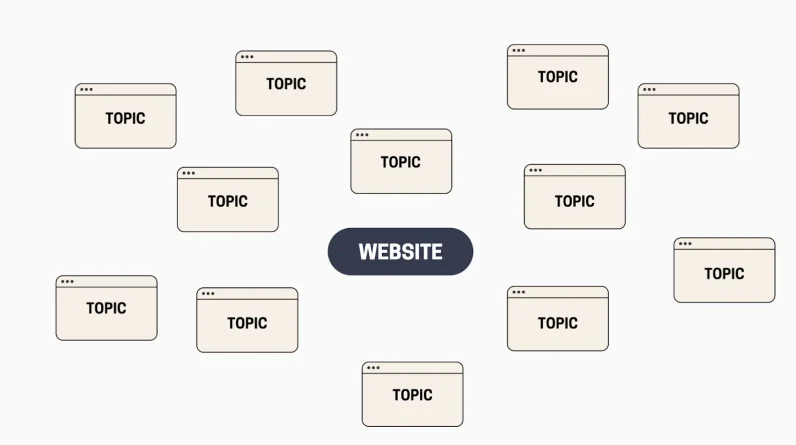
An unstructured approach, characterized by disparate and loosely connected pages spread across your website, undermines EEAT optimization by:
Lack of expertise: Surface coverage of broad topics, trying to appeal to everyone, fails to establish a deep understanding or thorough knowledge of any specific area.
Diminishing authority: Frequent topic changes make it difficult to establish authority in specific areas.
Question the reliability: A lack of focus can raise concerns about your website’s reliability as a source of information.
Adopt a Topic Map Mindset
Moving beyond the “jack of all trades” approach requires shifting your content strategy to a topical map mindset. This involves visualizing your website content as a road map, where each page contributes to a broader understanding of a central topic or theme.
This change paves the way to implement a pillar cluster strategy, which is critical to creating well-structured content and showcasing EEAT.
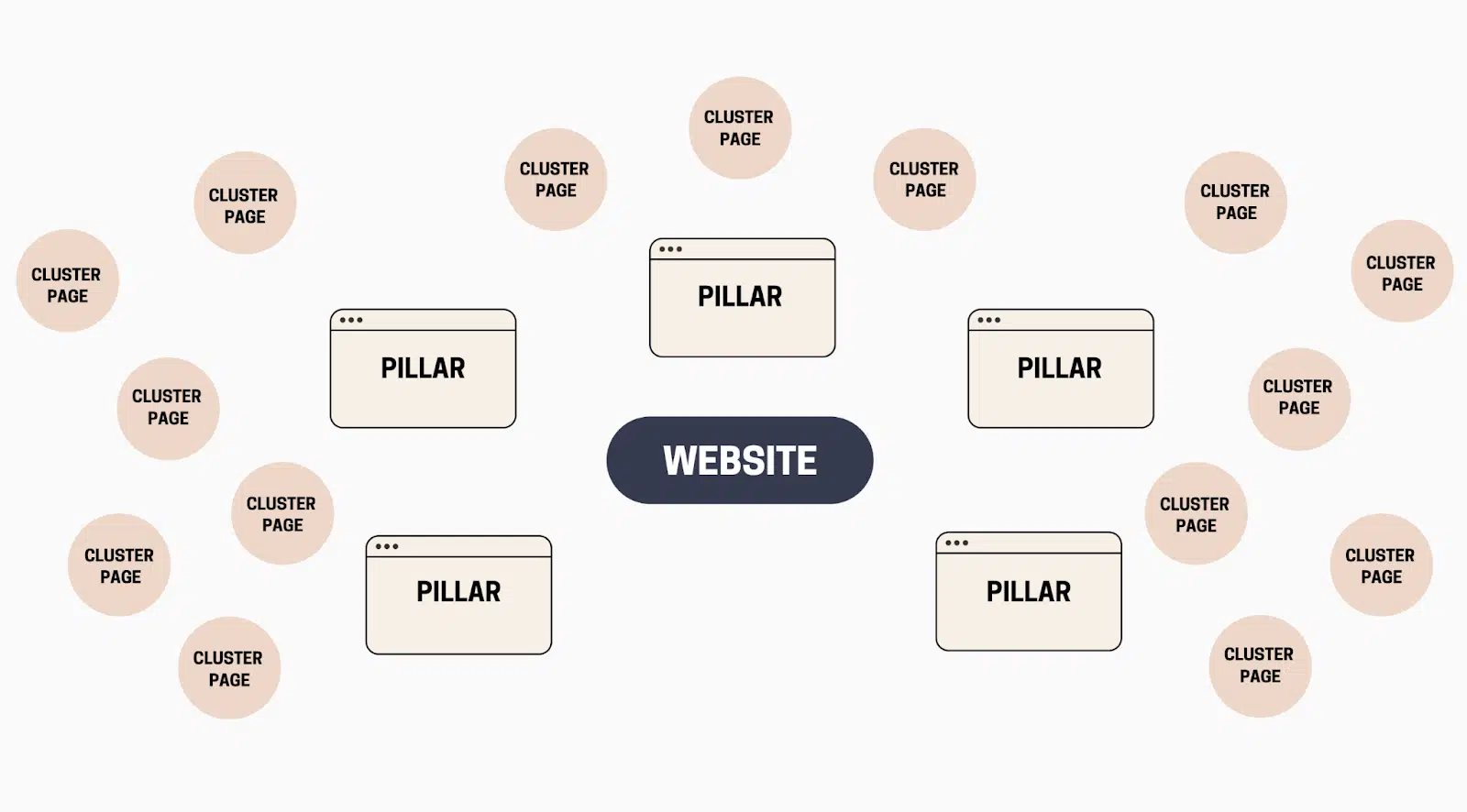
Imagine pillar pages as the main reference points of your thematic map. These comprehensive and authoritative resources delve deeper into the core topic, providing a basic understanding of the subject matter. Think of your pillar pages as central axes of knowledge.
Cluster pages support your pillar pages. These are articles, blog posts, or other more specific and focused content formats that explore various aspects and subtopics related to the central topic.
How this strategy increases EEAT:
Improved experience: In-depth pillar pages and cluster information pages show your comprehensive understanding of your chosen topic, cementing your position as an expert to users and search engines.
Increase your authority: The expansive nature of your content, with pillar and clusters covering all areas of a particular topic, increases your authority on the topic.
Increased reliability: Clear organization of your website content improves user experience and builds trust.
While a well-structured thematic map and pillar-cluster strategy form the basis for a strong EEAT presence, maximizing the impact of this structure relies on strategic internal linkage.
Get the daily search newsletter marketers trust.
Improve the EEAT with the placement of strategic links
Now that we’ve laid the groundwork with a killer, well-structured content strategy, it’s time to boost our EEAT with strategic internal linking.
Think of this approach as the secret sauce or glue that holds your site’s content ecosystem together. By weaving your pillar pages with related cluster content, we create a web of information that amplifies the structure, depth and authority of your site.
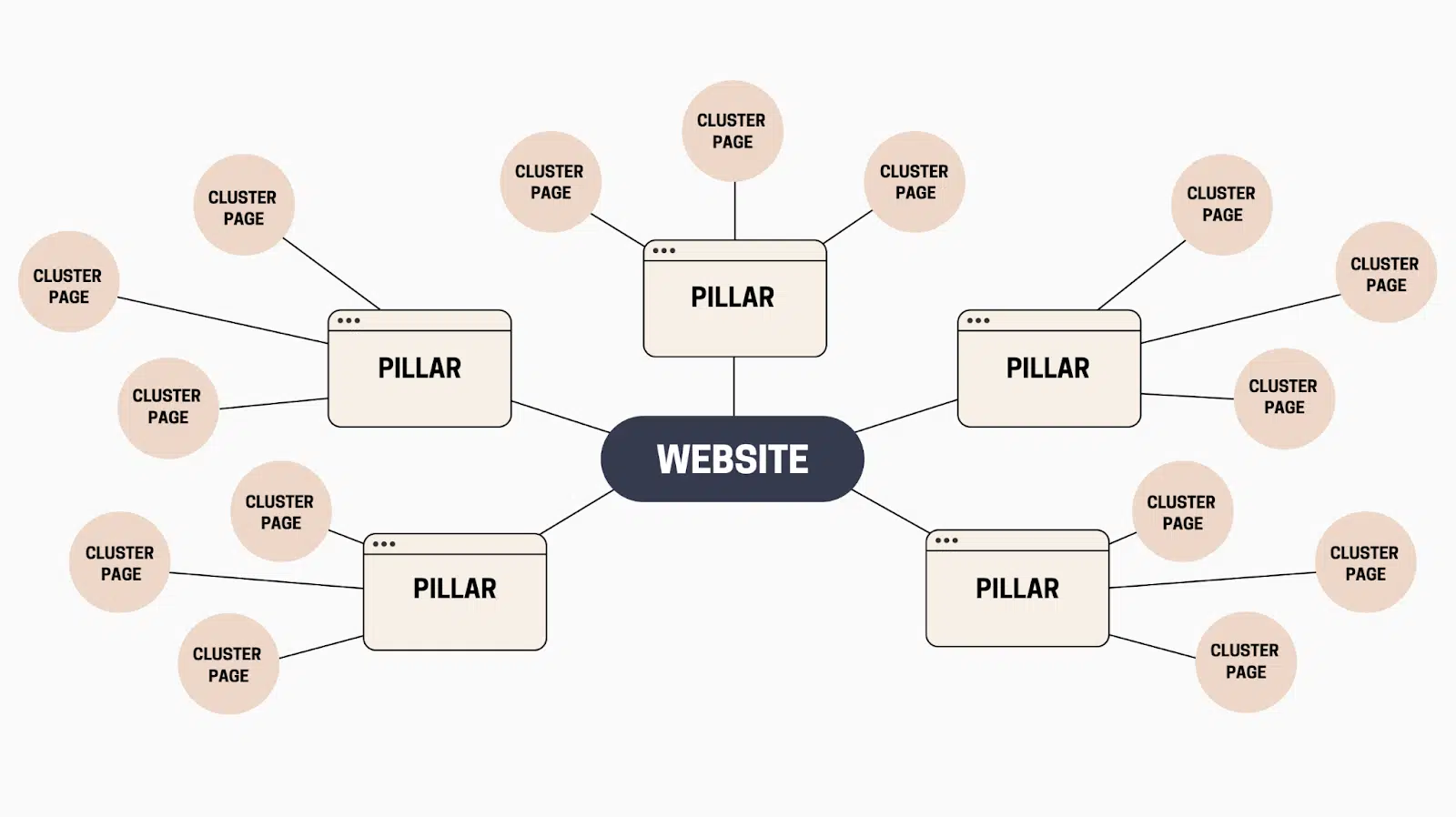
Now, our theme map is complete! Strategic internal link placement serves as vital connectors within your website architecture.
Structure information like a professional
Think of the strategic internal link as the circuits on a motherboard, where each link is a pathway that ensures power flows smoothly and efficiently between components. Likewise, your website’s internal links facilitate the flow of information and the distribution of search engine equity, from your high-priority pillars to your supporting clusters.
These links are not random; they are well placed to create a clear hierarchy and logical flow of information on your site. This shows your organizational skills and deep knowledge of the subject at hand.
It’s like saying to Google, “Hey, not only do we know our stuff, but we know exactly how it all fits together.”
Showing depth with every click
Every time you link to relevant supporting content, whether it’s delving into subtopics or exploring related aspects, you’re showing the breadth and depth of your understanding. This shows your authority to users and search engines.
Pointing out importance where it matters
We’re not just distributing equity to cluster pages. With a strong internal linking strategy, we can also point out the importance of pillar pages. With each cluster page that links to the pillar, we identify to Google that these main or pillar pages are where our true experience is displayed.
Mastering Internal Linking: The Topic-Based Approach
You’ve designed a killer content strategy and recognized the need for a strong internal link network. Now is the time to unlock the true potential of your websites content. But how can you efficiently implement an internal linking strategy that maximizes your site’s EEAT?
The theme-based approach Internal linking is the backbone of your pillar-cluster strategy, shaping the complex relationships between each page. But we’re upping our game by introducing a tiered structure for cluster pages. After all, not all cluster pages are created equal.
Build your page hierarchy
Let’s start things off by establishing a clear hierarchy of pages:
Pillar page: This page is the pinnacle of authority, encapsulating your experience and overall theme.
Cluster level 1: These powerful pages have high traffic or are strategically targeting high volume search queries.
Cluster level 2: Acting as a supporting cast, these pages may focus on low-volume search terms, but they play a critical role in enriching the depth of your content.
Now that we have our content hierarchy in place, it’s time to dive into the nuts and bolts of internal linking.
Identification of link objectives
Before proceeding, it is crucial to precisely identify our linking goals. Basically, we’re mapping our link location by following these rules:
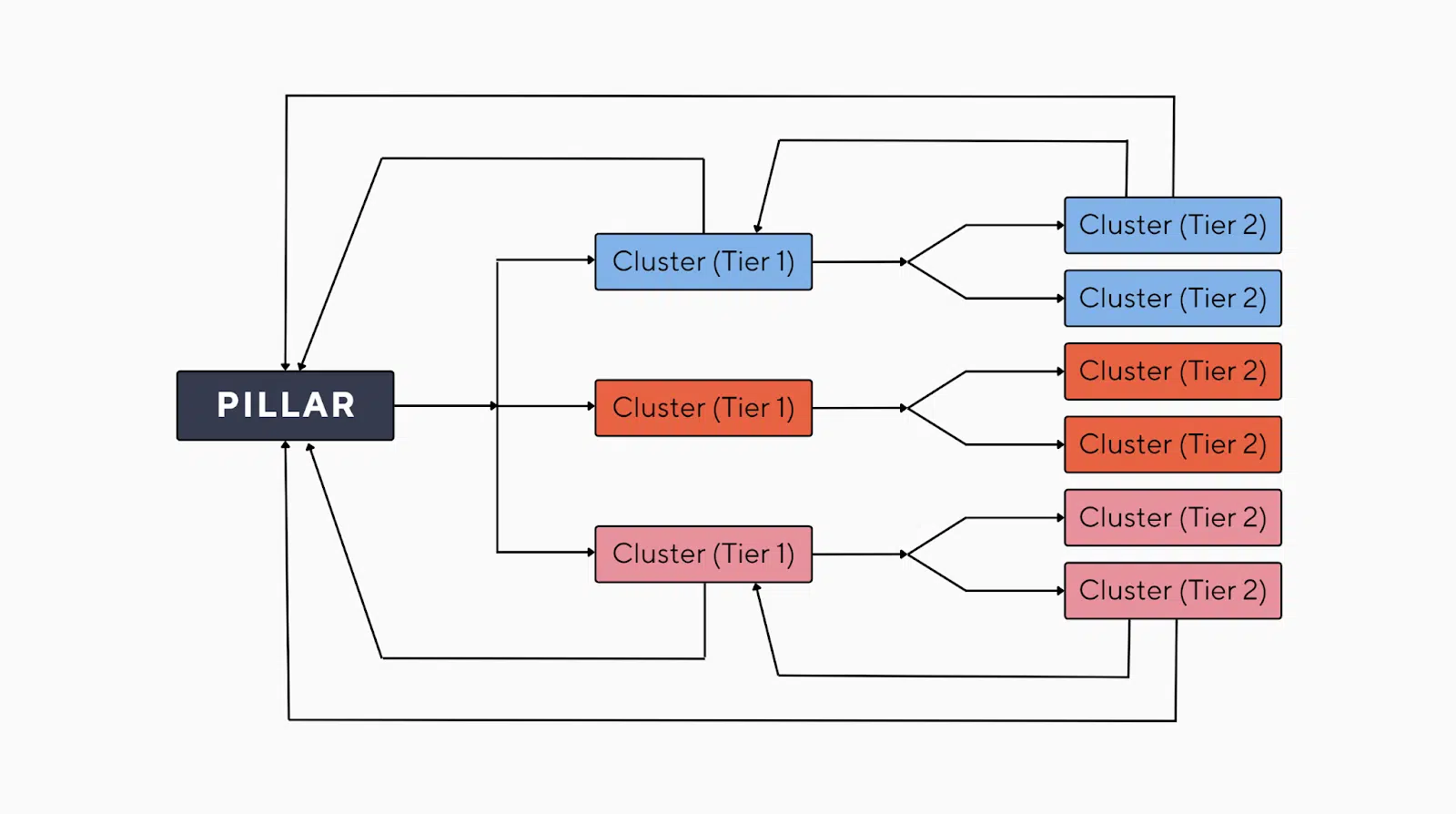
Starting with the pillar pageour goal is to strategically place anchor text links that lead to cluster level 1 pages. These links serve as pathways, guiding users to explore specific aspects of the overall topic in more depth.
Passing to the Level 1 cluster pages, the focus shifts slightly. Here, we ensure that each page not only links to the pillar page, but also extends its reach by linking to Tier 2 cluster pages. This network of interconnected links reinforces the unity of your content and improves user experience by providing multiple entry points to explore related topics.
Finally, a Level 2 cluster pages, the linking strategy completes the circle. These pages link to both the Tier 1 cluster page and the pillar page, completing the loop and solidifying the relevance and authority of your content.
Tips for optimizing link placement
Here are four additional tips for optimizing your link placement strategy:
Embed anchor text strategically: Anchor text links should ideally be placed within the body of your pages, using existing keywords or integrating additional relevant content. This strategic placement enhances the context and relevance of your internal links.
Evaluate link placement methodically: Link placement evaluation can be done by manually reviewing each page’s content or using automated tools such as Screaming Frog’s custom extraction feature. While manual review offers precise control and customization, automated methods provide efficiency, especially for larger clusters. Choose the method that best suits your needs and ensure that internal links are strategically placed to improve content cohesion.
Track inbound and outbound links per page: As you build your internal linking strategy, track the number of inbound and outbound links on each page. This allows you to maintain a balanced link profile and ensures that your pages are well connected to your website architecture.
Implement continuous performance monitoring: Monitor changes in user engagement metrics such as bounce rate and time on page, as well as fluctuations in search engine rankings. By regularly evaluating the impact of internal linking on user experience and search engine visibility, you can make informed adjustments.
Internal links increase the path to EEAT success
By carefully integrating strategic link placement into your content strategy, you’re not just curating content; you are improving its value, relevance and appeal to your audience and search engines. This deliberate approach is the cornerstone to elevating your EEAT from good to great, transforming your website into a beacon of trust, authority and expertise in your niche.
Remember, SEO is a journey, not a destination. Keep monitoring and repeating your link building efforts to generate tangible results.
The views expressed in this article are those of the guest author and not necessarily Search Engine Land. Staff authors are listed here.
[ad_2]
Source link





