


Web developers often spend time optimizing page speed to improve user experience.
In the past, Google gave higher rankings to faster loading websites than slower ones.
This leads to the question: Does page speed affect search rankings today? And if so, how important is it?
In this chapter, we’ll examine the relationship between page speed and SEO, assessing the extent to which speed continues to influence search results.
[Recommended Read] → Ranking factors: systems, signals and page experience
The Claim: Page speed is a ranking factor
Pages that load quickly were thought to increase Google search rankings.
Speed is measured by how quickly a page loads after clicking a link in search results, now measured using Core Web Vitals metrics.
Google’s PageSpeed Insights tool measures page load speed, further fueling claims that speed affects rankings.
These assumptions arise from the knowledge that Google wants to provide pages with a good user experience, so fast pages are considered an advantage.
It’s more satisfying when pages load instantly upon click, which was the idea behind Accelerated Mobile Pages (AMP).
A search results page with quick links seems ideal, but it could exclude slower and more relevant pages.
This is where the argument for page speed as a ranking factor falls short.
Google repeatedly says that relevance is the number one ranking factor. If fast pages got an automatic boost, they could overtake more relevant content that better answers the query, hurting search engines.
Speed at the expense of quality does users a disservice.
There are claims for and against page speed affecting rankings, with much debate in SEO. Let’s examine the tests to clear up misconceptions about page speed.
Prior evidence of page speed as a ranking factor
Google has long considered website speed to be a factor in search engine rankings, announced in April 2010 that their algorithm would begin to incorporate site speed when determining the ranking of search results.
As Google said at the time:
“Like us, our users place a high value on speed, which is why we’ve decided to factor site speed into our search rankings.”
This initial change was applied to desktop search results. It took nearly another decade before, in July 2018, Google finally made page speed a ranking factor for mobile search results.
A company announcement states:
“Users want to find answers to their questions quickly, and the data shows that people really care about how quickly their pages load.
The search team announced that speed would be a ranking signal for desktop search in 2010, and starting this month (July 2018), page speed will also be a ranking factor for in mobile searches.”
Current evidence against page speed as a ranking factor
In April 2023, Google updated its documentation classification systems page and removed the “page experience” system as one of the ranking systems. But “page experience” got its own page in the documentation, and Google was careful to clarify that the algorithms directly reward good page experience signals.
Still, removing “page experience” from the ranking systems page was an unexpected change in the SEO community. Page speed is part of the page experience, so what does this mean for speed as a ranking factor?
This change comes after Google’s “useful content update,” which aims to better reward pages with experience, expertise, authority, and trustworthiness based on semantic analysis rather than quantitative metrics.
In the documentation of the page experience, Google clarifies that there are many signals that affect the page experience. Load times may or may not be weighted within this system, so page speed is still a ranking factor, but it may not have a huge impact all the time.
Google’s core philosophy has always been that relevancy is most important, and fast load times do not necessarily equate to useful, high-quality content. Better content that is slightly slower can be superior to worse content that loads faster. That doesn’t mean page speed isn’t important, either. Page experience is part of how users interact with content, and algorithms reward good page experience factors like speed.
With the rise of mobile browsing and improved bandwidth, page speed may be less of a differentiator compared to a decade ago, when slower connections were more common.
It is clear that the changes were a matter of organization, and not of any real algorithmic change.
[Ranking Factors 2023] Download the free ebook + cheat sheet →
Yes, page speed is still a ranking factor
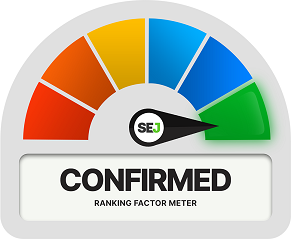
Page speed is still a confirmed ranking factor for Google search results as of April 2023. It may not have a strong impact all the time, but it’s a signal you can use to gauge experience of the page.
While page speed is still vital to the user experience, it may not directly influence search rankings if your content has issues.
Relevance is still the number one ranking factor, according to Google. Page experience is important as it affects a user’s ability to interact with your website and speed is part of that.
Featured image: Paulo Bobita/Search Engine Journal
[ad_2]
Source link





