


The arrival of Google’s Search Generative Experience (SGE) is revolutionizing online search, ushering in a new era of contextualization and intuition in information discovery.
This technological advance is fundamentally changing SEO strategies, requiring professionals to adopt a new approach to content creation.
The impact on users is just as significant, with AI making search results much easier to access.
This article proposes an advanced thematic mapping approach to maximize the effectiveness of these technologies in SEO.
He also discusses the knowledge of large language models (LLM) such as OpenAI’s GPT, Google’s Bard, and Microsoft’s Bing AI, highlighting their limitations and potential in SEO content creation.
The arrival of Google SGE
Google SGE marks a revolutionary change in online search. This innovation makes Google adopt a more contextual and intuitive approach to information retrieval.
This development has a significant impact on how SEO professionals should think about and plan their content strategies.
The user experience is also changing, as AI-driven search results are easier to find.
Answers are quickly accessible without having to go through multiple tabs and pages.
Understanding how this AI works and extracting its knowledge using new methods is essential to effectively positioning yourself and understanding its limitations.
Understanding Large Language Models (LLM)
LLMs like GPT, Bard and Bing AI are powerful tools with impressive natural language generation and understanding capabilities.
However, these models have limitations, especially when it comes to understanding specific contexts and updating information.
Image by the author, January 2024
SEO project staff must understand these limitations in order to maximize content creation efficiency.
There are two types of knowledge: that which comes from the data used for training, and that which is found in the searcher’s index and used as part of the answers.
To illustrate this, I would like to show you how we can map this knowledge.
Importance of thematic mapping
Thematic mapping is a fundamental tool in SEO that organizes and structures content in a logical and intuitive way.
It ensures that all facets of a topic are covered, increasing the relevance and quality of the content. Using an LLM for thematic mapping offers unique advantages for generating new ideas and perspectives.
Structuring a thematic map
Topic mapping is the practice of grouping related ideas and topics into groups to facilitate the creation of coherent and comprehensive content.
This approach not only helps to organize ideas in a logical way, but also to identify gaps in existing content.
Thematic map Architecture
Choice of topic and keywords
Choose a niche topic and identify relevant keywords. You can start with the LLM of your choice, but I prefer one approach.
The first is to use Google AI such as PaLM 2 if you have a good command of Google tools (for your information, I have created a training course on Data Marketing Labs).
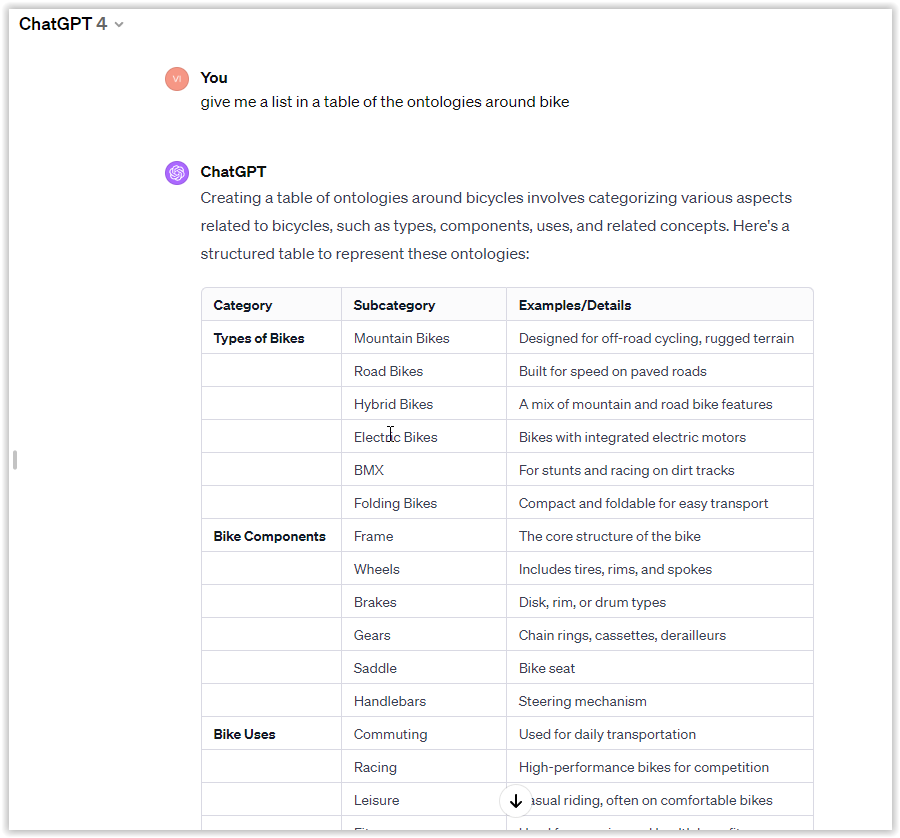
Here is a very simplified prompt to get the ontologies present in ChatGPT:
Give me a list in a table of the ontologies around “YOUR CONCEPT”.
 Screenshot of ChatGPT 4, January 2024
Brainstorming
For each expression, you will ask the LLM to brainstorm by creating several passages related to the expression.
I am often asked why I do multiple passages. The answer is simply because, depending on the creativity threshold and the answers in the Google index, the LLM can have slightly different answers, and this allows the field of possibilities to be included.
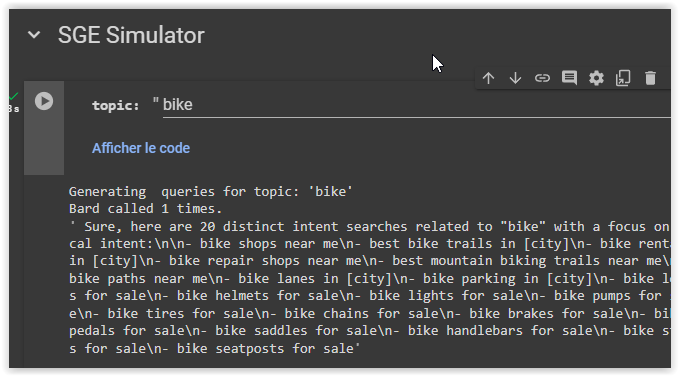
Here is an image I use PALM 2 to generate topics that the AI knows perfectly well and that are searched for by web users. The more topics you order, the better your topic coverage will be.
 SGE Simulator screenshot, January 2024
extraction
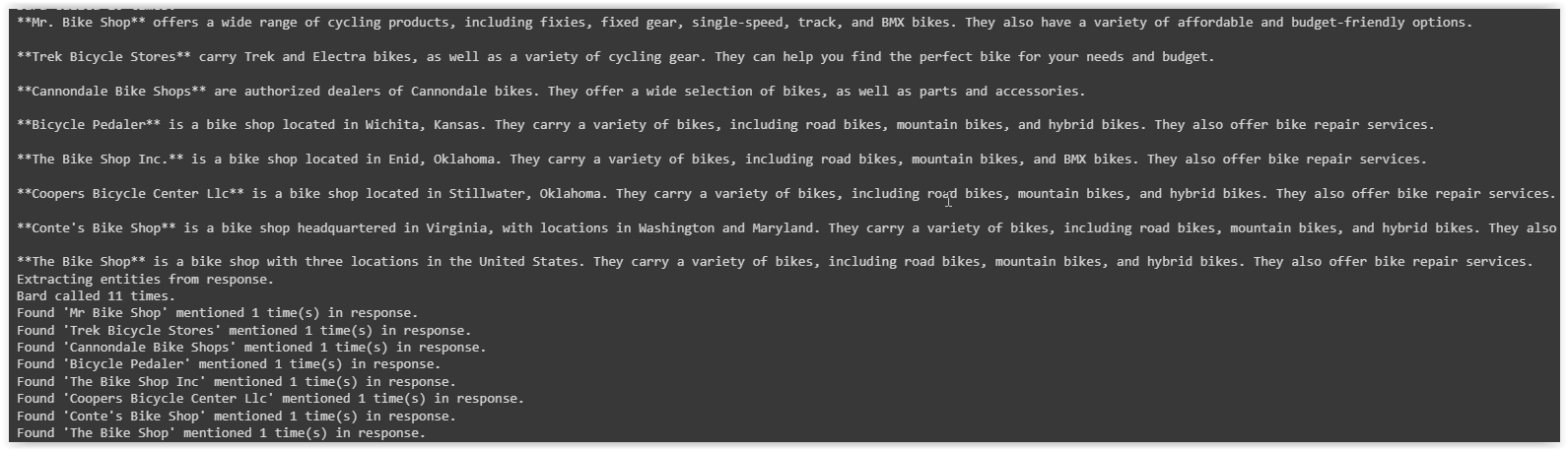
You can then extract all entities mentioned in relation to a concept.
In the beginning, I was using Python libraries, but now you can use an LLM because the task is very simple.
In the end, everything is stored in an array and you can count the number of times a concept appears. I would like to explain this part in more detail.
In this image you can see that for each of the above topics I am doing five generations to try to retrieve as many relevant elements as possible, which will help me generate the mind map.
For each generated text, I use PaLM 2 to extract the important terms, and everything is stored in a table.
 Screenshot of PaLM 2, January 2024
As you can see, each step takes place in a Google Cowhich offers ready-to-use tables and makes it easy to sort data with a few clicks.
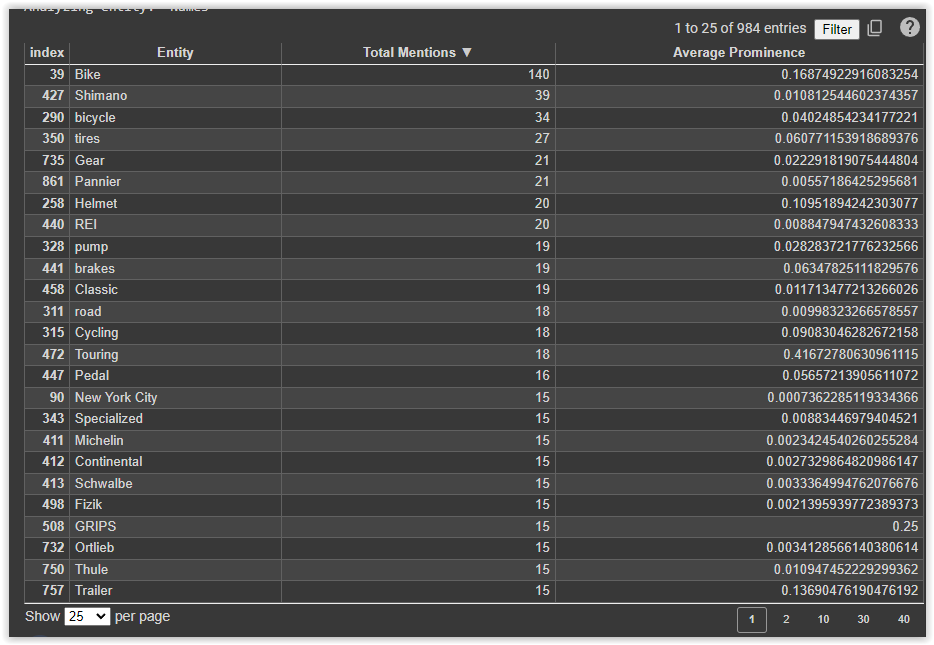 Screenshot from Google Colab, January 2024
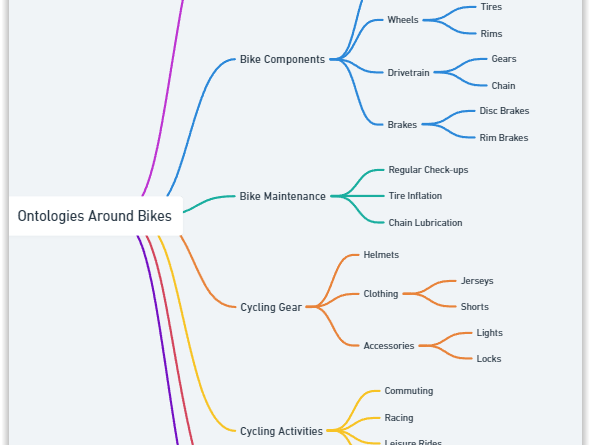
You can then create the thematic map from this indicator.
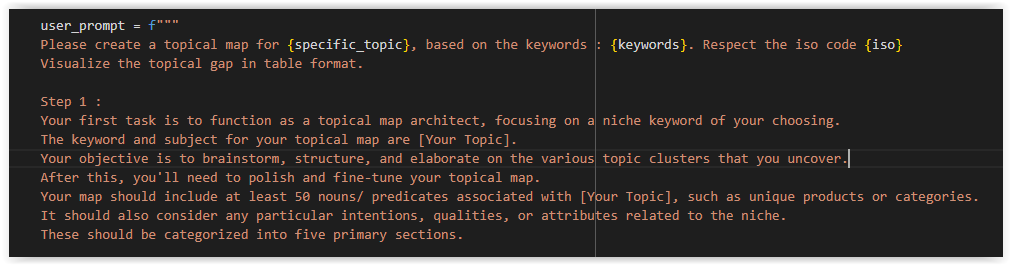 Screenshot by the author, January 2024
Here is a possible result:
**Step 1: Topic Map Creation**
**Subject:** Bicycle
**Nouns/Predicates:**
**1. Types of bikes**
– Peloton bicycle
– Electric bycicle
– Mountain bike
– Road bike
**2. Bicycle Components**
– Ring the bicycle bell
– Bicycle clips
– Bicycle pedals
– Road bike pedals
**3. Bike activities**
– Run by bike on foot regularly
– Fully conscious human bicycle
**4. Bicycle accessories**
– Mountain bike tires
**5. Bike Safety**
**Step 2: Semantic Graph**
| Subtopic 1 | Subtopic 2 | Semantic connection |
|—|—|—|
| Bike Peloton | Electric bicycle | Both are types of bicycles that run on electricity. |
| Electric bicycle | Sonar bike beautiful boy | Both are components that can be added to a bike. |
| Sonar bike beautiful boy | Fully Conscious Human Bicycle | Both are related to pilot safety. |
| Fully Conscious Human Bicycle | Cycle regularly | Both are related to the physical activity of cycling. |
| Cycle regularly | Mountain bike tires | Both are related to the terrain where you can cycle. |
| Mountain bike tires | Road Bike Pedals | Both are components that can be added to a bike. |
| Road Bike Pedals | Bicycle Clips | Both are components that can be added to a bike. |
**Step 3: Mind Map**
**Subject:** Bicycle
**Subcategories:**
1. Types of bicycles
– Peloton bicycle
– Electric bycicle
– Mountain bike
– Road bike
– BMX bike
2. Bicycle components
– Ring the bicycle bell
– Bicycle clips
– Bicycle pedals
– Road bike pedals
– Bicycle seat
3. Bicycle activities
– Run by bike on foot regularly
– Fully conscious human bicycle
– Bicycle races
– Cycle tourism
– Traveling by bicycle
4. Bicycle accessories
– Mountain bike tires
– Bicycle helmet
– Bicycle lights
– Bicycle pump
– Bicycle rack
5. Bicycle safety
– Bicycle brakes
– Bicycle reflectors
-Bike locks
– Bicycle insurance
– Bicycle maintenance
6. Bicycle brands
– Specialized
– Trek
– Giant
– Cannondale
– Scott
7. Bicycle shops
– KING
– Performance bike
– Dick’s Sporting Goods
– Walmart
– Goal
8. Cycling events
– Tour de France
– Tour through Italy
– Return to Spain
– Tour through California
– USA Cycling National Championships
9. Bicycle clubs
– The League of American Bicyclists
– Serra Club
– National Bike Club
– Adventure Cycling Association
– Bikers against child abuse
10. Bicycle defense
– People on bicycles
– Rails-to-Trails Conservancy
– Bike Walk Alliance
– National Center for Safe Routes to School
– International Bicycle Fund
Visualization
You can visualize it all using mind mapping tools and the results are very instructive.
To make visualization easier, there is a free Assistant in ChatGPT called AI Diagrams.
I invite you to search for it, and then you can request the generation of your mind map from the table in the previous steps.
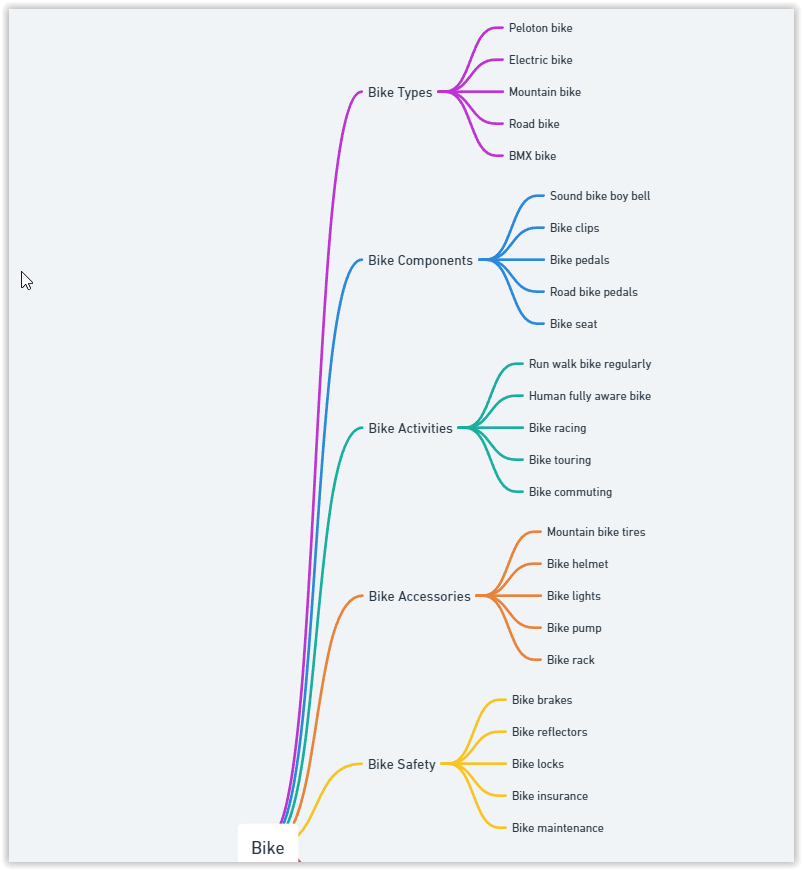 Screenshot of ChatGPT 4, January 2024
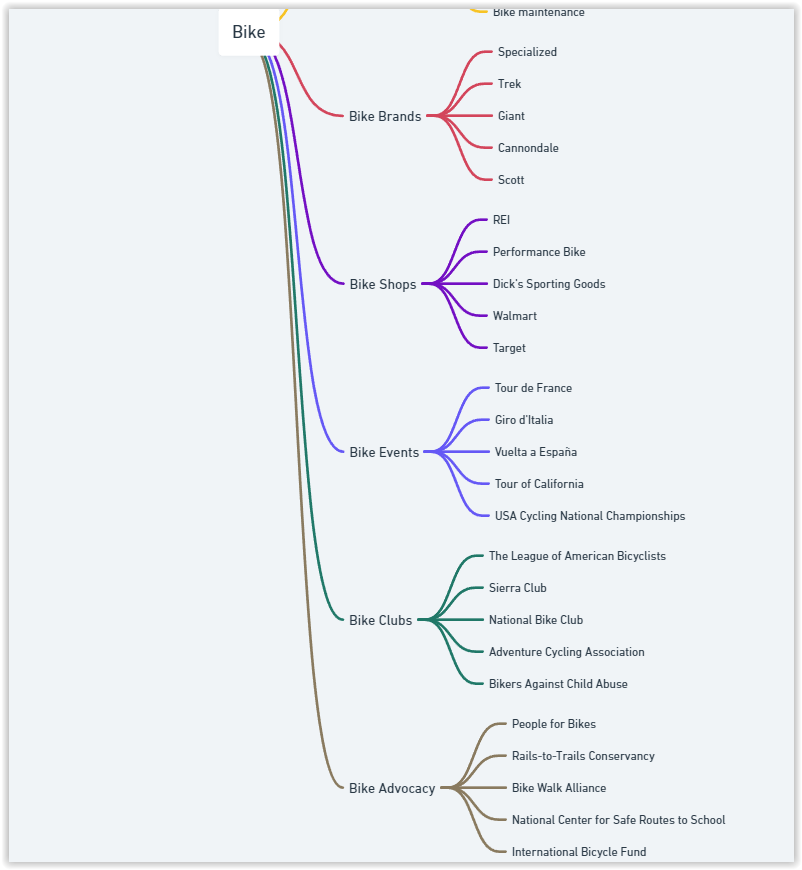 Screenshot of ChatGPT 4, January 2024
Now I would like to suggest some advanced actions to anticipate Google SGE.
Advanced strategies for Google SGE
Use Google’s PaLM 2 to check that the map covers all aspects of your topic. Integrate the map into your content writing and research process. Turn each subtopic into a web page, blog post, or other form of content and link them together to create an interconnected content web.
This methodology provides a robust way to understand the role of generative AI in search engines and optimize generative AI search features.
It is enriched with detailed examples and explanations and focuses not only on topic optimization, but on prioritizing content quality and targeting specific search intents.
Human intervention remains critical to search intent and content quality.
The combination of a skilled writer and AI can improve content optimization, using tools to maximize the efficiency and relevance of your ecosystem.
With the advent of generative AI, any SEO professional can create their own tool.
More resources:
Featured Image: Summit Art Creations/Shutterstock
[ad_2]
Source link





