


Google Ads has evolved significantly in recent years, with more automation and artificial intelligence being introduced to simplify campaign management.
One area where PPC advertisers now have to make strategic decisions is geo-targeting, whether to let Google’s algorithms determine where ads are shown based on performance data or to manually define specific geographic targets.
This article explores the key considerations for optimizing location targeting in Google Ads campaigns. It covers factors such as:
Alignment of orientation with product/service availability in different regions. Linking geo-targets to localized landing pages. Assess performance differences between locations. Balancing automation versus manual control.
With clear guidelines and example data, this guide will help you find the right geo-targeting approach for your unique business needs.
What to consider before targeting placements in Google Ads
Does your company have location-specific products or services?
This question is quite simple and basic, but if a product is not available in a location, you should exclude it from targeting.
How many times as a consumer have you seen an ad and know it’s not available in your location? It’s frustrating for consumers and a waste of funds for advertisers.
Maybe your products and services are the same across regions, but there may be specific site-specific landing pages or experiences that require geo-targeting of your campaign. Geo-targeting is set at the campaign level, but landing pages are set at the ad group or keyword level. Therefore, decisions must be made.
A key thing to remember here is that Google has two location settings:
“Presence” “Presence or interest”
Presence means that the user is physically present at that location at the time of the search.
Interest means the user is outside of the physical target, but has shown interest in that area in the past. For example, I live in the suburbs but often go to the city. If a business located in the city only shows ads to those in the city, it would miss people like me who are in the neighborhoods but interested in businesses located in the city.
Google recommends broader geo-targeting as a best practice.
“While broad geographic targeting is recommended as a best practice in Search, it’s important to know when targeting by ‘Presence’ makes sense. You should consider targeting by ‘Presence’ in cases where :
Your business is in a sensitive industry with strict targeting limitations. You only want to target users in specific locations and not users who may be in other locations but are still interested in your product or service.”
Dig Deeper: Improve your Google Ads performance: 3 simple configuration changes
Are you seeing an outsized performance variance?
This issue is more complicated and requires proof. Logically, it makes sense if a business is geo-configured and budgets are allocated accordingly to set up geo-targeting campaigns.
This would allow you to control budgets at the campaign level. However, when data can be aggregated across multiple regions, Google Ads can determine how to allocate those budgets based on the highest likelihood of conversion.
Why is this complicated? Because there is no right answer.
We’ve tested it across multiple companies, verticals and brands. The answer is not always the same. It depends on the specific business, competitive environments and budget levels as key inputs.
Get the daily search newsletter marketers trust.
Real-life examples where geographic targeting went both ways
We had a lead generation business where budgets were allocated by region. This forced us to spend money where it was not as efficient.
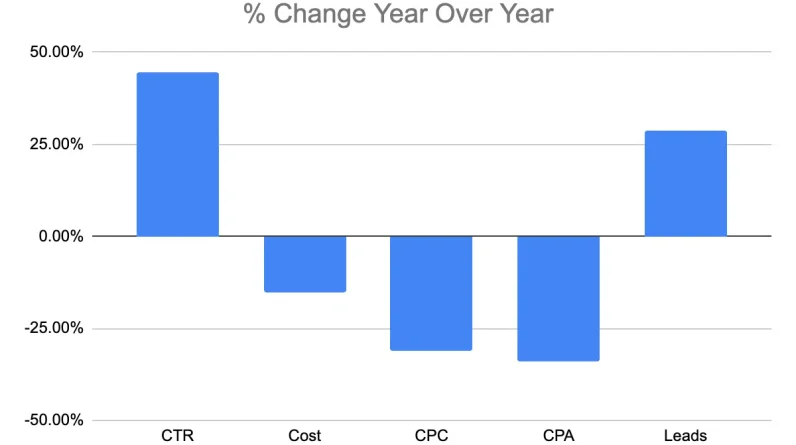
Therefore, we considered consolidating the campaigns and eliminating the autonomous budget allocations. This had an incredible impact on the campaigns, detailed below. Immediately, we saw massive gains. CPA dropped by 32% and we increased benefits by 26%.
However, differences in performance between companies often require spending to be reallocated or removed from certain regions. The data below shows the top five and worst performing states based on cost per conversion and spend.
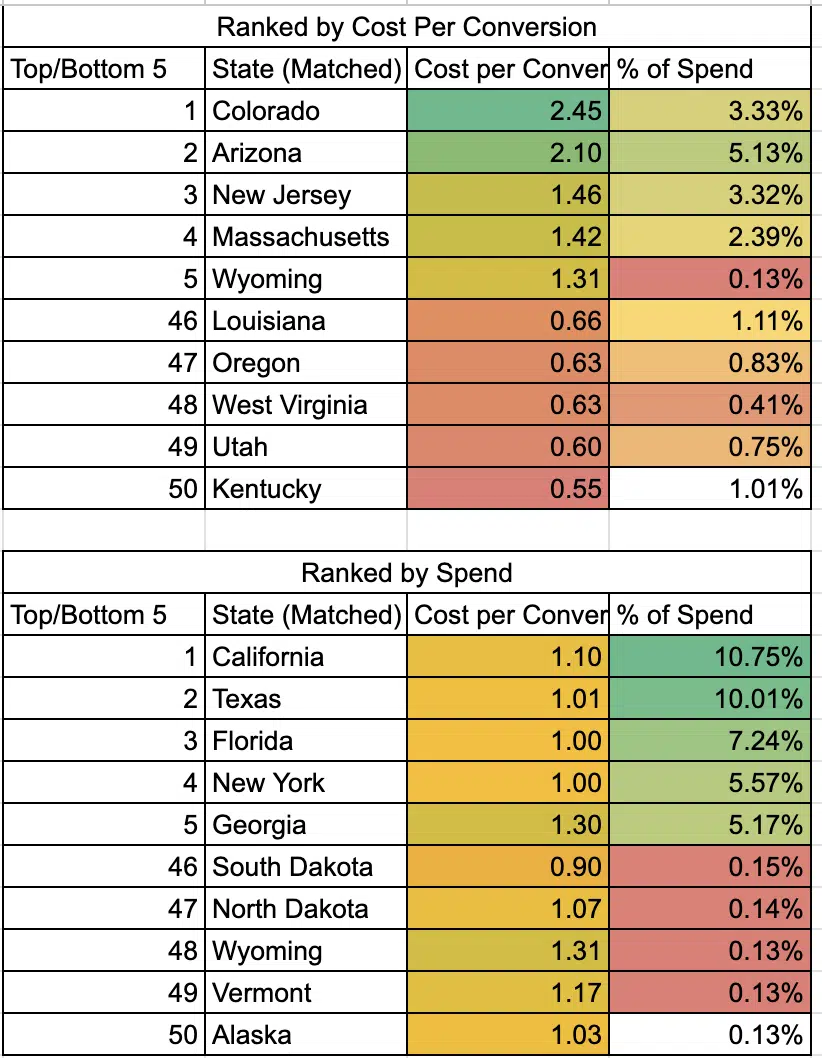
You can see that the best and worst performing states in cost per conversion are five times different.
In the example above, Kentucky is 50% lower than the average cost per conversion and is responsible for 1% of the spend. If you could reallocate 1% of spend from the highest cost-per-conversion state (Colorado in this data set), you would materially lower your cost-per-conversion.
When looking at the highest and lowest spending states, it makes sense that they are close to or on average since they account for 10% of spending.
In this case, you should consider only removing the lowest spend states above average cost per conversion so that spend can be reallocated.
This becomes even more important when your budget is small or data for these specific states is limited.
Data = power to make better, faster decisions. This is especially true for geo-targeting.
Geotargeting in Google Ads: Balancing automation and control
Geotargeting optimization in Google Ads is crucial to campaign efficiency and effectiveness. There is no one-size-fits-all approach.
Finding the right balance between automated algorithmic targeting and manual control depends on your business, products/services, localized requirements, performance data, and testing.
Use data to guide the optimization process, aiming for the ideal combination of automation and granular location control. Through analysis and testing, you can leverage geotargeting tools to improve ROI and achieve your marketing goals.
Dig Deeper: A privacy-focused PPC guide to audience targeting
The views expressed in this article are those of the guest author and not necessarily Search Engine Land. Staff authors are listed here.
[ad_2]
Source link





