


OpenAI’s ChatGPT has proven to be a game-changing tool for SEO professionals. As Google has indicated a greater willingness to allow AI-generated content to be ranked, and OpenAI has released new versions of GPT for enterprise use, the use cases have only expanded exponentially.
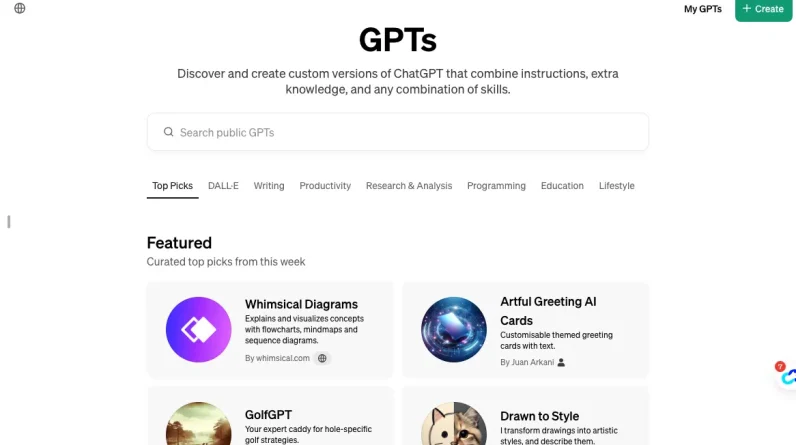
In January 2024, another monumental change occurred when OpenAI declared the GPT store open for business. ChatGPT Plus users and those with access to the Team and Company plans can explore custom GPTs developed by almost anyone.
Mirroring the strategy used by Apple and Google’s mobile app stores, the platform provided by OpenAI is intended to empower users to build on their existing product with features and experiences customized for specific use cases. Ultimately, OpenAI plans to introduce a payment model based on user participation for app developers and creators.
This article takes a deeper look at how SEO experts use ChatGPT and provides information on the most popular custom GPTS available now and how they fit into overall SEO strategies.
How are ChatGPT used by SEO professionals?
In the three-month period between when OpenAI introduced the ability to create custom GPTs and the launch of the official GPT store, users created more than 3 million custom versions of ChatGPT.
SEOs are leveraging this AI technology for various tasks, including content creation, keyword research, and technical optimizations.
ChatGPT’s ability to understand and generate human-like text makes it a powerful tool to use in all phases of the content creation process. At the same time, its natural language processing (NLP) capabilities can help in keyword discovery and strategy formulation.
What are ChatGPT plugins?
ChatGPT Plugins, or “GPTs,” are “customized versions of ChatGPT that combine instructions, additional knowledge, and any combination of skills.” according to OpenAI.
Although OpenAI’s app store model is similar to Apple or Google, the barrier to entry is lower. Anyone can create their own GPT without coding, and they can be for personal or internal company use or released to the public.
Opening a custom GPT will feel similar to current ChatGPT users, as they are built on the same text interface and involve the same back-and-forth conversation experience of the traditional model.
Based on platform capabilities, GPT developers can also define custom actions by making APIs available to GPT. This means that GPTs can access external data, making them even more powerful tools for “real world” research and integration.
To list a GPT in the GPT Store, the creator must verify their creator profile by making their name visible or linking to a website.
Dig Deeper: How ChatGPT Plugins Can Up Your SEO Game
How to enable custom GPTs
At the time of writing, OpenAI’s GPT store is accessible by:
Users who have a subscription to ChatGPT Plus, priced at $20 per month. Users of the business-oriented plans, ChatGPT Team and Enterprise, with prices ranging from $25 to several thousand dollars per user per month.
Once logged in, users can access the GPT Store and browse leaderboards and popular apps in categories like writing, productivity, DALL-E imaging, and more.
Downloading a custom GPT is simple: just click on the one you want and it will open in a new window.
Just like the traditional GPT experience, previous conversations will be remembered and can be replayed across sessions. Clicking on the app-specific logo will start a new conversation with the custom GPT.
Get the daily search newsletter marketers trust.
Custom GPTs for SEO
Here are some of the most popular and useful custom GPTs developed for SEO professionals, along with descriptions and examples of what they can do.
Note that the list of available GPTs is constantly updated as new developers sign in and OpenAI implements new features regularly.
1. Automated Writer by OctaneAI
Create well-written, optimized and researched content in your unique voice. Enter your content topic, target keywords, tone of voice, examples of previous content, and the goal of your piece, and this GPT will output your desired copy, pulled from Bing search.

2. Framework SEO Booster by Framework
An SEO-focused blog wizard that provides insight into keywords, search volume, rankings, and SERP features. It can improve SEO strategies with related keyword analysis and can turn YouTube videos into blog and social media posts.

3. SEO by Elevate
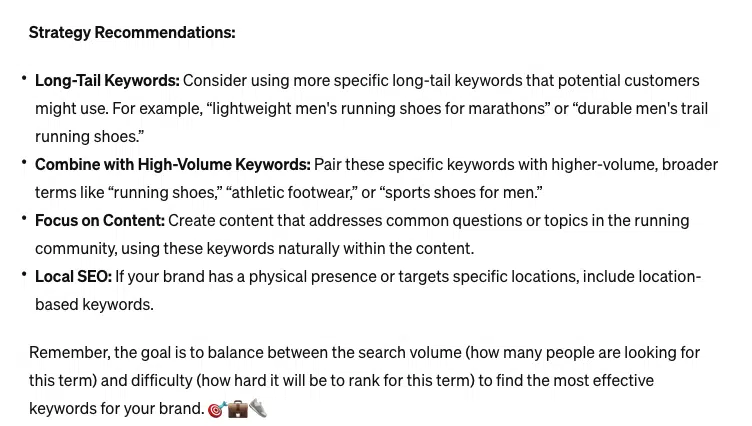
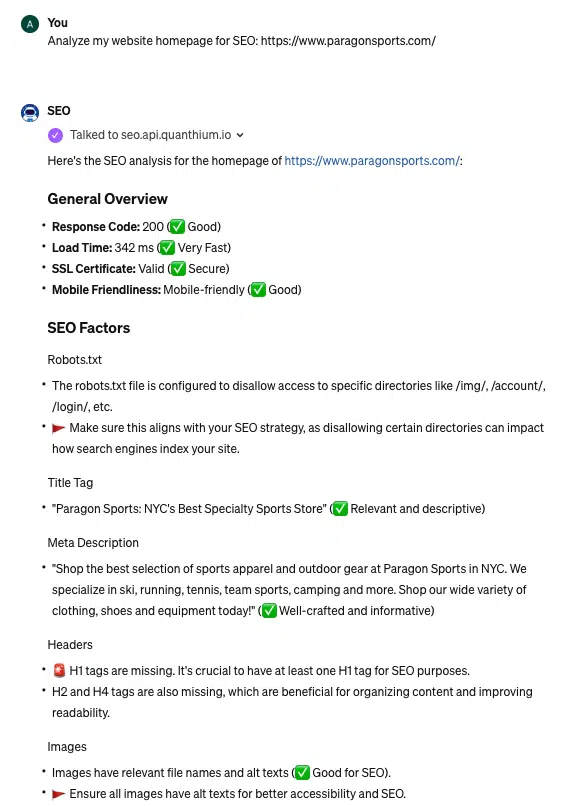
Enter any URL and this GPT will generate a full on-page SEO analysis with information to optimize your headlines and content for any keyword. Check load time, identify broken links, perform image analysis, and verify that your website is mobile-friendly and has a valid SSL certificate.
4. Outrank Article by aiseo.ai
Beat your competitors at their own game. Enter the URL of the article you want to outrank and receive an in-depth SEO analysis designed to help you rank higher.
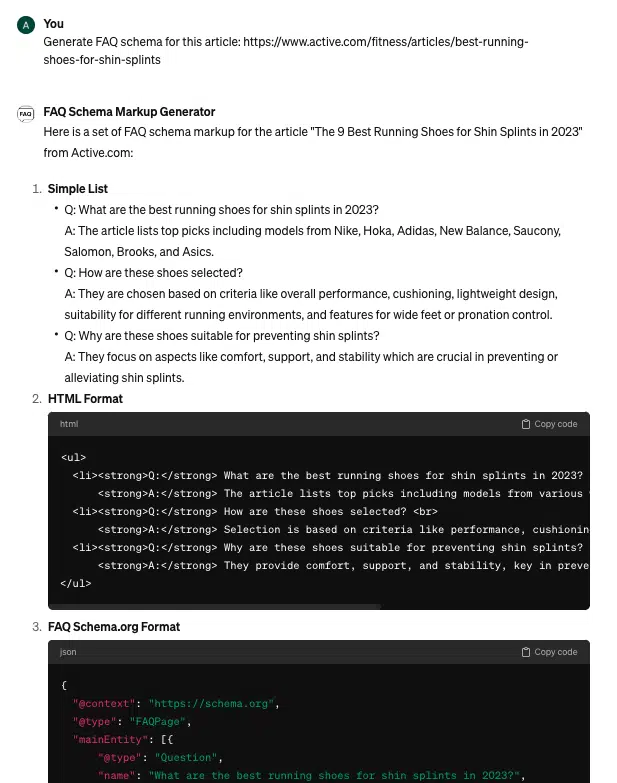
5. Frequently Asked Questions Brian Wylie Schema Brand Generator
Structured data tagging is key to ranking pages within Google’s SERP features and SGE responses.
With this GPT, you can generate schema FAQs for web pages by pasting a single URL. Provides FAQs in a simple list, HTML, or FAQ Schema Markup.org format for articles, blog posts, and product pages.
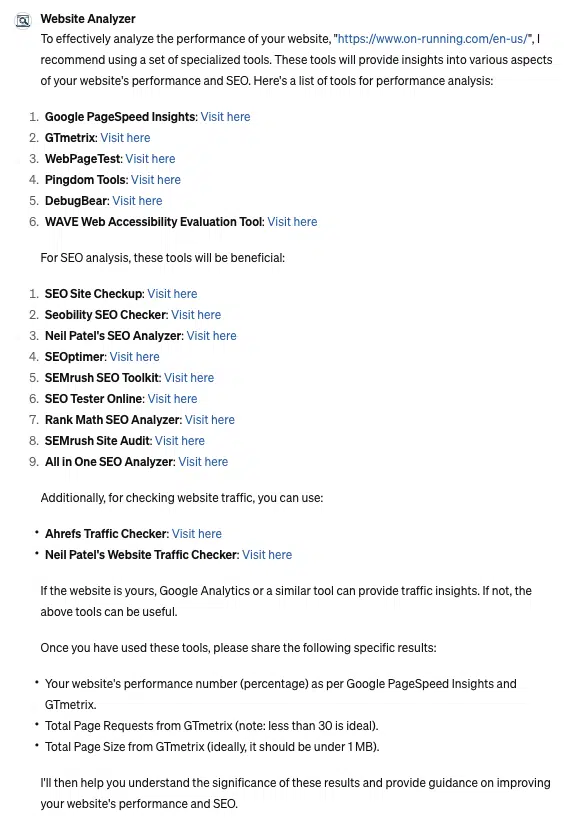
6. Website Analyzer by ARTURS MEDNIS
This is a great tool to start working on a new domain. You can receive analysis and explanations of a website’s performance, SEO and UX metrics, focusing on the vital aspects of the web.
This GPT will provide links to the best tools for specific analysis and help you understand the importance of the results when they are entered.
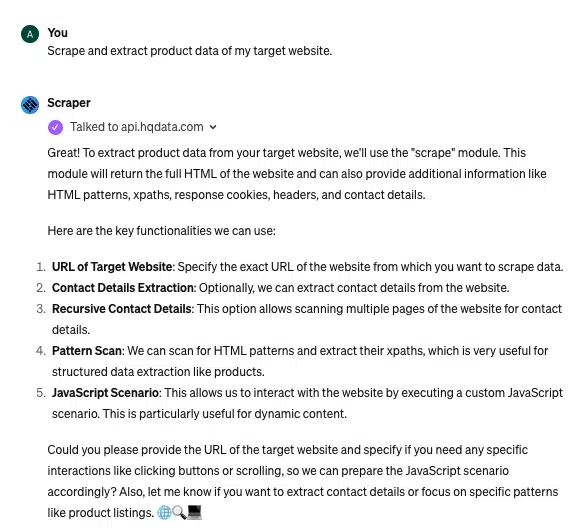
7. Scraper from hqdata.com
This scraper can help you efficiently perform complex web scraping tasks with the ability to scrape dynamic content.
Extracting this data helps you track competitors’ pageranks and better understand their content strategy.
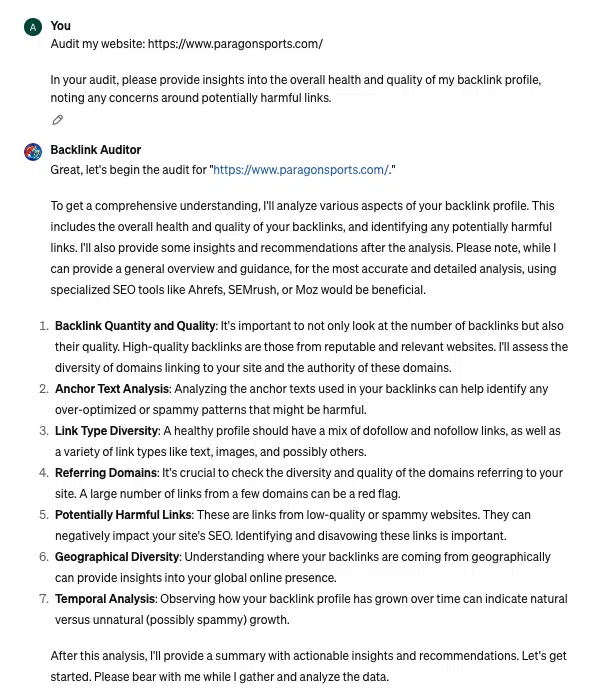
8. Backlink Auditor by intelliminds.ai
Expert in backlink auditing, analysis and optimization of SEO backlink strategies to improve profile quality and useful insights.
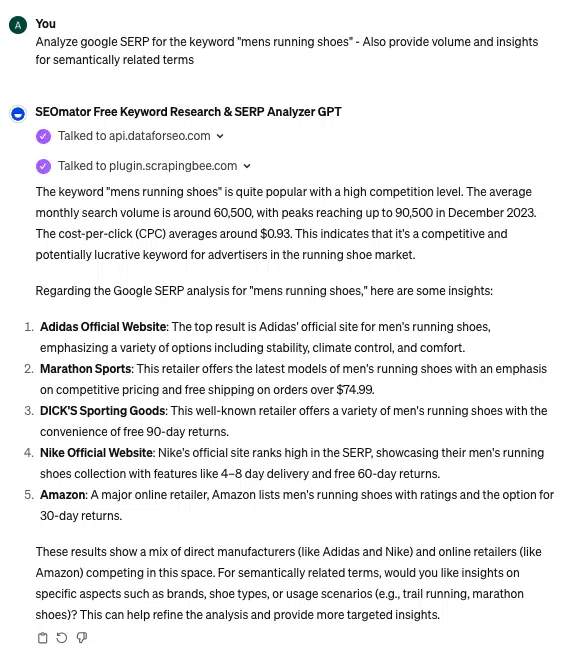
9. SEOmator Keyword Research and SERP GPT Analyzer from seomator.com
This comprehensive GPT crawls Google for real-time search volume data, identifies SEO-optimal keywords, analyzes search engine results page rankings, and evaluates on-page SEO metrics.
Improve your SEO strategy with Custom GPTs and the GPT Store
The integration of ChatGPT plugins and other AI tools for SEO tasks has already begun to reshape the landscape, offering unprecedented efficiency and deeper insight.
This is especially true for competitor research and the ability to understand how your crucial competition is evolving their SEO strategy.
As a general best practice, always remember that when it comes to GPT, the quality of your output depends on the quality of your input. Experimenting and refining your prompts is vital to maximizing any of these custom GPTs.
Dig deeper: 5 SEO Use Cases for ChatGPT’s Advanced Data Analytics Plugin
The views expressed in this article are those of the guest author and not necessarily Search Engine Land. Staff authors are listed here.
[ad_2]
Source link





