


Google is transitioning from AdSense to an eCPM payment model for publishers.
Last November, Google announced that it would update the AdSense revenue share structure to modernize the way publishers make money from their website content.
Ginny Marvin, the Google Ads link, has it confirmed this transition to eCPM payments for AdSense partners.
Hi, Yes, this change has been implemented and partners should now be paid in eCPM. More here:
— AdsLiaison (@adsliaison) February 12, 2024
A closer look at the updated revenue share
Previously, publishers received a flat 68% of ad revenue. The revenue share is now split into separate fees for buying (advertisers) and selling (publishers).
Google elaborates the specifics of this new structure:
“To display ads with AdSense for content, publishers will receive 80% of revenue after their fee is covered by the advertiser’s platform, either Google’s buying platform or a third-party.”
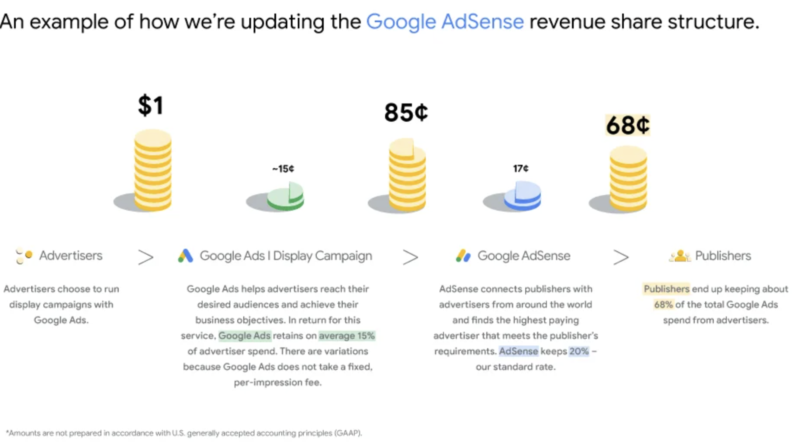
According to an example from Google, when Google Ads buys display ads from AdSense, it retains an average of 15% of the advertiser’s spend. Google says overall publisher revenue is expected to remain around 68% despite these changes.
The model differs when third-party platforms buy AdSense display ads. In these cases, publishers receive an 80% share after third-party fees. Google says it has no control over, or visibility into, these third-party fees.
The following example shows that with both buy and sell commissions, one dollar from an advertiser translates into sixty-eight cents for the publisher.
Screenshot from: blog.google/products/adsense/evolving-how-publishers-monetize-with-adsense/, February 20204.
Transition to payments by impression
Google is transitioning AdSense to a pay-per-impression model, aligning it with industry standards for display advertising. This will allow publishers to more easily compare the earnings of Google products and third-party platforms.
According to Google, this update to the payment model will not affect the amount or type of ads that publishers can display as long as they comply with existing AdSense policies and Better Ads standards. These standards prevent intrusive ads such as pop-ups or ads that take over the screen.
Food for editors
Publishers who rely on AdSense for a portion of their revenue may be considering the implications of these changes.
Here are some points to consider.
Understand the implications
The eCPM (effective cost per thousand impressions) payment model is different from the previous prevailing cost per click (CPC) model.
With eCPM, publishers’ earnings are based on the number of impressions, not clicks.
Publishers should understand how this new model works as it could impact revenue, especially for those whose content targets high engagement with high traffic volume.
Content adaptation and SEO strategies
Google has stated that most publishers’ earnings will likely remain unchanged after the transition to eCPM bidding.
However, the impact may vary on an individual basis. Publishers may need to adjust their content and SEO tactics to maximize revenue under the new eCPM model.
Potential strategies include increasing website traffic volume, improving user engagement metrics, and extending session duration to deliver more ad impressions.
Compliance with advertising standards
The shift to an impression-based model increases the need for publishers to follow AdSense policies and Better Ads standards.
Publishers must continue to provide a positive ad experience for users by avoiding harmful ads. This will be critical to maintaining ad revenue and staying in good standing with the AdSense program.
To sum up
While Google’s AdSense updates aim to simplify and bring transparency to the monetization process, publishers should use these changes to their advantage.
By staying informed, monitoring performance, and adapting strategies, publishers can continue to thrive.
FAQ
How important is Google’s transition from AdSense to an eCPM payment model for publishers?
How will the updated revenue sharing affect AdSense publishers?
The updated revenue sharing structure changes publisher compensation, introducing separate fees for buying (advertisers) and selling (publishers). Publishers will receive 80% of revenue after fees are collected by the advertiser’s platform, either from Google’s or third-party buying platforms. This could affect the predictability of earnings, as third-party rates may vary and are not controlled by Google. Publishers’ overall revenue is expected to remain around 68%, similar to the previous deal. However, there may be individual variations depending on the details of each transaction and the parties involved.
What strategies can publishers use to adapt to the eCPM payment model?
Increase website traffic volume to generate more ad impressions and potentially increase revenue. Improve user engagement metrics such as time on page and pages per session, as higher engagement can lead to increased ad impressions. Extend session duration on your sites to serve more ad impressions. This could involve improving the quality of content or providing additional resources to keep users engaged for extended periods. Ensure AdSense policies and Better Ads standards are met to deliver a positive advertising experience and maintain ad revenue growth.
Featured Image: Wirestock Creators/Shutterstock
[ad_2]
Source link





