


There is too much misinformation about how SEO works.
And this does not help to increase investment in our sector.
In this article, we will clear it all up.
You’ll learn exactly why and how SEO supports brand growth, sales, and leads.
Let’s dive in.
How brands grow
Marketing research has made it clear how brands grow.
They grow by acquiring new and light buyers.
(Light buyers are consumers who make occasional or infrequent purchases of a particular product or service. They may not be as committed or loyal to a particular brand or product category.)
But how do you increase the rate at which you acquire new and light buyers?
Again, the research is clear. Increase the brand:
mental availability: The probability that a brand will be considered in a buying situation.
Physical availability: The ease and comfort with which a brand can be purchased.
These terms are widely accepted by marketing leaders and have been for about ten years.
But where does SEO fall into this?
Dig deeper: Top 10 SEO benefits of building a brand people trust
Some SEOs don’t understand marketing
I recently saw a tweet on X that went something like this.
“When people search on Google, they don’t care about logos and brands; they are concerned about finding a relevant page and solving their problems”.
It got 17,000 views, over 200 likes and over 40 posts.
And yet, the advice is completely wrong and an example of how out of touch some SEOs are these days.
The quality of the brand, logo and website are not only essential for your marketing. SEO is actually the delivery of these assets.
Repeated studies have shown that website quality and brand perception are used to build trust.
Without trust, we don’t buy.
But this is not all; your logos and branding are how we remember businesses. In marketing, these are known as “distinctive brand assets.”
If you were to think of your website as a package.
Our job as SEOs is to put your website on the shelf. And if we don’t understand this, how can we advise customers?
Dig deeper: Modern SEO: Package your branding and marketing for Google
Get the daily search newsletter marketers trust.
How to buy online
As SEOs, we should understand and be able to accurately explain how the purchase occurs.
And here’s the simple version.
1. Trigger
We all get triggers to search. These can be internal, like a feeling or a thought. Or an external one such as advertising or a vital event.
At this point, one of two things happens.
We search directly for a brand/website.
This is known as a navigational search.
We can also enter a keyword in a search engine or open an application like YouTube or TikTok.
The key to brand growth lies in the searcher’s state of need. You want to be found or searched for by people who are in the market to buy.
These are people who are looking to buy or are ready to buy today.
And your job as an SEO is to bring your brand to potential customers with both of these states of need.
There is a good reason for this.
Reaching those who want to buy with your brand helps build the mental availability we discussed earlier. Reaching those about to buy increases your physical availability.
2. Exploration
The next stage of research is known as the exploration stage. This is where things get messy and we start digging into the category.
And yes, people go to social media apps to do research.
It is at this stage that a fierce battle begins to take place.
The battle for memory.
Purchase decisions often take place over extended periods.
And this is even longer for the B2B sector.
But I don’t need to tell you that.
It took me at least six months to pick a car I liked.
But I didn’t spend six months doing solid research every day. Life gets in the way. We all juggle multiple tasks and demands that disrupt our decision making.
During this period, we are subject to retargeting with advertisements on various platforms. And this is where advertising plays an important role.
Companies with great advertising that regularly reach people are more easily remembered at the all-important moment when we decide to buy.
However, I’m sure the vast majority of people reading this work for brands with limited advertising.
So organically displaying where your potential customers do their research can increase the likelihood that they’ll find you, recognize you, and remember you when making a purchase.
And this is where we move to the next stage.
3. Evaluation
After we’ve done our research, a few things happen.
You can be chosen directly as a brand or you will be part of a set of considerations.
But we don’t often search that way.
For example, here’s how my car searches came up:
Search Google for Kia Sportage car rental deals (wanted this brand). Find several offers and was told I would be waiting 12 months to get a Kia. I am looking for alternatives to the Kia Sportage. I look at deals for these cars to get approximate prices. I searched for articles about model cars. I watched about 4 hours of YouTube videos on the models. I had two makes and models in my mind that I wanted. I went back to looking for rental car deals. I spoke to three car rental companies. I received countless email marketing messages from these companies. Eventually, the need for a car became so great that I went back to search for rental car deals and saw a link to a business I hadn’t contacted in the SERPs; I called them and signed a lease that day.
Why did I choose them?
I knew who they were, as they had proven in my research. They are one of the largest car hire companies in the UK and had come up in a number of searches I had done.
This is called a “transfer fee,” as my friend and awesome SEO JP Garbaccio shared a recent LinkedIn post.
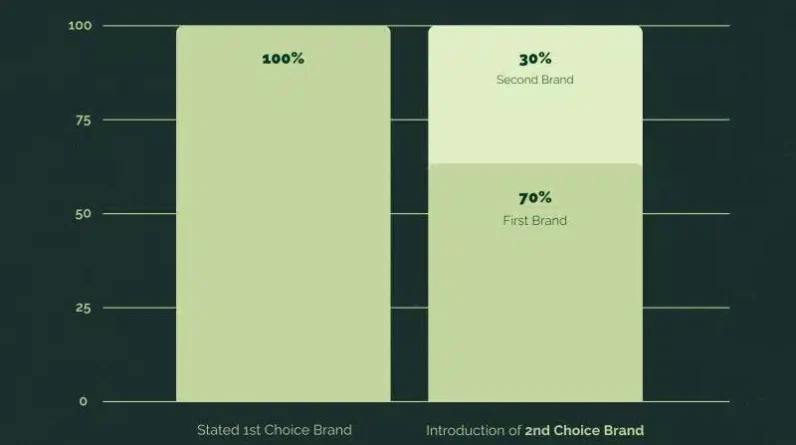
“In 2020, Google conducted experiments with 31,000 online shoppers.
There was a decisive factor that influenced the “Transfer of Preferences” (TOP).
TOP is the process of a customer going on to buy YOUR brand.
The most influential factor was simply being present in the buying journey.
Just by being there, 30% of potential buyers will choose your brand.
This ranges on a spectrum from 18% TOP to 44% TOP.”
This is how PPC works.
Pay to reach today’s buyers, hoping you can get them to you at the last minute.
My car rental company didn’t pay to acquire me; I recognized them in the organic search listings, clicked and called, and they were great at sales.
I hadn’t seen a single video created by their brand on YouTube or read a single article they wrote.
But I clicked on their site a few times over a few months, and the day I needed to buy… they were there.
This brings us to the final stage of the research.
4. Purchase
There is a lot of talk online about “TikTok” as a search engine.
However, the real questions are:
Where do your customers shop? What is your business environment? How can you increase the likelihood of being recognized in these environments?
This is why advertising is so powerful, especially creative video advertising, which helps link a brand to a category within our memory architecture.
For example, if I asked you to tell me who you think of first when it comes to basketball shoes, chances are you’ll say Nike.
However, for many categories, we simply don’t know the brands within them until we start researching. As such, we target search engines and social media applications.
But where we shop is very important.
This is your physical availability.
For example, I am aware that there is a TikTok store. But this is not suitable for most brands.
Also, TikTok is very hard to get off. No external links limited to organic results, combined with a strong algorithm that brings you fresh content.
No, TikTok doesn’t want you to leave.
This means we will still be going back to search engines to buy our products (I’ll leave Amazon for another discussion).
And, as we saw in both my car-buying example and the preference transfer study, you have to be on the digital shelf to be chosen. Just showing up increases that chance.
And that brings us to the big finale of how SEO helps brands grow.
SEO grows new and category light buyers
When a person turns to search to start the buying process, they do so because they are open to buying from brands other than the ones they bought last time. Or they have never bought in this category before.
And this is where we start to show the brilliance of organic search.
Paid search is all about efficiency, often in the form of ROAS or ROI.
Organic search is about marketing effectiveness.
Reach the maximum number of possible buyers in the market.
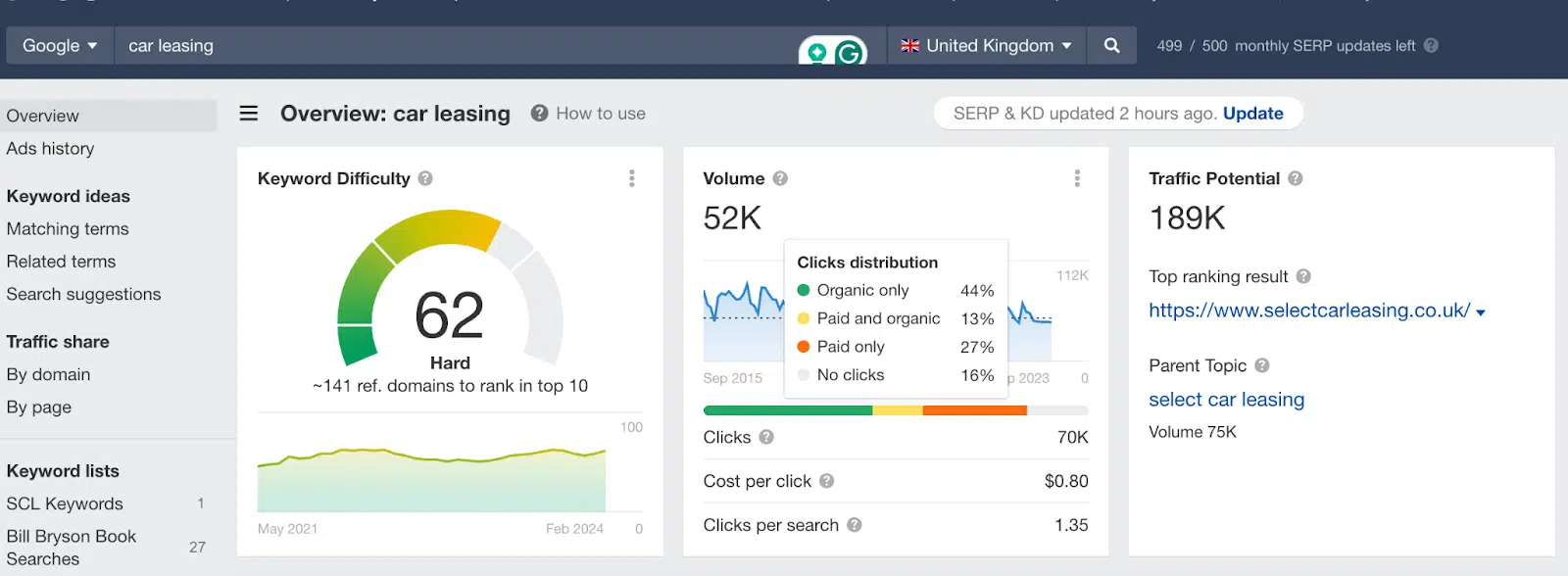
If we use the Ahrefs Keyword Explorer feature, we tend to see that the majority of traffic goes to organic listings in most markets.
In the car rental example above, 44% of clicks go to organic listings.
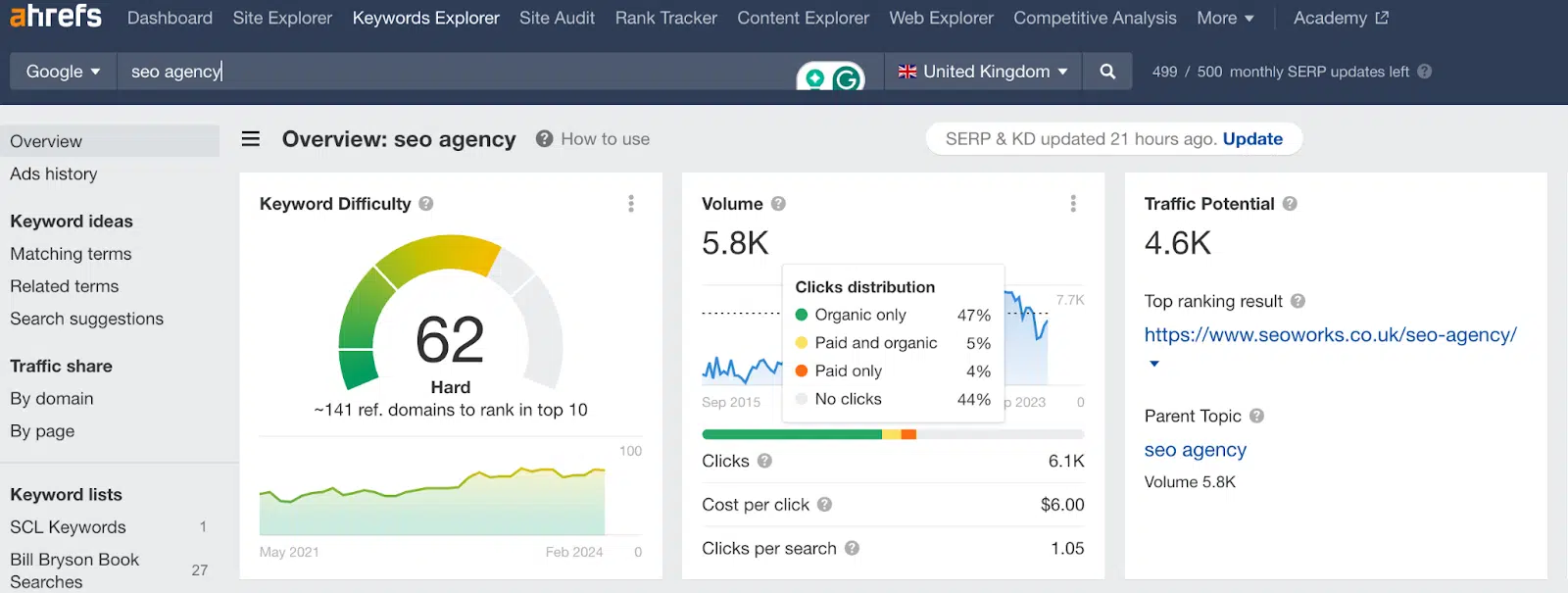
What about the term SEO agency? 47% goes to organic products.
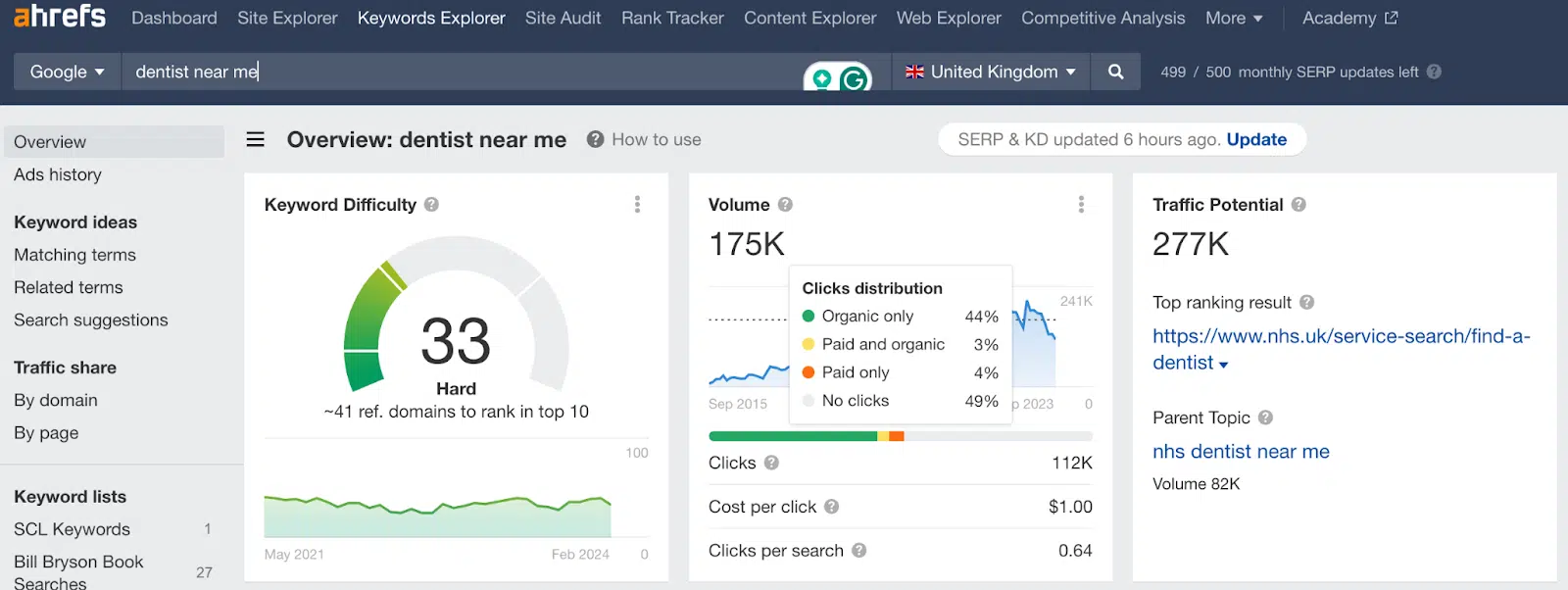
And here, with a “near me” search for a dentist, 44% go organic, with only 4% going to paid search.
However, we know that paid search drives more clicks in some industries, such as Nike shoes.
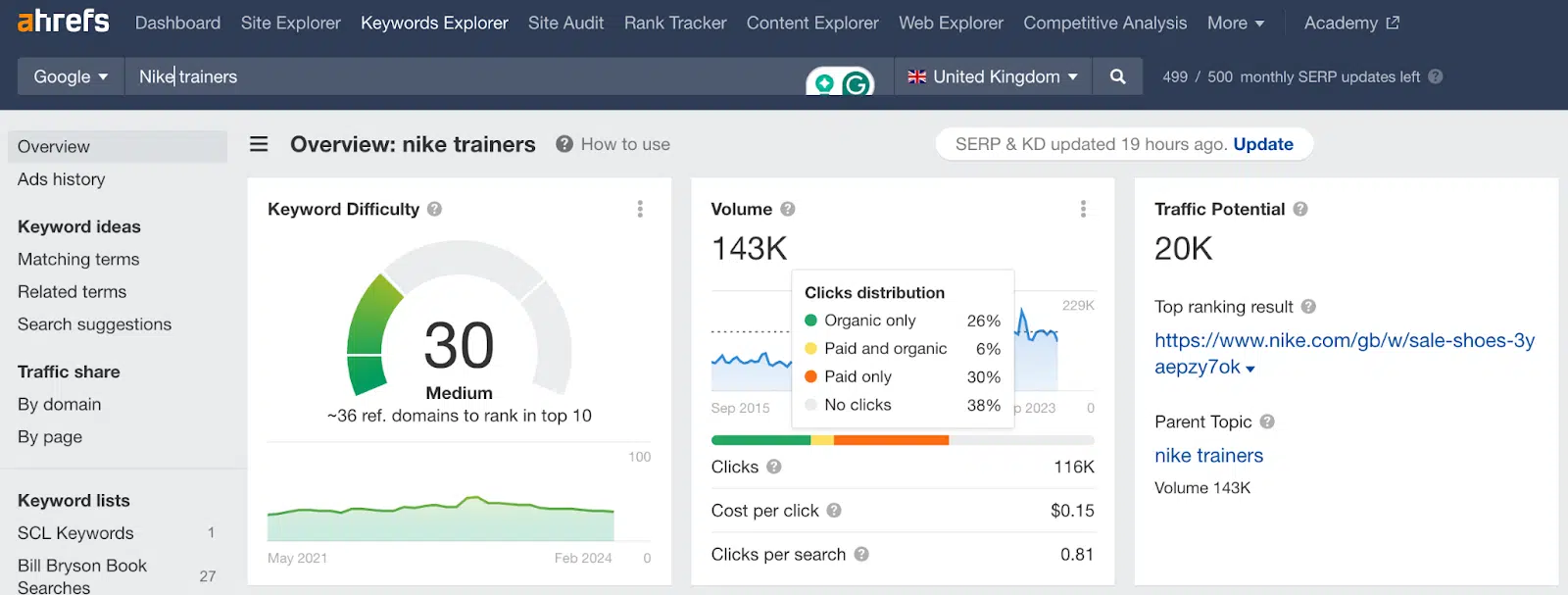
But you have to look beyond clicks.
When you acquire a customer through a paid search click, you are effectively cutting into your profits, and more often than not, they would have bought from you anyway.
And a lot of buyers click on organic listings.
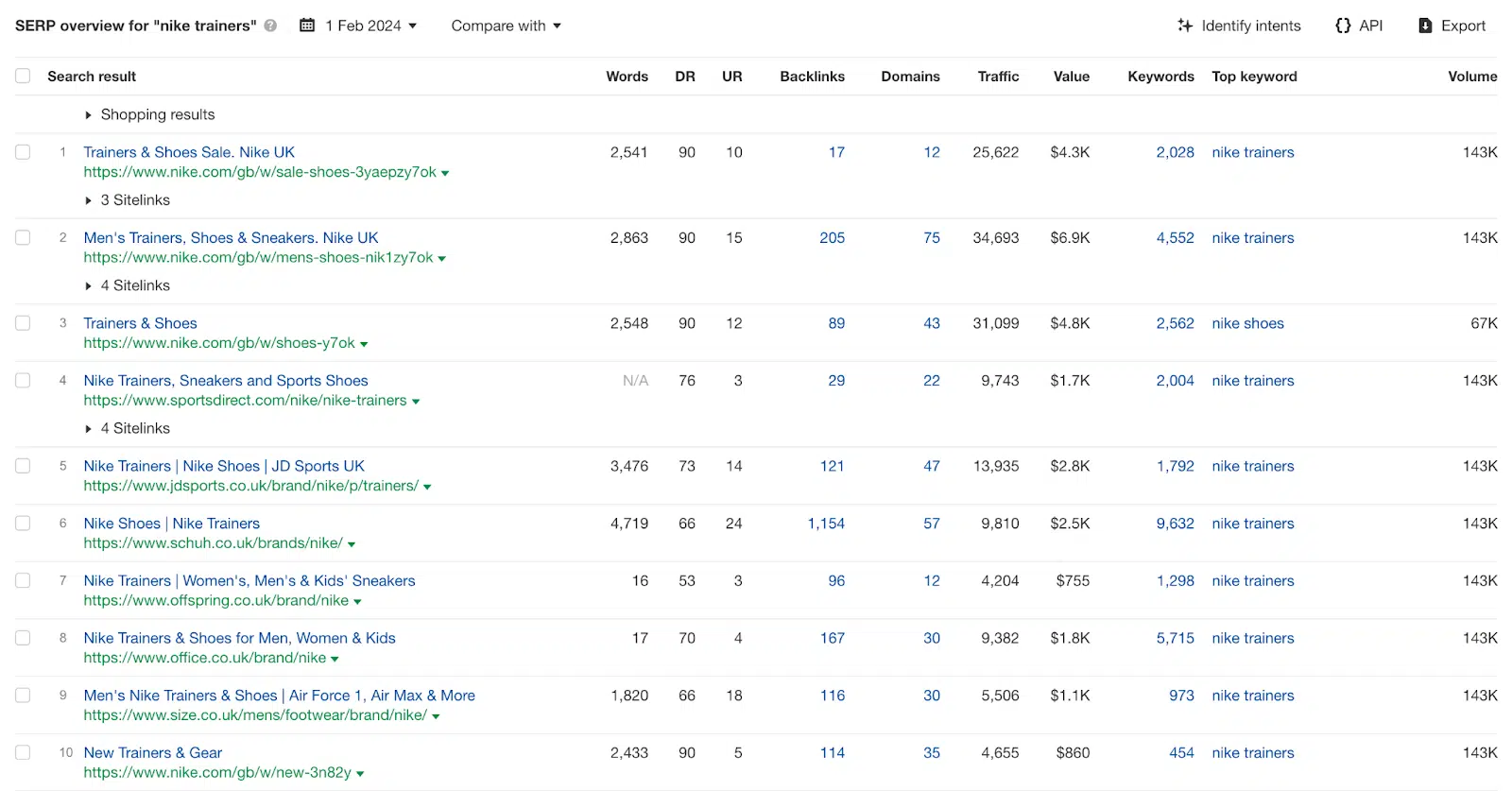
This is key to growth because brands grow by acquiring new, lean buyers.
Justifying the investment in SEO
Over the years, I’ve talked to countless companies that didn’t invest in organic search.
All because they went to hunt the mythical dragon that is the ROI.
This is oddly justified with mental accounting such as:
“If I spend $3,000 a month on SEO, how long before I see results and what will those returns be?”
As stated in a previous article, don’t measure SEO performance by ROI; you justify your investment.
If you don’t invest in SEO, you are missing out on reaching large amounts of potential customers and letting others win them.
At the same time, others are growing their brands; you’re not winning category-light new buyers.
I really hope more marketing managers and entrepreneurs realize this.
Organic search is competitive.
But all businesses are.
When you win in organic search, you gain a competitive advantage, which leads to more business.
It’s that simple.
Do you want to grow up? Are your buyers using search engines to help them find what you sell?
If the answer is yes to both, it’s a case of how much you can afford to invest in SEO and who you’ll hire to deliver that growth.
Once you understand the science, invest in SEO.
Or not, and your competitors will.
Dig deeper: Why SEO is a great investment, not just a cost
The views expressed in this article are those of the guest author and not necessarily Search Engine Land. Staff authors are listed here.
[ad_2]
Source link





