


Product Detail Pages (PDP) optimization is crucial for e-commerce websites. Well-optimized product pages can increase organic traffic, increase conversions and increase revenue.
This comprehensive guide covers the key elements of effective product page optimization, including:
1. URL of the product page
Clear and descriptive URLs improve both user experience and visibility. Ideally, they should describe what content a page contains.
It’s important to optimize URLs for clarity and ease of use, not just keywords. Remember that its main purpose is to guide users.
A good product page URL should look like this:
Improve your site structure by identifying uncategorized product pages
Some products may be linked directly to the domain and listed next to the main categories.
The risk is that these pages may have the same treatment as the main categories and create confusion as some products will not be displayed correctly.
To find these uncategorized products:
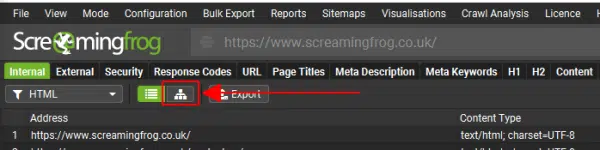
Crawl your website with Screaming Frog. You can then click the directory tree icon on the Internal tab.
You will then see the inner tab converted into a directory tree.
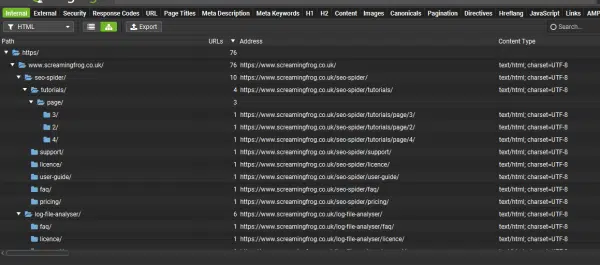
Click Export. This will export the site in a directory tree format to a spreadsheet.
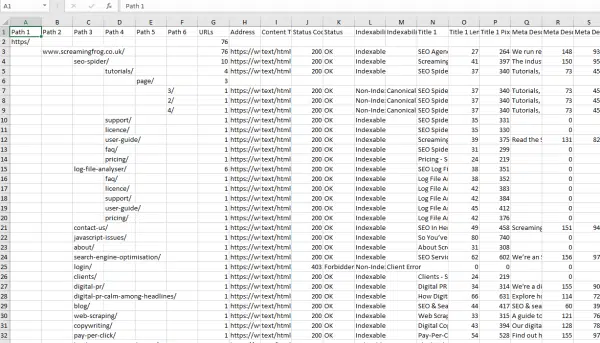
In this spreadsheet, you can now see your top categories and subcategories and find products that may have been uploaded without a category, as well as other irregularities in the website structure of your website.
2. Image optimization
If you work for a brand that prioritizes minimal text on its pages (like luxury brands) or if you don’t have to have text on key pages, images become crucial. They serve as the equivalent of your text, relaying content to search engine crawlers. This makes image optimization a must in your SEO strategy.
Image URL
High quality images are essential to showcase products. File names for these images must be descriptive and include:
Domain Product type Color or size Main characteristics
This is a perfect example from Chanel:
This URL describes the following product to Google:

Image alt text
Alt text is probably the most important content component of images. This element will help search engines understand what the image is about.
make sure optimize image alt texts for web accessibility, helps visually impaired users. This is not an opportunity for keyword stuffing.
example: Chanel Medium Double Flap Caviar Leather
Product page URL
Image alt text
Img alt=”Small Classic Handbag – Black – Grained Calf Leather & Gold Metal – CHANEL – Artist View 1 – View Full Size Version”
Outline of the image
Implementing an outline on your images and product pages allows you to provide search engines with content and context to understand our pages.
Dig Deeper:
Get the daily search newsletter marketers trust.
3. Product descriptions
Once your customers are swayed by an ad or campaign on TikTok, you only have a short time to get them to stay and convert once they land on your product page.
Along with product images, descriptions are crucial in making a customer buy or abandon the idea of buying.
Here are some important considerations for your product descriptions:
Pop ups: Some categories may need to add pop-ups, for example food products that provide an allergy reminder. However, if you’re not in a health-related or high-risk category, try delaying a pop-up. If you have a high-value item, showing too many pop-ups might not convince people to buy it; instead, it could make them change their mind and leave the website without buying anything.
Keep your product descriptions clean and easy to read. Too much information, buttons, labels or discount information will overwhelm the customer and again lead to abandonment.
Avoid duplicate content for similar products. In case of potential duplication or close similarities, ensure that there are canonical chapters to differentiate product descriptions and pages.
Make sure you have hreflangs available for product descriptions in the same language but for different languages and international versions of your site.
Avoid keyword stuffing. It looks like spam and won’t help you. Include the minimum keywords necessary, but don’t go overboard. Remember that your product descriptions are meant to convince users, not just Google.
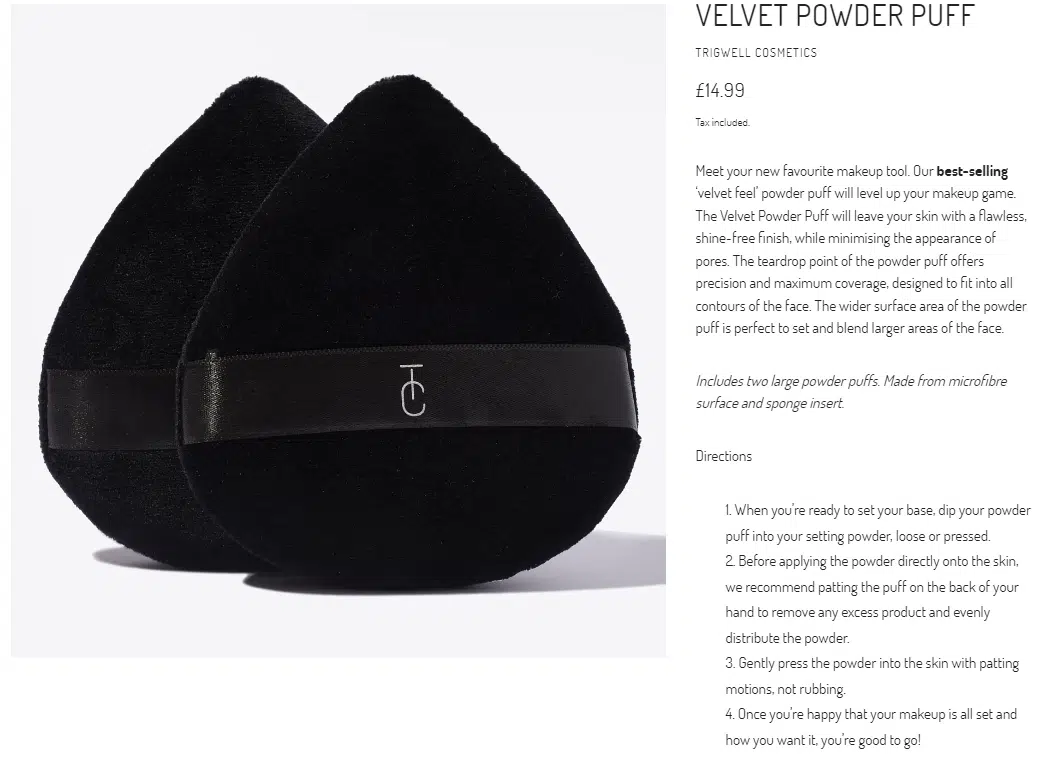
The Velvet Powder Puff became a viral sensation in early 2023. The product description is accurate and a great selling point that also includes a how-to guide, pushing an influenced customer to convert immediately.
Dig Deeper: How to make your eCommerce content more useful
AI and Product Description Generators
Using product description generators can be a double-edged sword. On the one hand, they offer efficiency and consistency, especially for companies with a large inventory of products. However, the downside is that these generators may lack the unique human touch that can make product descriptions more engaging and persuasive.
If you run a large website with hundreds of products, chances are you can afford to hire a copywriter. If so, do it instead.
If you’re a smaller site, it’s best to write them yourself or take some time off. The use of generative AI can be okay as long as these product descriptions are checked by a copywriter or brand manager and closed before publishing.
Otherwise, you’ll be creating content just to have it on a product page, and it can lead to abandonment.
Dig Deeper: How to use ChatGPT to generate product descriptions at scale
4. User generated content on PDP to drive organic and direct traffic
UGC, such as customer reviews and Q&A, can significantly improve SEO. They provide fresh and relevant content, which search engines favor. Encouraging UGC on product pages can also increase trust and engagement among users.
Create a content hub for your user-generated content, you can create other content such as research or data, and use these resources to pitch journalists or articles for coverage and links.
example: Charlotte Tilbury Flawless Filter Foundation

This is a high converting product page. It’s a product page meant to push an already-influenced customer to convert rather than satisfy a search engine.
User-generated content, for some niches, is what makes their pages highly convertible. In the case of this foundation, seeing the product in many shades and many skin types in real images is the final push to get a customer to convert.
note: Only use this type of content if it is relevant to your niche. Otherwise, it will look out of place and instead of converting, it could lead to abandonment.
Dig Deeper: Why e-commerce brands need to show the authentic EEAT
5. Global adaptation
Global adaptation involves more than translation. Includes:
Cultural customization: Understand the nuances and cultural preferences of different regions. Do not use machine translators; if you use agencies, make sure they have target country writers who can adapt your content to your target country.
Local SEO: Use of region-specific keywords and phrases.
Pricing strategy: Adaptation of prices to reflect local market conditions and purchasing power.
Payment Methods: Which payment methods are effective in your destination country? is it paypal Or Klarna? Do people prefer quotas?
Dig Deeper: 15 SEO Localization Dos and Don’ts: Navigating Cultural Sensitivity
Make your product pages useful for customers
Product page optimization is an ongoing process that requires a strategic and multifaceted approach. The above tips provide an excellent starting point for improving your PDPs.
Focus on creating pages that attract users while also appealing to search engines. Test different optimization strategies and refine them based on performance data.
Optimized product pages will become powerful drivers of organic growth and revenue with time and consistency.
The views expressed in this article are those of the guest author and not necessarily Search Engine Land. Staff authors are listed here.
[ad_2]
Source link





