


The debate over the importance of links has been a recurring theme in SEO.
Recently, Google’s Gary Illyes reignited debates on the topic when he said that “people overestimate the importance of links” and it hasn’t been in the top three ranking factors for a long time.
These statements by Google have been made in the past, causing SEO professionals and businesses to rethink their strategies.
This got me thinking about how essential links really are today. What would the data show?
To find out, I analyzed 100 random keywords spanning multiple categories, gathering data from the top 100 ranking websites, including referring domains and backlinks. This complete dataset consisted of over 10,000 rows of URL ranking data.
It’s important to note that correlation does not imply causation, especially given Google’s stance on the ever-evolving nature of ranking factors. However, digging into the data can give us an idea of where links are most important as a category.
Data analysis and key findings
Given Illyes’ comment, I initially expected that we would find a moderate link between backlinks and rankings, but nothing to suggest that this is the key to improving rankings.
For probably the first time in a long time, the data lines up with this hypothesis.
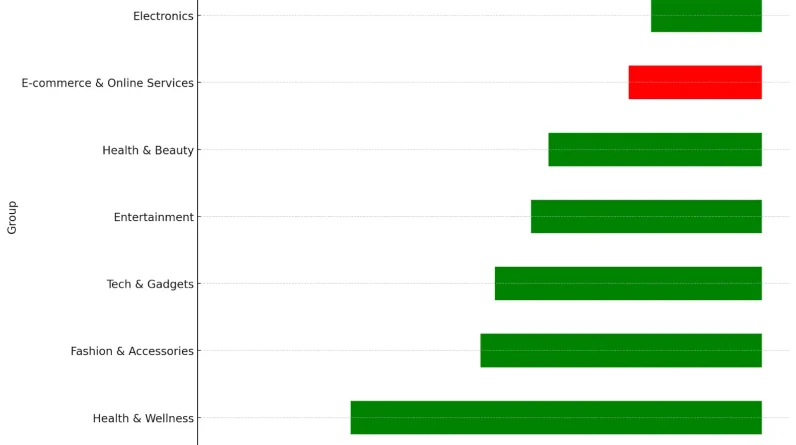
To conduct this analysis, I divided the 100 keywords into specific categories: Electronics, Health & Beauty, Entertainment, and more.
In correlation analysis, a higher value indicates a stronger relationship between the two variables, while a value closer to zero means a weaker relationship.
In the context of our analysis, where the goal is to reach the top ranking, an ideal score is -1. This means that as the number of backlinks increases, the ranking “declines” or approaches the number one position.
Here are the takeaways from the data:
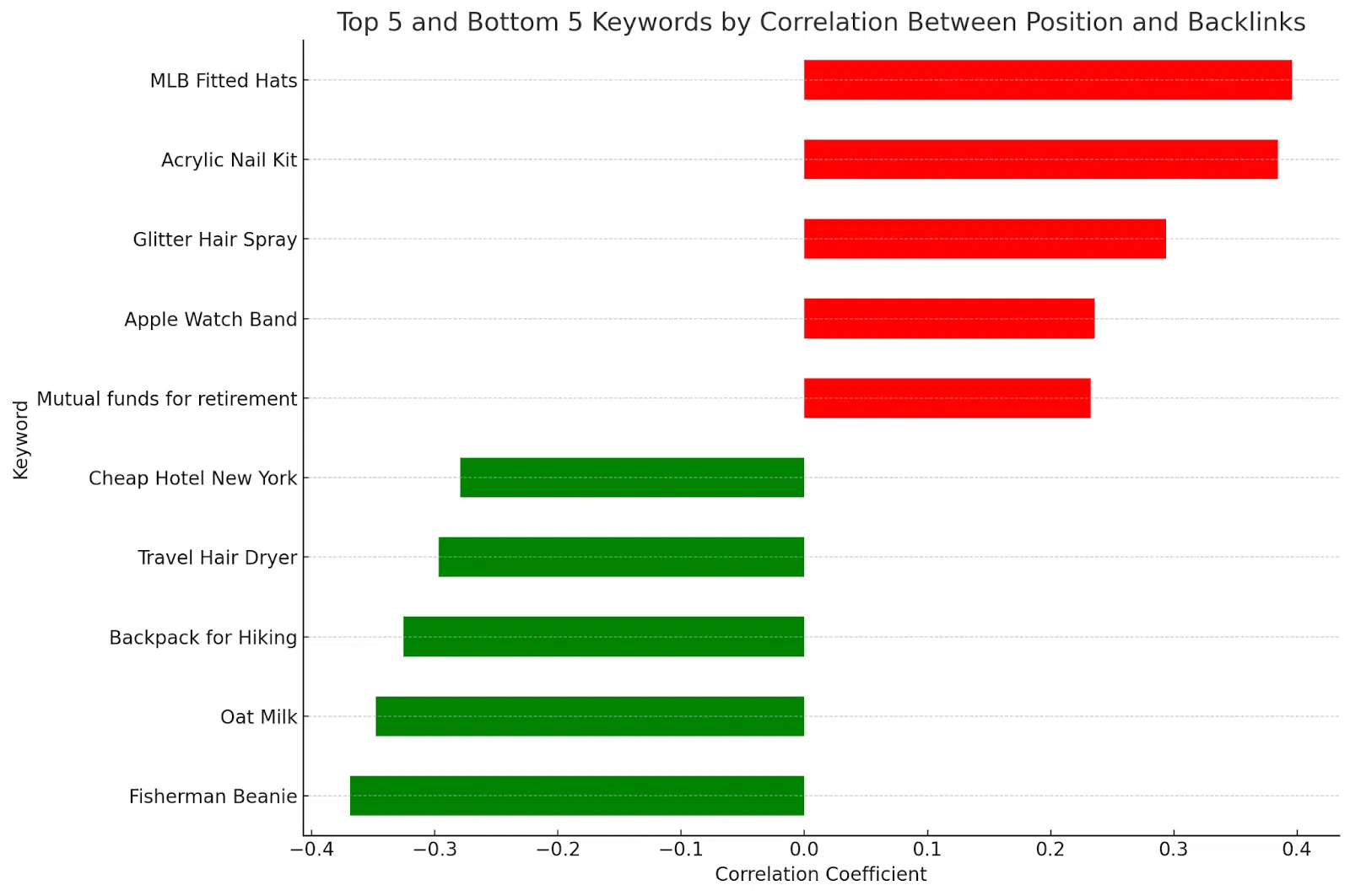
No keyword grouping or individual keyword was greater than -0.4. This means that neither data set was highly correlated. There were keywords and groups that, when the number of links increased, the rankings actually decreased (these would be positive correlations as the ranking numbers increase). However, again, nothing was above 0.4. The highest correlated groups were Outdoor and Sports and Health and Wellness. The groupings where links caused a decrease in ranking were Home & Kitchen and E-Commerce & Online Services.
At the keyword level, “fisher hat” and “oat milk” showed the highest correlation, while “MLB tight hats” and “acrylic nails” were the lowest. (The chart below showing keyword level only represents the top and bottom five.)
Get the daily search newsletter marketers trust.
The importance of links today: 3 key points
Knowing that the correlation coefficient lines up with the Google point, what should we do with this information? How should we alter or think about your own brand’s link profile?
Here are three takeaways and recommendations from this dataset for your SEO strategy.
1. Links are a great sign that users value your content
Although Google emphasizes that links are not as powerful a ranking factor as they were in recent years, they are still a valuable signal.
Consider them an indicator of user and website approval for your content and products. If a specific blog post or product gets a substantial increase in links, it indicates user appreciation.
Redirect your efforts accordingly: create more content or products in this area or step up your promotion.
These links provide essential intent-based data to optimize your time, even if they don’t always translate into higher rankings.
2. You should always evaluate your competition and specific data sets
With over 10,000 data points, our data set is large, but not tailored to your brand or industry. Use this article as a guide to analyze your own data for insights.
Examining the top 100 keywords will clarify your competitive landscape and allow for more focused strategy development.
If other brands in your space have many more links, this indicates a challenge, but remember that links are not the only driver of rankings. Instead of feeling overwhelmed, use this data to inform and refine your strategy.
3. The foundations have been, and will always be, the polar star of organic research
The original goal of SEO is to increase brand ranking, a goal that remains relevant today.
However, the emphasis has shifted to providing a great user experience, evident in Google’s EEAT framework: experience, expertise, authority and trust.
EEAT emphasizes the importance of user experience and values. They don’t advocate link acquisition as a primary strategy, but emphasize the importance of creating a website that enhances the value of your goods or services to end users.
This user-centric approach should be your guiding light.
Reevaluate the role of links in your SEO efforts
I found this data set interesting as it spans multiple industries and consistently suggests that while links matter, they are not the only determinant.
I’ll be watching closely how the data evolves with larger language models incorporating more links, which could reshape link values and website visibility.
It’s an exciting time for research, marked by innovation, and data will be our compass for assessing the changing landscape. I look forward to seeing how links continue to influence rankings in this next phase.
The views expressed in this article are those of the guest author and not necessarily Search Engine Land. Staff authors are listed here.
[ad_2]
Source link





