


It’s hard to believe it’s only been a year since then ChatGPT burst onto the scene and captured the world’s attention with its remarkably adept chatbot that generates human-like text on command.
Once users moved on from testing the chatbot for silly things like writing jokes or letters in Shakespeare’s voice, more useful applications emerged.
Teachers discovered how to use large language models to teach complex topics to students. Hollywood writers negotiated new contracts to continue making a living when genAI could use their ideas to create new plot twists. And software companies added genAI to their tools to simplify mundane tasks.
For PPC marketers, ChatGPT also unlocked game-changing potential. Here’s a look at ChatGPT’s first year and what we can expect from this transformative technology.
Looking back at ChatGPT’s debut
ChatGPT launched on November 30, 2022, offering free access to what appeared to be an impossibly smart AI chatbot. Based on OpenAI’s GPT-3.5 language model, it showed an unprecedented ability to understand context, follow logical reasoning, and respond to prompts with coherent and compelling text.
Almost overnight, people started using it to write emails, blog posts, code, and ad copy. The hype was amplified as users realized that this was not narrow AI, but a foundation for the next wave of computing revolution with implications in countless industries.
Since the introduction of ChatGPT and other genAI models a year ago, several industries have undergone significant transformations.
Our industry is among those affected, as generative AI has streamlined the process of producing a variety of content, from blog posts and social media updates to landing pages, keywords and ad copy.
The technology’s ability to quickly generate high-quality text has been a boon for marketers, saving time in project conception and execution.
Google went further and introduced a generative AI campaign builder in May.
Announcements like this reinforced the question that has been on the minds of digital marketers for years: What will our roles look like as AI continues to do more than we used to do manually?
To help you answer this, let’s first look at what chatGPT has done for search marketers.
The first uses of GPT-3.5 in PPC
Naturally, PPC experts wondered how we could leverage ChatGPT’s talents. Even in its initial form, I found many uses:
Generate keyword ideas from seed keywords or landing page URLs. Sort long keyword lists into consistent ad groups. Writing compelling ad titles and descriptions. Provide landing page optimization suggestions. Analyze the relevance of search queries to improve ad targeting.
To do some of these tasks at scale in spreadsheets, I started using GPT extensions for Google Chrome. Also, I played extensively with the OpenAI API Playground, where all parameters that affect performance can be ticked.
For example, advertisers can use the temperature setting to make the system more or less creative, which is important in regulated industries where the most creative ad copy ideas could break regulations.
These early applications demonstrated the immense potential of ChatGPT in PPC account management and campaign optimization. But they were just a taste of what would soon be possible as AI advanced.
Dig deeper: How to use ChatGPT to boost your PPC efforts
GPT-4 is a better but more expensive writer
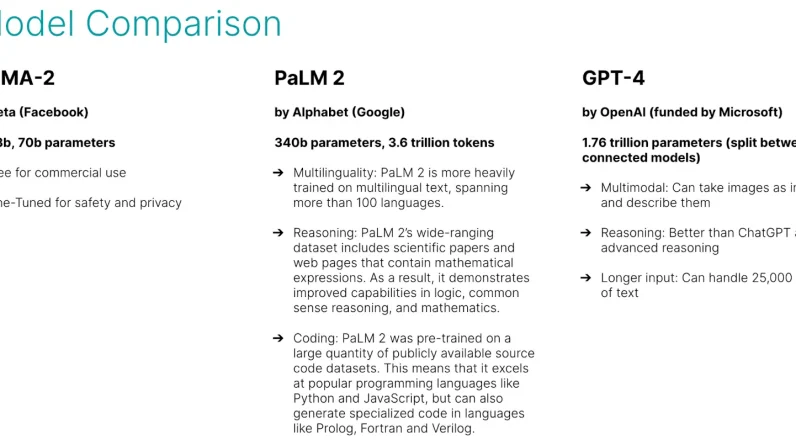
In March 2023, OpenAI introduced GPT-4, which brought significant improvements. The model was trained with more input parameters, 25 times more than Meta’s Llama-2 model and five times more than Google’s PaLM-2 model. As a result, it produced higher quality writing.
It was also better at math, which is very important in PPC, where optimization decisions depend on correct mathematical or statistical data analysis.
Image of the author’s presentation at SMX Next.
While previous versions adequately handled simple PPC tasks like keyword generation, GPT-4 proved particularly useful for long-form text, such as that used for email campaigns, blog posts, and pages of destination
The downside was that it was significantly slower and more expensive than previous models. But as more models become available, the door opens for optimizations. People can evaluate the strengths and weaknesses of each model and decide which LLM and version to use for various tasks.
I found GPT-3.5 to be just as good as GPT-4 at suggesting keywords. Therefore, deploying this model for keyword-related tasks is more cost-effective and faster.
GPT-4 works better for writing, so the extra cost and latency is worth it when I need to write a copy of the landing page or a report to share with a client.
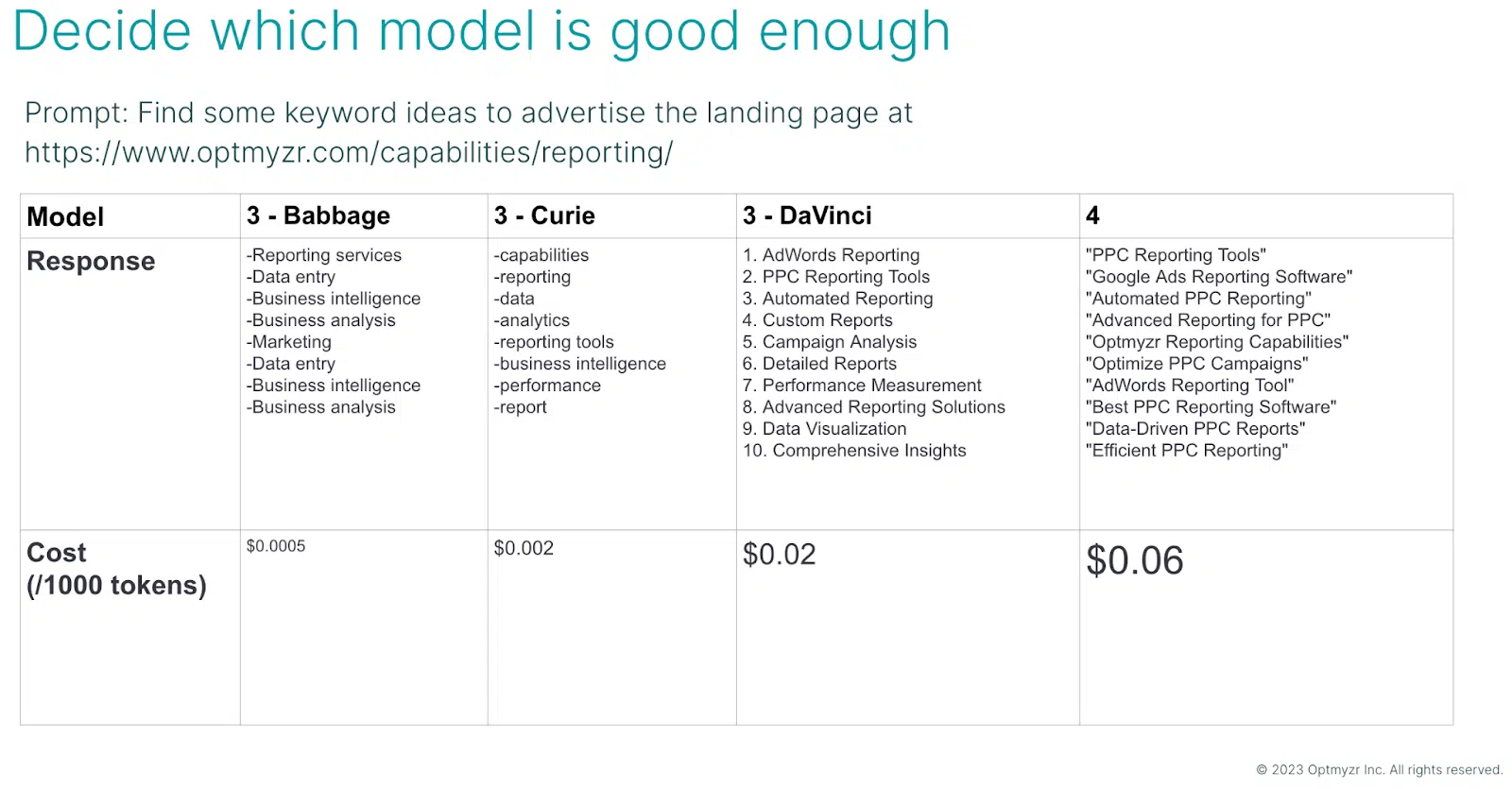 Image of the author’s presentation at SMX Next.
Dig deeper: ChatGPT for PPC marketers: 15 strategic pointers to use today
Get the daily search newsletter marketers trust.
ChatGPT launches beta features
In July 2023, OpenAI introduced new beta features for ChatGPT, such as Code Interpreter, which was later renamed Advanced Data Analysis. This made entirely new PPC use cases possible.
Advanced data analysis helps advertisers gain new insights
A big upgrade for the sometimes mathematically challenged GPT-4 was its new ability to write and run Python code.
By uploading campaign performance files directly to ChatGPT requests, we can now have it perform statistical analysis and create graphs to provide new insights and optimizations.
Plugins allow advertisers to connect GPT with live data
One of the most powerful updates ChatGPT has gotten is support for plugins, which are special add-ons that greatly expand its capabilities. Plugins enable direct ChatGPT connectivity to external datasets, documents and live websites instead of just its own fixed indexed knowledge.
This means you can feed ChatGPT a raw .csv file of PPC campaign statistics for advanced analysis, upload your entire catalog of product descriptions to improve copywriting relevance, or even have ChatGPT scrape and summarize a landing page that you are optimizing in real time.
Would these new capabilities start humans down the road to digital marketing irrelevance? Not exactly.
Generative AI as an assistant, not a replacement
It’s easy to imagine generative AI completely automating digital marketing tasks. But in practice, these tools work best as assistants that augment human capabilities, not replace them.
As I first explored in 2017, long before the dawn of generative AI, humans play three essential roles in digital marketing:
The teacher. The doctor. the pilot
Although AI has moved from simple pattern recognition to content generation, I believe these functions still apply.
The teacher curates data and fine-tunes models like ChatGPT to align with an organization’s goals and industry context. The doctor prescribes solutions, such as the right LLM for the business challenge. The pilot closely monitors performance, intervening when the generative AI goes astray.
Generative AI takes care of tedious tasks like writing repetitive ad copy and landing pages. This frees up teachers, doctors and pilots to operate more strategically.
For example, an account physician can now invest time previously spent on writing into data analysis and querying. Or they can ask ChatGPT to summarize key account statistics in client-ready reports. The tool generates content, while the human provides creative direction and quality control.
So don’t see generative AI as a threat. See it as a collaborative assistant that amplifies human strengths. Marketing teams that embrace this partnership between humans and AI will stay ahead of the competition. But it requires accepting that the future is still human, with AI just lending a hand.
What’s Next: OpenAI Developer Day Announcements
And those of OpenAI DevDay on November 6, 2023, they revealed important updates that give insight into the future potential of PPC professionals.
Most notably, OpenAI released GPT-4 Turbo, which supports much longer prompts of up to 128,000 characters. This means you can now send the equivalent of around 300 pages of text to help the AI better understand what you want: give it learning in context – the data it should use to formulate its response to the your request
This massively expanded context window could enable ChatGPT to handle more advanced PPC analysis and optimization tasks.
From the whiteboard to the ad script
In addition, OpenAI announced new modes such as vision, which allow GPT-4 Turbo to ingest images.
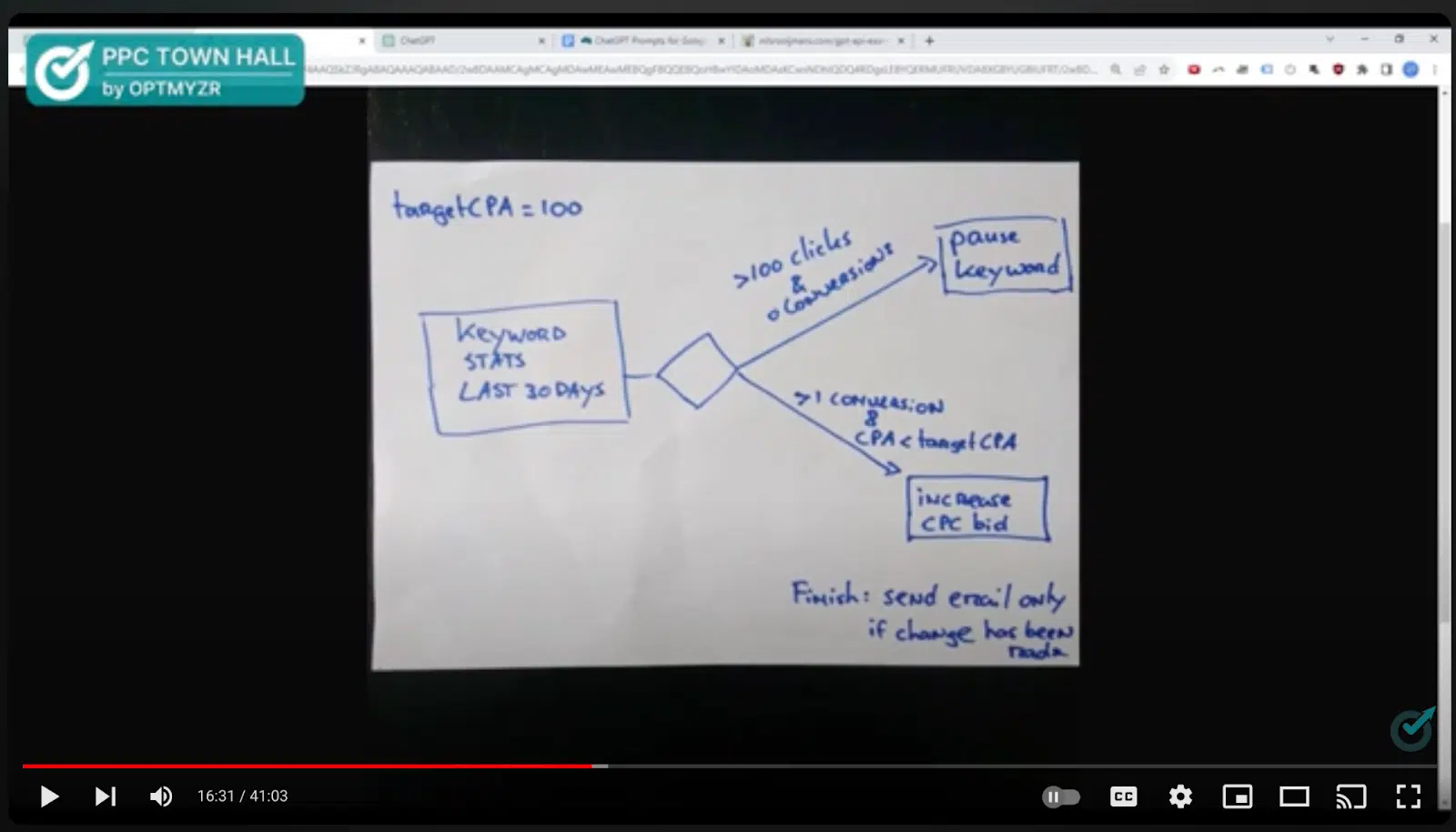
In one great example illustrated by PPC scripting expert Nils Rooijmans, gave GPT a photo of a whiteboard sketch of an optimization decision tree and asked GPT to write a script to handle this case of use
He understood the logic of the whiteboard drawing and suggested the relevant Google Ads Script code to automate this task.
Reduced price for GPT
OpenAI also lowered prices across the board. Input tokens for GPT-4 Turbo are now 3x cheaper at $0.01, while output tokens are 2x cheaper at $0.03.
Broader access to lower-cost capabilities like tuning could help PPC managers train custom AI tools tailored to their unique accounts.
Between updated base models, new modalities like vision, and more affordable building blocks, OpenAI’s offering paints an exciting picture.
The next level of PPC optimization will be AI-assisted, thanks to innovations in the tools you already use that can take advantage of the latest innovations in generative AI.
The future of generative AI for PPC
The future looks incredibly bright if ChatGPT can achieve this much in just one year. Here’s what I expect next:
Improved accuracy in analytical and mathematical calculations. Integration with PPC platforms through plugins for simplified access to account data. Ability to dynamically write scripts and rules compatible with your PPC tool of choice to streamline optimization. Easier access to customization via GPT, “tuning” and longer prompts to help better align responses with your goals. Low-code tools to build custom AI models tailored to customers’ businesses.
ChatGPT to PPC: A year of innovation, integration and impact
The past 12 months have transformed our expectations of what AI can do. As algorithms continue to advance, our job is to push the limits of AI to increase PPC performance beyond human limitations.
In a world of AI assistants, the answer should never be that you can’t do something, but that you haven’t tried something yet. AI can teach and help you execute your projects faster than ever before.
The views expressed in this article are those of the guest author and not necessarily Search Engine Land. Staff authors are listed here.
[ad_2]
Source link





