


When it comes to SEO, many people perceive keyword rankings and organic traffic as “vanity metrics.”
Although they could be if they were not more part of SEO tracking, you really need them to help you connect SEO to business growth.
Data allows you to create the entire journey from keyword ranking to conversion, not just a single point without context.
When doing SEO for international markets, this data is even more crucial because it’s part of an expansion effort. So you’ll want to keep track of whether you’re generating revenue for all that effort.
And this is precisely where proper conversion tracking comes into play.
Now let’s see why conversion tracking for international SEO is an essential part of calculating long-term success and explore some concrete steps on how to set it up.
Why individual market tracking is crucial to international SEO success
In addition to creating a global journey of business growth, there are several reasons why individual market tracking is important to international SEO success:
Prove that localization efforts are worth it: SEO localization takes more work than translation, but the effort is worth it. When done right, it positively impacts the market and builds long-term relationships with new target audiences because it focuses so much on personalization. Distinguish market performance from global marketing: Because you likely won’t have the same level of brand visibility and trust as in your home market, new markets will inevitably perform differently (and be slower). This isn’t a negative point, in fact, it’s a normal part of the process, and these metrics help you show realistic analytics for new markets. Highlight areas of optimization by individual markets: Some markets will perform better than others, so individual metrics highlight where you can duplicate and where your strategy isn’t working. Build a bridge between core SEO data and business growth metrics: All marketing has to contribute to business growth at some point, and the best way to demonstrate that is through data. Monitoring individual markets helps ensure continued investment of resources by stakeholders when deemed worthwhile.
How to do effective international SEO conversion tracking
International SEO conversion tracking doesn’t have to be complicated.
In just four steps, you can generate gross revenue figures and determine the ROI of your efforts. All you have to do is:
Ensure proper URL structure. Track core SEO KPIs for individual markets. Set up individual events and conversions for each market. Align conversion events with business growth metrics.
Let’s now see how this works in more detail.
Step 1: Make sure the URL structure is correct
The first step to properly tracking international SEO conversions is to make sure you have the right URL structure for your site in multiple languages. Ideally, each language should have a unique home on the website (so avoid creating a page with multiple languages).
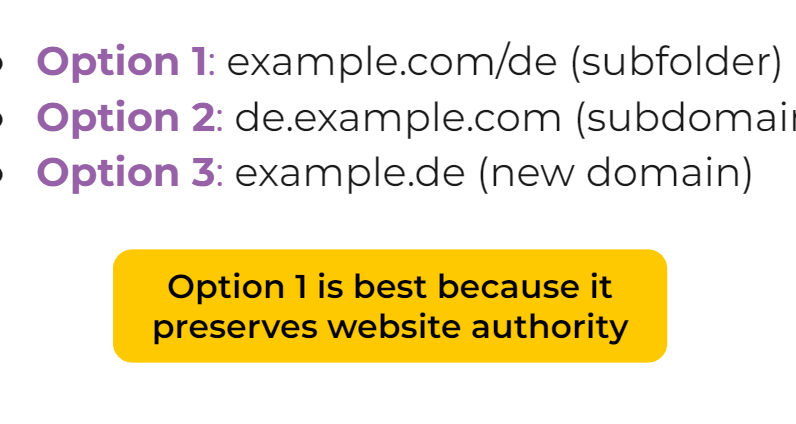
You have three options with the URL structure: subfolders, subdomains, and a new domain.
The subfolder is often the best choice as it preserves the authority of the original website. Although a controversial topic, website authority carries a lot of weight in terms of international SEO.
Google still needs to understand content in a new language, and when you use a subfolder, you’re more likely to transfer authority from older languages.
If you cannot create a subfolder (as in the case of certain technology stack limitations), a subdomain is the best option.
With the right approach, this can still be effective, but it can take a bit longer to rank the content.
The third option should rarely be used, as you will have to start completely from scratch with a new domain. Whenever possible, try to use option 1 and create a subfolder.
In the image below, you can see how these URL options are structured:
One thing people often ask me about URL structure is:
“Is it worth locating different countries that speak the same language, such as Canada (which speaks English and French) and DACH (Austria, Germany and Switzerland, which all speak German)?”
In many cases, no.
There really isn’t enough language variation, and when you separate them, you separate the search volume. This can also create a high risk of cannibalization. For example, when you create German content, everything can be categorized in DACH without any other localization.
However, always consult with an SEO strategist who speaks the local language, as some languages may have enough variation between different countries to warrant their own page.
I found a recent example where it was a high search volume topic with language variations and in this case it paid off.
For more information on how to set up your website in this case, check out these 4 technical SEO tips for multilingual websites.
Step 2: Track core SEO KPIs by market
The next step is to understand how to track the core KPIs for each market. Some of the most important SEO KPIs to include by market are:
Keyword ranking. Increase in monthly organic traffic. Backlinks increase. Increased domain authority. organic CTR
To gather all the data and create a complete SEO analysis, one of the most effective options is to use Looker Studio.
However, there are various SEO tools available based on personal preference and user interface. Just make sure that whatever you choose, you track the keywords for each market.
You can see an example of tracking the position of specific market keywords Ubersuggest in the following image:
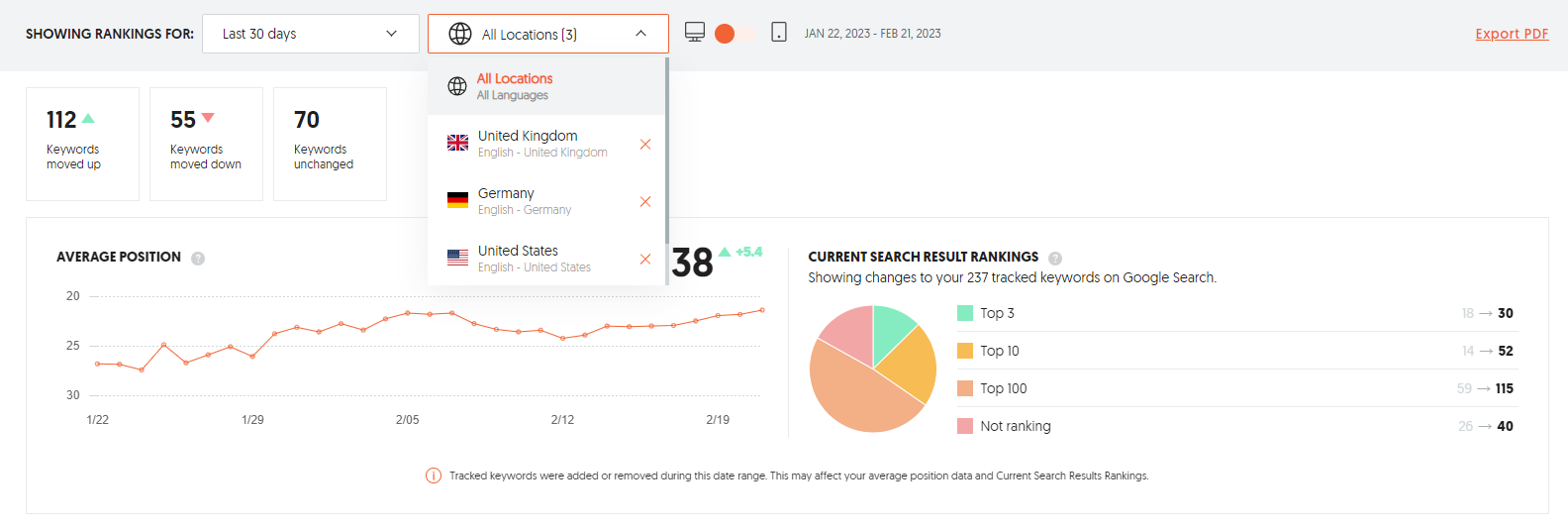 Screenshot from Ubersuggest, November 2023
Then enter these details Looker Studio along with Google Search Console (GSC) data and check things in GSC, such as organic clicks by country, as shown in the example below:
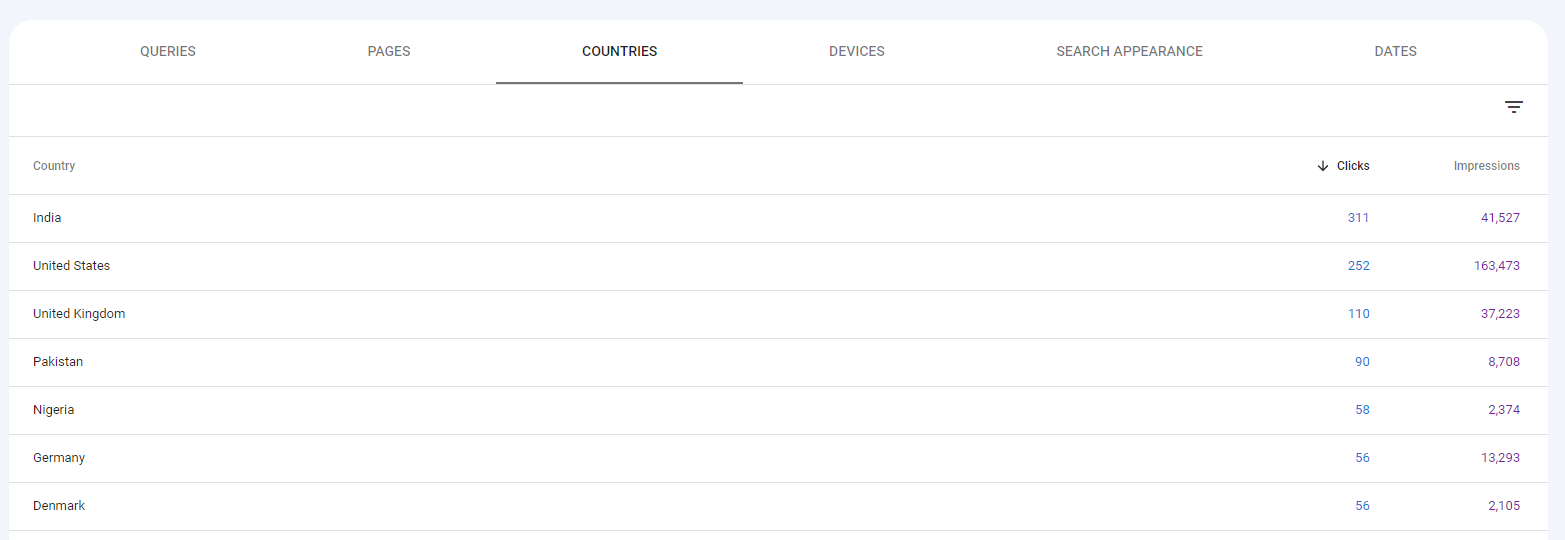 Screenshot from Looker Studio, November 2023
As I mentioned at the beginning, these SEO KPIs are often called “vanity metrics” when they are the only KPIs that are tracked. But to justify the investment of resources to win by today’s SEO standards, your strategy needs to be as conversion-driven as PPC has long been.
So it’s time for us SEO professionals to up our game with SEO conversion tracking, and that’s where the next step comes in.
Step 3: Set up individual events and conversions by market
This next step is one of the most critical, as it translates the fundamental KPIs into understandable business metrics, especially for management and stakeholders.
This data has always been a part of PPC campaigns, but is often overlooked for SEO. But again, SEO should be as conversion focused as PPC if you want to truly understand your ROI.
While you may have this type of data in a CRM or sales analytics tool, you can also summarize it in Looker Studio for a simple data source. You want to track items like:
Number of conversions. Organic traffic conversion rate. Conversion sources.
Many GA4 engagement metrics are also useful to add here.
Once you’ve collected the data sources relevant to your strategy, you’ll get a nice overview that clearly describes specific market events in easily understandable terms and metrics, as you can see in the screenshot below:
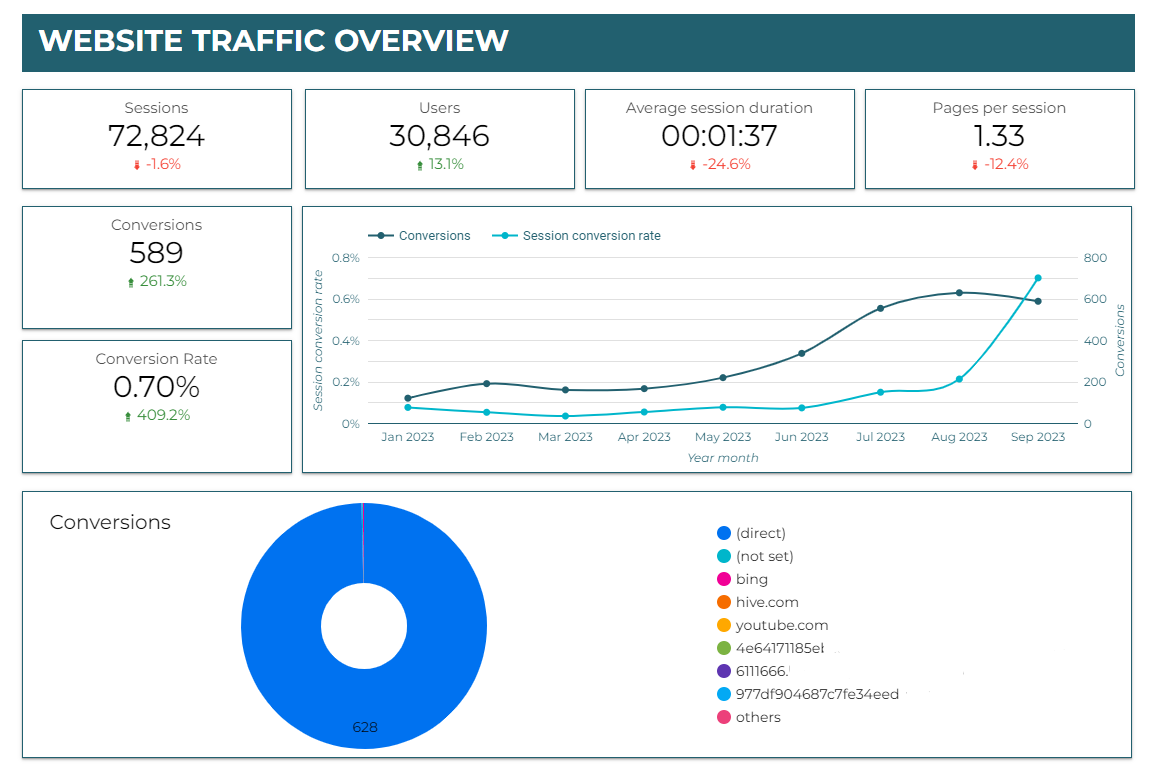 Screenshot from Looker Studio, November 2023
Step 4: Align conversion events with business growth metrics such as leads and sales
The final step is to create a bridge between marketing and sales.
If you’re in e-commerce, this becomes very easy once you’ve set up the above data, and it’s even possible for it to be automatically generated via a CMS like Shopify or directly in GA4.
However, it is more complicated with B2B companies, as the sales process is often divided into the sales team.
By the way, sometimes the SEO team doesn’t even have access to this data.
Either way, you’ll need to find this data somehow to calculate other elements like close rate and average contract value (ACV) to connect international SEO to business growth in specific markets.
Ideally, sales data should be tagged according to a specific SEO content group, such as a pillar, category, or industry vertical. You can get a rudimentary idea from the image below, but it’s likely in a CRM or other sales tool.
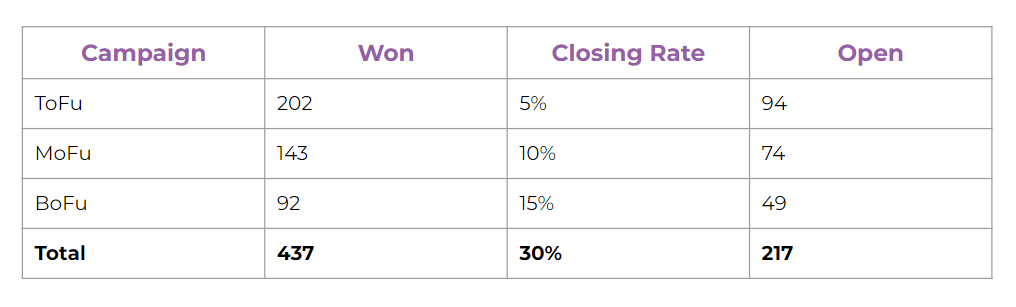 Image by the author, November 2023
Also, if you know how much a lead is worth based on average opportunity close rate and a specific LCA, you can use Google Analytics (slight variation now in GA4) to track gross revenue data .
You’ll need to subtract operating costs from the above figures to get the true ROI, but this still gives a great overview of SEO’s impact on a particular market.
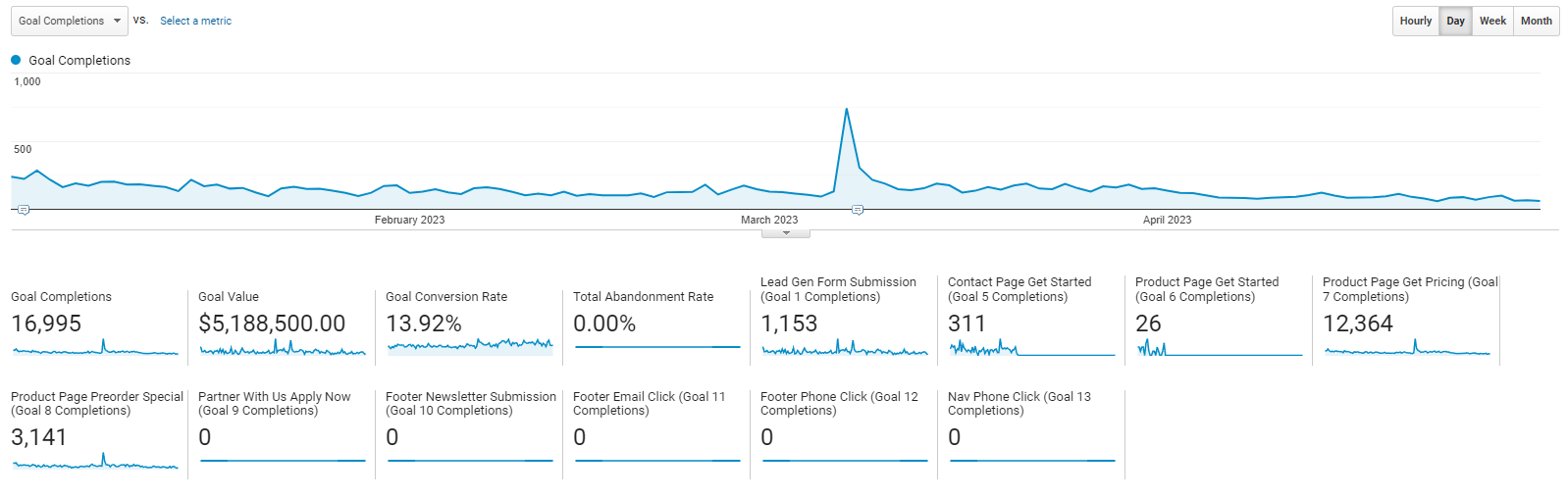 Screenshot from GA4, November 2023
Track international markets individually and earn globally
In general, tracking conversions specific to your market is the best way to monitor progress and get a big picture of current and future international SEO success.
It helps you see which markets are thriving and which need a little help.
These steps are critical if you want to succeed in global expansion, so take the time to implement conversion tracking so you can continue to perform market-specific analysis as well as monitor how your SEO efforts are impacting business success .
More resources:
Featured image: svetlichniy_igor/Shutterstock
[ad_2]
Source link





