


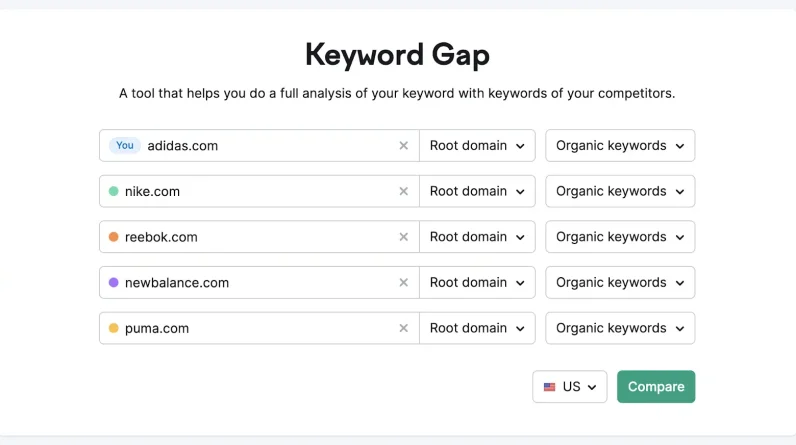
A content gap analysis is a valuable type of market research, helping you uncover opportunities you may have missed and improve your content marketing.
But what exactly is a content gap analysis and how do you do it? And most importantly, why should you?
What is a content gap analysis?
Content gap analysis is the process of identifying and addressing content that is missing or underperforming on a website, compared to competitors or market standards.
Improve your content strategy by discovering areas for improvement to meet the needs of your target audience and improve SEO visibility.
What are the best tools for content gap analysis?
Some of the most useful tools for content gap analysis are Semrush, Ahrefs, and Google Search Console.
Semrush provides insight into competitors’ content strategies. Ahrefs’ Content Gap feature helps uncover keyword opportunities. Google Search Console can be used to spot topics that might be weak or missing from existing content.
Semrush
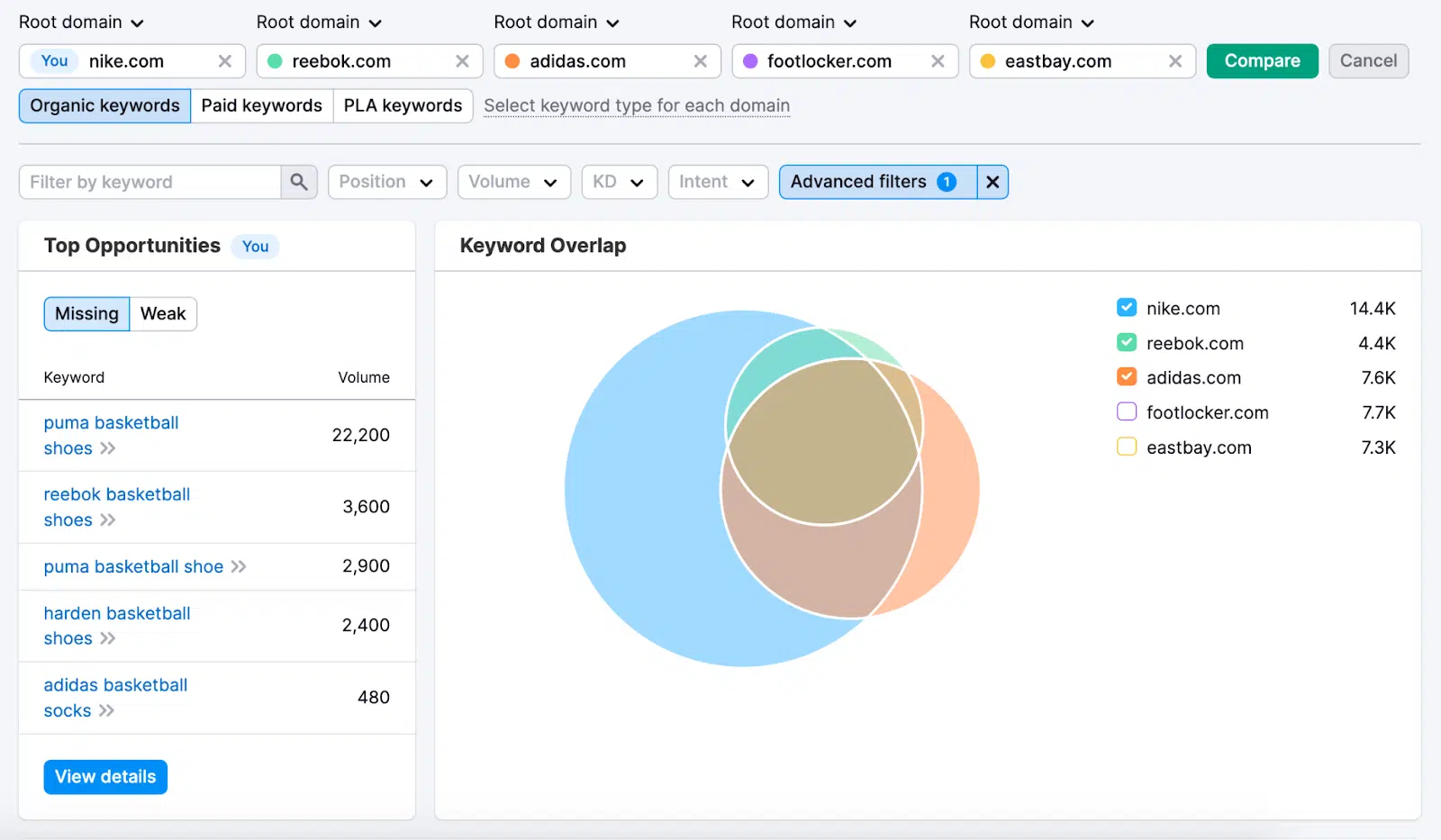
I find Semrush to be the easiest and most intuitive tool. It’s simple to use and automatically suggests websites to compare with yours based on common keywords; useful if this is your first analysis and you don’t know where to start.
I also like the Venn diagram illustrations of keyword overlap. It’s a simple way to get an overview of how you’re doing so far and how much work or opportunity you have.
Ahrefs
This is another solid SEO tool to see where competing websites rank and help find gaps in your content.
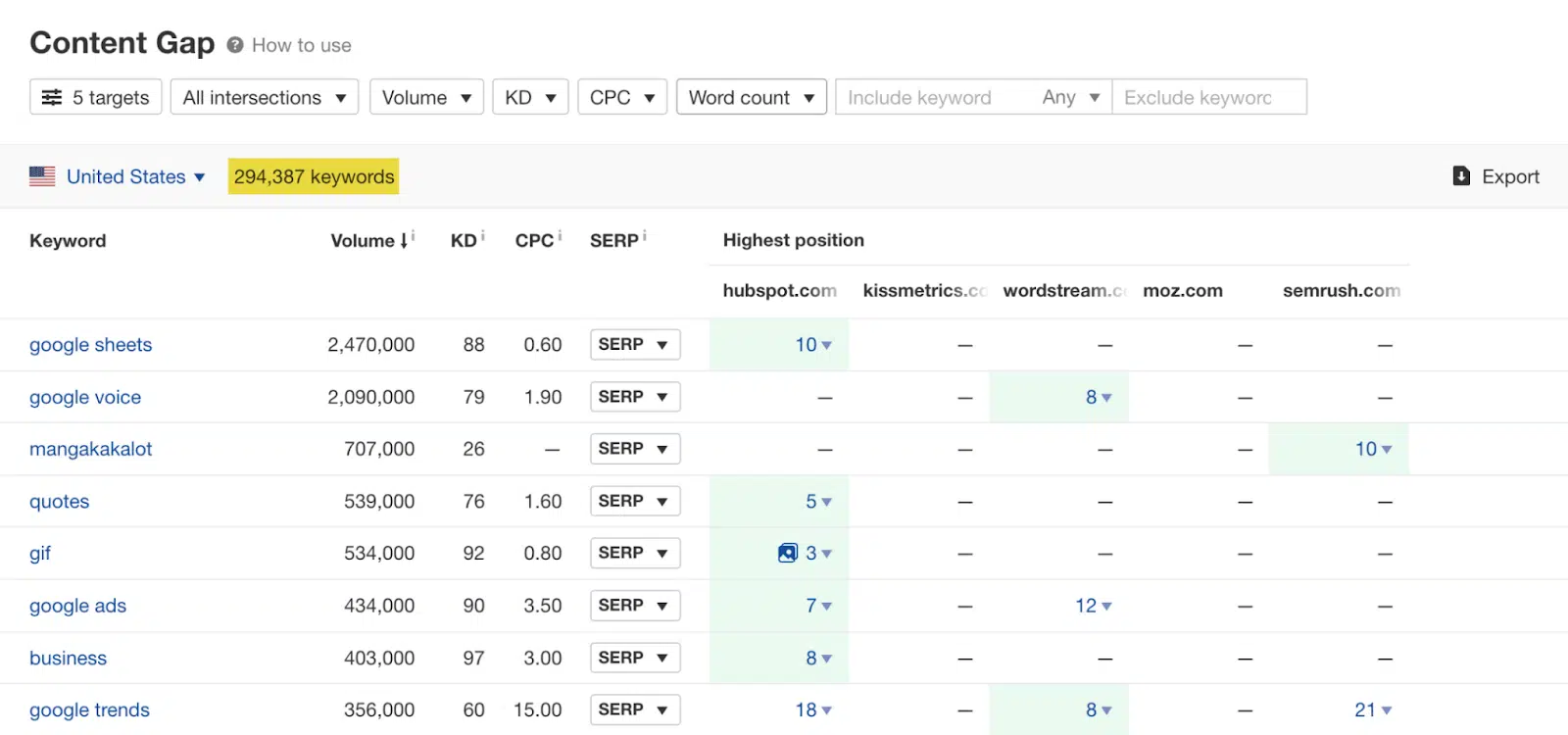
There is a limit on the number of results displayed based on the plan you are on, which is a limitation of Ahrefs. But regardless of which plan you choose, Ahrefs will show you the top opportunities for improvement—the ones that will make the most difference.
Google Search Console
Search Console is a useful option if you want to improve specific pages and don’t have access to paid tools.
There’s a wealth of data about what’s working on your site, and you can use information about the organic keywords you’re already ranking for to see if you can make improvements (more on that later).
Get the daily search newsletter marketers trust.
How to do an SEO gap analysis
Doing the analysis is simple. Enter your own URL and one or more competitors and run the analysis. This is.
The hardest part is selecting the right competitors and interpreting the results. You can use Semrush and Ahrefs by pulling it automatically or using a separate report to identify close competitors in the SERPs.
I’ve found this works well for e-commerce sites and websites that follow similar patterns. If your industry doesn’t have a “standard”, it may not provide many useful results.
For example, I found that a content gap analysis for a brand strategy agency that was trying to position itself differently in its market was not very effective.
They had little overlapping content and their closest competitors approached things differently. In this case, it may not be the right approach for your business. But most of the time, a gap analysis is very useful.
Here are more details on how to get the most out of a content gap or keyword analysis.
Site Level
Looking at gaps across a site is useful for refining your content strategy. It’s what most of us think of when we consider analytics. Find out what competitors are ranking for and provide opportunities for organic traffic.
Enter your site into your favorite keyword gap tool along with the competition, setting each to domain-level analysis. Evaluate untapped, weak, and missing keywords. You can sort them by volume, keyword difficulty and more to find the most lucrative opportunities for your business.
Extensive keyword lists can be overwhelming, so it can be helpful to use a keyword grouping tool to help group similar opportunities together. You can also export a CSV file and use filters to identify opportunities once you spot patterns yourself.
This kind of large-scale analysis can be useful when you’re creating a long-term plan and trying to sort out your strategy for the next 6-12 months.
Category level
You can use a URL path analysis to strengthen a specific area of your website, such as a set of related categories and subcategories. This will collect all relevant opportunities in a subset of URLs.
Most SEO tools allow you to run analysis at the prefix or path level. This can be useful if you want to do an analysis with a section of the larger site that does what yours does. You can run your entire domain with the subsection path of your site that covers your common products or services.
Check if the competition has any subcategories you want to add or any informative content that supports certain products.
Doing a more focused gap analysis like this can be helpful. You can even choose to do this against competitors who are more successful for a subset of your products or services to help you plan to strengthen a particular area.
Page level
If you want to improve a certain page on your site, you can compare it to the ones that are currently performing better. This is a quick way to find the relevant keywords you are missing and make an optimization plan. Just follow the same process at the page level.
If you have limited access to paid tools, this is where Search Console can come in handy. You can evaluate the keywords your page is ranking for and spend time improving the results of low-performing keywords.
You are likely to identify topics that you could cover in more detail or that you haven’t touched on. Use these insights to improve your content.
Why is content gap analysis important in 2024 and beyond?
Assessing content gaps is not about copying your competitors or stealing their strategy.
An effective content gap analysis helps you refine your content and keyword strategy to meet the needs of your target audience and can help improve your search engine results in the process.
Here are five reasons why this type of analysis needs to be part of your strategy in 2024 and beyond.
It helps you create better content, fast
Assessing the market can help you identify content ideas you may not have considered and assess which ones will be most successful.
This saves time and effort and helps you create content that delivers results. I Google asks website owners take into account that:
“The ‘why’ should be that you’re creating content primarily to help people, content that is useful to visitors if they land directly on your site.”
So using an assessment of what’s already really helping people in your market is a good place to start.
You can continuously improve
Regularly reviewing your content against other articles or pages that have been published or improved since you published yours will help you make changes over time.
Your top competitors may have changed because new, current, or different information on a topic has become more relevant to your audience. Or perhaps users simply expect a higher level of detail, additional knowledge or experience.
Reviewing your content in this context helps you easily spot areas you can improve and create the best piece on a topic.
This helps you comply with Google’s useful content criteria:
“Does the content offer substantial value compared to other search results pages?”
You can better meet needs and intent
By analyzing keyword gaps and missing topics in your content, you can often discover where you may be missing the needs or intent of your potential customers.
This can help you align your content with what they’re looking for, creating something better, more useful, and ultimately more successful.
So you should be able to ask yourself:
“After reading my content, will someone walk away feeling like they’ve learned enough about a topic to help achieve their goal?”
And if you have better satisfied the search intent, your answer will be yes!
You can demonstrate experience
The more you write about a topic, the more you can demonstrate the depth and breadth of your knowledge and experience. If there are big gaps in what you’ve covered, you may not be an expert in those areas (or even a real expert).
The reality is that you are probably that expert. You haven’t covered these areas yet. Maybe you hadn’t even thought to do it.
Using gap analysis to evaluate competitor websites helps bring it into focus so you can showcase your knowledge and provide unique insights and insights.
Analysis reveals missed opportunities. Now, you can add your own experience to set your content apart from the rest.
You can create more powerful content clusters
Covering a topic in more depth across multiple pieces of content allows you to link them together and create in-depth resources.
This can help keep users on your site longer as you anticipate their needs. It can also help you with your sales or lead generation funnel as you’ve covered more user needs at different parts of their journey.
Topic clusters can help you organize your content effectively for better results. Discovering target keywords in a cluster that you’ve missed helps make them more complete, useful and valuable.
Mind the Gap
Watch out for these gaps. You could be missing out on important opportunities and traffic. Use gap analysis wisely to create content that improves on what’s already ranked and demonstrates your expertise and knowledge.
The views expressed in this article are those of the guest author and not necessarily Search Engine Land. Staff authors are listed here.
[ad_2]
Source link





